Evidence-based response
Which Soup Is Best for Gut Health? Evidence-Based Answer Without Healing Hype
Vegetable, lentil and fermented soups may support digestive comfort, but no soup can heal the intestines or replace clinical diagnosis.
By Sandra McKenzy, Pharmacist · 2026-08-10
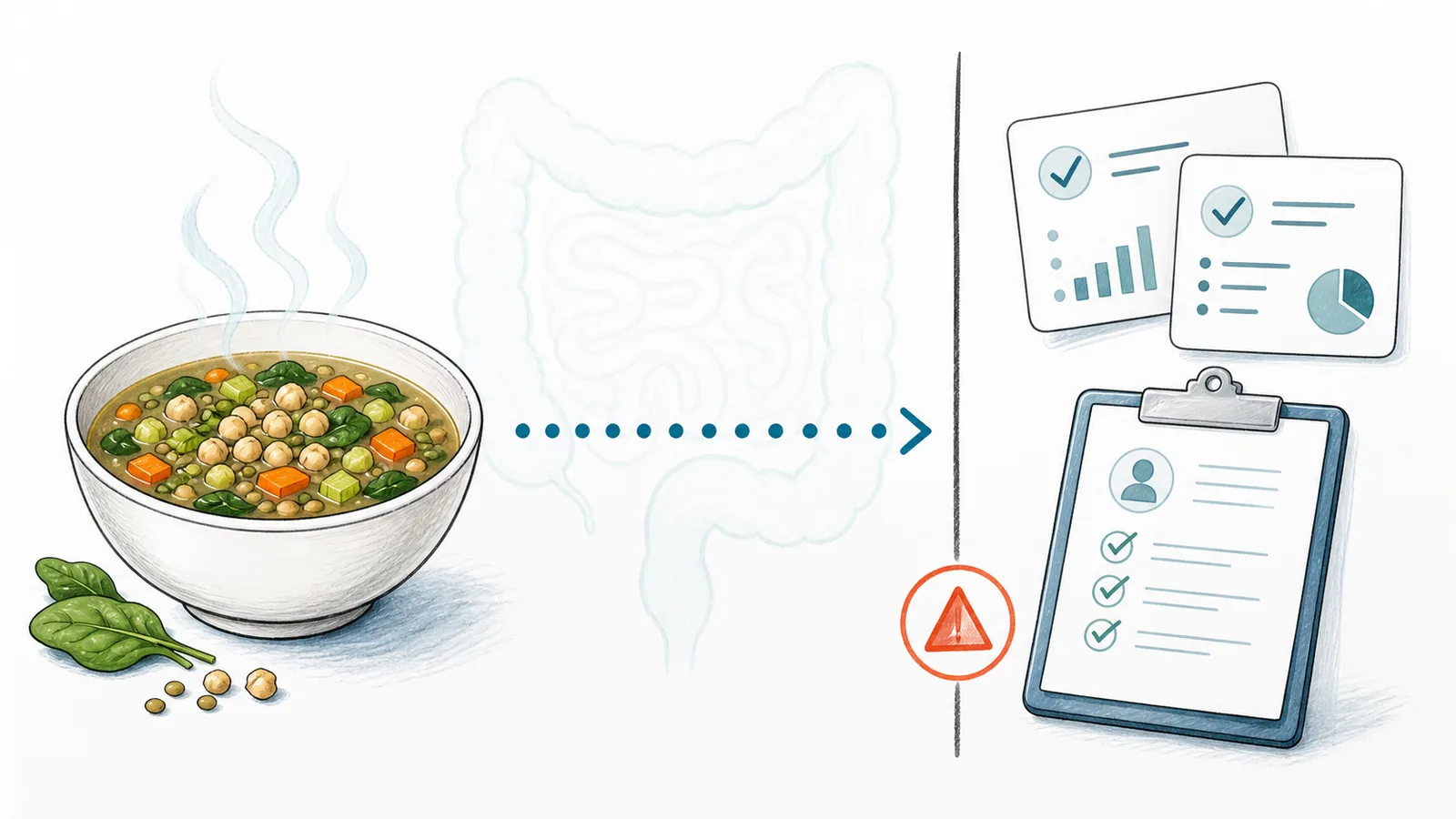
Short answer: The best soup for gut health is usually a simple, well-tolerated soup built around vegetables, legumes or oats, enough fluid, and optional fermented ingredients added gently. Soup can help someone eat more fiber and stay hydrated, but no soup has been proven to heal the intestines, repair a leaky gut, diagnose dysbiosis, or replace medical care.
Articles about “gut healing soup” often mix a sensible idea with a much stronger promise. Warm soup can be a practical way to eat cooked vegetables, lentils, beans, oats, herbs and fluid, especially when appetite is low or digestion feels sensitive. That does not make soup a microbiome treatment on command. A soup recipe cannot tell you whether your symptoms come from irritable bowel syndrome, inflammatory bowel disease, infection, celiac disease, medication effects, food intolerance, constipation, gallbladder disease or something else.
The InnerBuddies article that prompted this response presents intestinal soup as a personalized microbiome tool and links soup choices to stool-test results. The safer answer is narrower: diet can shift the gut microbiome, fiber can feed microbial fermentation, and fermented foods may change immune and microbial markers in some settings. But the evidence does not support using a consumer microbiome report to prescribe a specific soup for Akkermansia, Firmicutes, Bacteroidetes, inflammation or “gut recovery.”
Evidence summary
- Diet can change the human gut microbiome quickly, but short-term changes do not automatically mean clinical benefit.
- Fiber-rich plant foods are the strongest reason soup can be microbiome-friendly, especially legumes, oats, onions, leeks and vegetables.
- Fermented foods have human evidence for microbiome and immune marker changes, but a miso soup is not a cure for intestinal disease.
- Bone broth, collagen and “gut lining” claims are much less clinically proven than fiber and overall dietary pattern claims.
- Consumer stool microbiome tests cannot currently diagnose why a person needs a particular soup or predict a guaranteed response.
Which soup is best for gut health?
For most people, the best gut-health soup is not exotic. It is a soup that helps you tolerate and repeat the basics: diverse plant foods, enough fiber, adequate protein if needed, and enough liquid. A lentil vegetable soup, white bean and kale soup, oat-thickened vegetable soup, minestrone with beans, or a mild miso vegetable soup can all be reasonable options if they fit the person’s symptoms and medical context.
The common thread is not that one recipe “heals the gut.” The common thread is fermentable carbohydrate. Many gut bacteria metabolize dietary fibers and resistant starches into short-chain fatty acids and other metabolites. These pathways are biologically plausible and supported by a large body of microbiome research. Still, a person’s response varies with baseline diet, existing microbiota, medication use, bowel pattern and disease status.
That is why the most evidence-based answer is boring in a useful way. Choose soups with cooked vegetables you tolerate, add beans or lentils gradually if they do not worsen symptoms, include oats or barley if you tolerate them, and avoid turning soup into a restrictive cleanse. For someone with active diarrhea, strictures, severe bloating or a known gastrointestinal condition, the “best” soup may be temporarily lower in fermentable fibers and chosen with a clinician or dietitian.
Can soup improve the gut microbiome?
Soup can support a healthier dietary pattern, and dietary pattern can influence the microbiome. Human feeding studies show that diet can rapidly and reproducibly alter microbial communities. That matters because soup is often a delivery system for the foods most people under-eat: legumes, vegetables, alliums, herbs, whole grains and fluid.
But there are two limits. First, microbiome change is not automatically the same as symptom relief. A stool test might show that bacterial proportions changed after a dietary shift, but that does not prove the soup treated the cause of pain, bloating, constipation or inflammation. Second, microbiome responses are individualized. A food that improves bowel regularity in one person may worsen gas or cramping in another.
So the claim “soup improves the gut microbiome” is fair only when it means soup can be a practical vehicle for fiber-rich foods. It becomes overstated when it implies that a specific soup repairs dysbiosis, restores bacterial equilibrium after antibiotics, or corrects named microbes based on a consumer report.
Are bone broth and collagen soups good for the intestines?
Bone broth can be warm, salty, hydrating and easy to tolerate. For some people recovering from a stomach bug or eating poorly, that alone can be useful. The evidence problem is the leap from comfort food to gut-lining therapy. Collagen and gelatin contain amino acids, but ordinary bone broth has not been clinically proven to seal the intestinal barrier, reverse leaky gut, treat inflammatory bowel disease or rebuild the microbiome.
If someone enjoys broth, it can be part of a meal. The stronger evidence-based upgrade is usually to add tolerated plant foods rather than rely on broth alone. A broth with carrots, potatoes, rice, lentils, oats, spinach, zucchini or beans provides more relevant substrates for gut microbial metabolism than collagen water by itself.
Does miso soup or fermented soup help gut health?
Fermented foods are more plausible than many wellness claims, but they still need careful wording. A controlled diet study in adults found that a high-fermented-food diet increased microbiome diversity and reduced several inflammatory markers, while a high-fiber diet had more individualized immune effects. That supports fermented foods as part of a dietary pattern, not as a stand-alone treatment.
Miso soup can be a reasonable fermented-food option, especially when it includes tofu, seaweed, mushrooms or vegetables. However, heating, processing, salt content and serving size matter. Miso soup should not be described as a probiotic medicine unless the product contains defined live strains and has evidence for the outcome being claimed. People with sodium restriction, histamine sensitivity or immune compromise may need extra caution.
Can a microbiome test tell you which soup to eat?
This is where marketing often goes too far. A stool microbiome test can describe DNA patterns in a sample. It may generate hypotheses about diet, diversity or microbial functions. It cannot reliably diagnose the cause of digestive symptoms or prescribe a soup that will fix a named microbe.
Claims such as “low Akkermansia means add pomegranate to lentil soup” or “Firmicutes to Bacteroidetes balance means choose bitter greens” sound precise, but they are not clinically validated meal prescriptions. The field is moving toward personalized nutrition, yet most consumer reports are not equivalent to medical diagnosis, dietetic assessment or outcome-tested therapy. Symptoms, medication history, red flags, blood tests, stool inflammatory markers, endoscopy findings when indicated, and dietary tolerance still matter more than a single consumer microbiome readout.
What soup should you choose for constipation, bloating or sensitive digestion?
For constipation, a soup with beans, lentils, barley, oats, vegetables and enough fluid may help because it combines fiber and hydration. Increase portions gradually. A sudden jump from low fiber to a large bean soup can worsen gas and discomfort.
For bloating or IBS-type sensitivity, start with simpler soups and smaller portions. Some people react strongly to onions, garlic, beans, wheat or certain cruciferous vegetables because of fermentable carbohydrates. That does not mean those foods are “bad for the gut.” It means tolerance and timing matter. A low-FODMAP approach, if needed, should be structured and temporary, ideally with dietetic guidance.
For diarrhea, acute infection symptoms, active inflammatory bowel disease, unexplained weight loss or blood in stool, do not use soup advice as a substitute for evaluation. Bland soups may be easier to tolerate temporarily, but persistent symptoms need diagnosis.
What gut-health soup marketing gets wrong
The biggest mistake is treating soup as a therapeutic category. “Gut healing soup” sounds medical, but the evidence belongs to ingredients, dietary patterns and clinical context, not to the soup label. A vegetable soup can be healthy without being a treatment. A miso soup can be fermented without being a proven probiotic intervention. Bone broth can be soothing without repairing the gut barrier.
The second mistake is over-personalization. Personalization is attractive because microbiome science is complex. But complexity does not mean a stool test can turn microbial names into recipe certainty. It is more honest to say: use testing cautiously, treat results as hypotheses, and judge food choices by symptoms, nutrition quality and medical context.
When should digestive symptoms be checked by a clinician?
Seek medical advice promptly if digestive symptoms include blood in stool, black stools, unexplained weight loss, fever, persistent vomiting, severe or worsening abdominal pain, dehydration, anemia, nighttime diarrhea, new symptoms after age 50, family history of colorectal cancer or inflammatory bowel disease, or symptoms after recent antibiotics or travel. People who are pregnant, immunocompromised, older, or managing IBD, celiac disease, kidney disease or diabetes should be especially careful with restrictive diets and supplement-style food claims.
Soup can be part of supportive eating. It should not delay evaluation when symptoms suggest inflammation, infection, bleeding, obstruction, malabsorption or another condition that needs medical care.
Bottom line
The best soup for gut health is usually a tolerated, fiber-forward soup made with vegetables, legumes, whole grains or fermented ingredients when appropriate. It may support digestive comfort and microbial fermentation as part of an overall diet. It is not a gut cure, a microbiome reset, a leaky-gut repair treatment or a personalized prescription from a stool test.
If you want a practical starting point, choose a simple lentil vegetable soup, bean and greens soup, oat-thickened vegetable soup, or mild miso vegetable soup. Start small, watch tolerance, and focus on the pattern over the promise.
The Simple Version
Soup can be good for your gut when it helps you eat more plants and drink more fluid. Your gut bacteria like many fibers from foods such as beans, lentils, oats, onions, leeks and vegetables. When bacteria ferment some of those fibers, they can produce helpful compounds.
But soup is not magic. Bone broth does not automatically heal the gut lining. Miso soup is not automatically a probiotic treatment. A microbiome test cannot reliably tell you the one soup your intestines need.
The safest rule is simple: pick a soup you tolerate, make it plant-rich if your gut handles fiber, increase fiber slowly, and get medical help for red flags such as blood in stool, weight loss, fever, severe pain or persistent diarrhea.
Evidence notes and sources
- David et al. (2014). Diet rapidly and reproducibly alters the human gut microbiome. Nature. https://doi.org/10.1038/nature12820
- Makki et al. (2018). The Impact of Dietary Fiber on Gut Microbiota in Host Health and Disease. Cell Host & Microbe. https://doi.org/10.1016/j.chom.2018.05.012
- Gibson et al. (2017). Expert consensus document: The ISAPP consensus statement on the definition and scope of prebiotics. Nature Reviews Gastroenterology & Hepatology. https://doi.org/10.1038/nrgastro.2017.75
- Wastyk et al. (2021). Gut-microbiota-targeted diets modulate human immune status. Cell. https://doi.org/10.1016/j.cell.2021.06.019
- McRorie and McKeown (2017). Understanding the Physics of Functional Fibers in the Gastrointestinal Tract. Journal of the Academy of Nutrition and Dietetics. https://doi.org/10.1016/j.jand.2016.09.021
- Zmora et al. (2018). Personalized Gut Mucosal Colonization Resistance to Empiric Probiotics Is Associated with Unique Host and Microbiome Features. Cell. https://doi.org/10.1016/j.cell.2018.08.041
- Lewis et al. (2017). Diet in the pathogenesis and treatment of inflammatory bowel diseases. Journal of Translational Medicine. https://doi.org/10.1186/s12967-017-1175-y
Educational note: This article is for general information and cannot diagnose symptoms or replace care from a qualified clinician. If symptoms are severe, persistent or associated with red flags, seek medical advice.