Evidence-based response
What Not to Eat for Dysbiosis? Evidence-Based Answer Without the Hype
Limit ultra-processed, low-fiber, heavy-alcohol, and sugar-heavy patterns, but stool microbiome tests cannot prescribe a validated dysbiosis avoid-list.
By Sandra McKenzy, Pharmacist · 2026-05-29
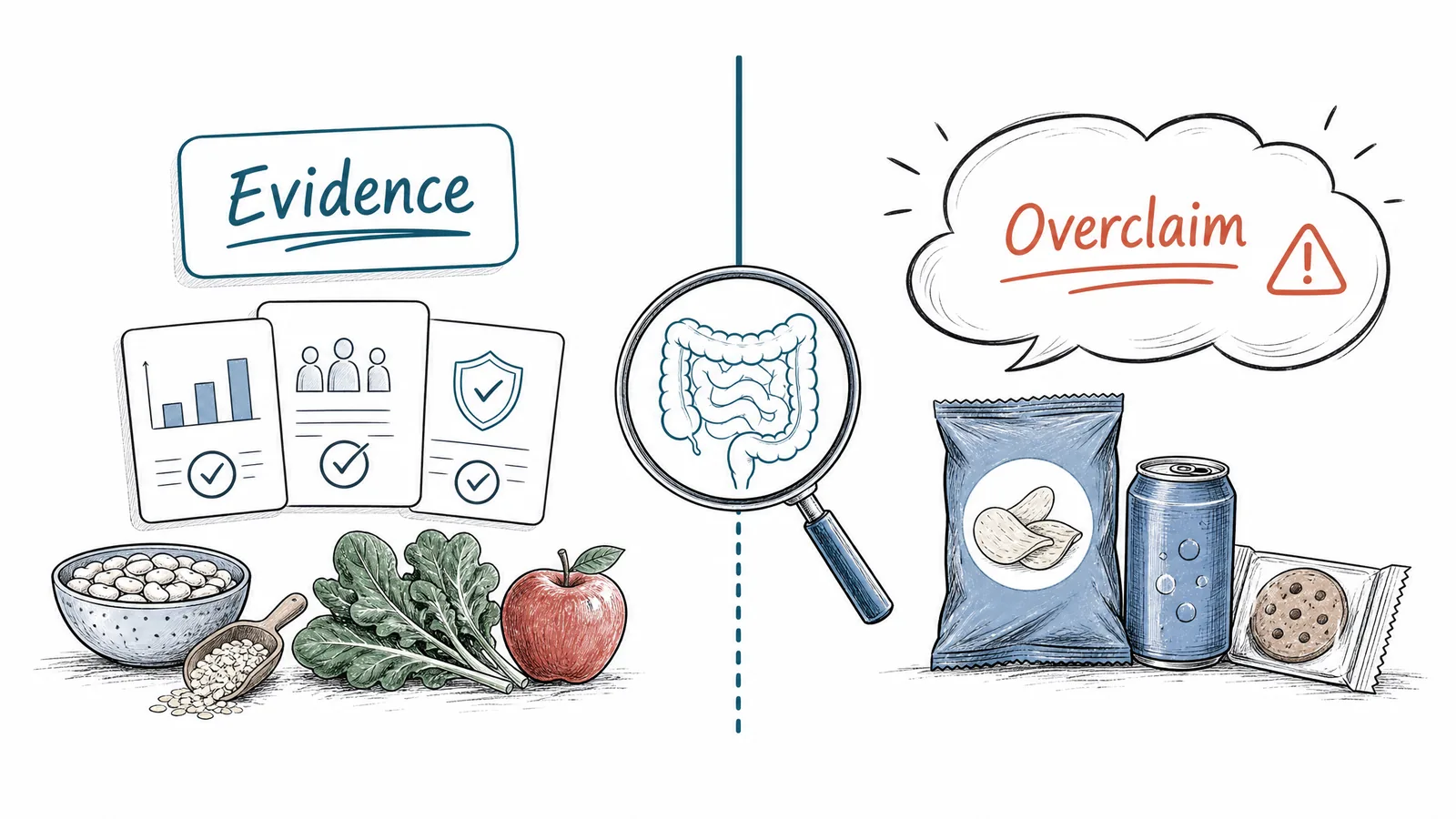
Short answer: If dysbiosis is the concern, the most evidence-grounded foods to limit are ultra-processed foods, low-fiber refined carbohydrate patterns, heavy alcohol intake, and some additive-heavy products when they displace whole foods. But no stool microbiome test can give a medically precise “do not eat” list for dysbiosis. Diet matters, but personalization still has limits.
What does “what not to eat for dysbiosis” actually mean?
Dysbiosis is not one diagnosis. It usually means an altered microbial community, reduced diversity, loss of useful functions such as fiber fermentation, or expansion of organisms linked with inflammation. That can happen in many settings: antibiotics, inflammatory bowel disease, infections, poor diet quality, alcohol use, metabolic disease, or simply short-term dietary change.
The source article correctly points readers toward diet quality, fiber, alcohol, and ultra-processed foods. The overreach is the suggestion that microbiome testing can reliably translate those broad patterns into a precise personal recovery plan. Current science supports dietary risk patterns much more strongly than test-driven food prescriptions.
Which foods are most reasonably limited for gut microbiota?
The strongest practical answer is not a dramatic elimination diet. It is to reduce foods that crowd out fermentable fiber and plant variety. Diets dominated by packaged snacks, sweet drinks, refined grains, fried fast foods, processed meats, and low-fiber convenience meals tend to provide fewer substrates for beneficial microbial fermentation.
Human studies show that diet can shift the gut microbiome quickly. That does not mean one meal “destroys” gut flora. It means repeated dietary patterns shape microbial ecology over time. A plant-rich, fiber-containing pattern generally supports short-chain fatty acid production, while a low-fiber pattern gives colonic microbes less material to ferment.
Are ultra-processed foods proven to damage the microbiome?
Ultra-processed foods are linked with gut-health concerns, but the evidence is mixed by ingredient, dose, and study design. A 2024 review in Nature Reviews Gastroenterology & Hepatology summarizes evidence that diets rich in ultra-processed foods and certain additives are associated with gut diseases and can affect gut barrier and microbiota biology. Some additive evidence is strong in animal or mechanistic models, while direct long-term human clinical proof is still developing.
That distinction matters. It is reasonable to limit additive-heavy ultra-processed foods as a default health strategy. It is not reasonable to claim that every preservative, sweetener, or processed item causes dysbiosis in every person.
What about sugar, artificial sweeteners, alcohol, and fried foods?
- Low-fiber dietary patterns give gut microbes less fermentable substrate for short-chain fatty acid production.
- Ultra-processed-food intake is associated with gut-health risks, but individual additives vary in evidence strength.
- Some emulsifiers and artificial sweeteners can alter microbiota in experimental studies; human effects are not uniform.
- Alcohol, especially heavy intake, can affect gut barrier function and inflammation.
- Consumer microbiome tests can describe stool patterns, but they do not diagnose dysbiosis or prescribe a validated food-avoidance plan.
Refined sugar and sweet drinks are best limited because they worsen overall diet quality and metabolic risk, not because they uniquely “feed bad bacteria” in a clinically proven way for every person. Artificial sweeteners deserve caution rather than panic. Saccharin, sucralose, and aspartame have microbiome data, including the Suez Nature study, but responses differ and not all findings translate into simple consumer rules.
Alcohol is clearer at the high-intake end. Heavy use can disrupt gut barrier biology, liver-gut signaling, and inflammation. Fried foods and processed meats are not microbiome toxins in a single bite, but frequent intake often comes with low fiber, high energy density, additives, and poorer cardiometabolic patterns.
Can a microbiome test tell you exactly what not to eat?
Not yet. A stool microbiome test can show relative abundance patterns, detect broad diversity signals, and sometimes suggest hypotheses. It cannot confirm that a symptom is caused by one food, diagnose dysbiosis as a disease, or prove that avoiding a listed food will repair the microbiome.
Personalized nutrition is a serious research field, but it is not the same thing as a consumer dashboard producing clinical certainty. If a test recommendation conflicts with medical advice, allergy history, eating-disorder risk, diabetes care, kidney disease, IBD management, or pregnancy nutrition, clinical advice comes first.
What is the safer evidence-based approach?
Start with pattern-level changes: fewer ultra-processed foods, fewer sugary drinks, less heavy alcohol, more tolerated legumes, whole grains, vegetables, fruit, nuts, seeds, and fermented foods if they suit you. Increase fiber gradually, especially if you have IBS, IBD, strictures, recent surgery, or severe bloating.
Food avoidance should be targeted, time-limited, and symptom-aware. Long lists of “bad microbiome foods” can reduce dietary diversity, which may work against the goal. The better question is not only what to remove, but what useful fibers and plant compounds you can consistently add.
When should symptoms be checked by a clinician?
Seek care for blood in stool, persistent diarrhea, black stools, fever, unexplained weight loss, anemia, night-time symptoms, dehydration, severe abdominal pain, progressive swallowing problems, or new bowel changes after age 50. A microbiome score should not delay diagnosis of infection, inflammatory bowel disease, celiac disease, colorectal cancer, or medication side effects.
Bottom line
The best answer to “what not to eat for dysbiosis” is boring but strong: limit ultra-processed, low-fiber, heavy-alcohol, and sugar-heavy patterns, while building a more diverse, fiber-rich diet. The marketing leap is pretending that stool microbiome testing can produce a validated personal avoid-list. It can inform questions. It cannot replace clinical context.
Evidence notes
- Whelan et al. (2024). Ultra-processed foods and food additives in gut health and disease. Nature Reviews Gastroenterology & Hepatology. 10.1038/s41575-024-00893-5
- David et al. (2014). Diet rapidly and reproducibly alters the human gut microbiome. Nature. 10.1038/nature12820
- Chassaing et al. (2015). Dietary emulsifiers impact the mouse gut microbiota promoting colitis and metabolic syndrome. Nature. 10.1038/nature14232
- Suez et al. (2014). Artificial sweeteners induce glucose intolerance by altering the gut microbiota. Nature. 10.1038/nature13793
- Makki et al. (2018). The Impact of Dietary Fiber on Gut Microbiota in Host Health and Disease. Cell Host & Microbe. 10.1016/j.chom.2018.05.012
- Kolodziejczyk et al. (2019). Diet-microbiota interactions and personalized nutrition. Nature Reviews Microbiology. 10.1038/s41579-019-0256-8
- Quigley (2017). Gut microbiome as a clinical tool in gastrointestinal disease management: are we there yet? Nature Reviews Gastroenterology & Hepatology. 10.1038/nrgastro.2017.29
This article is educational and does not diagnose, treat, or replace care from a qualified clinician.