Evidence-based response
What Is the Microbiome Diet? Evidence-Based Answer Without the Hype
A microbiome-friendly diet is better understood as a long-term eating pattern rich in diverse plant foods than as a branded protocol. The evidence supports fiber diversity more strongly than any one rigid “microbiome diet.”
By Sandra McKenzy, Pharmacist · 2026-06-01
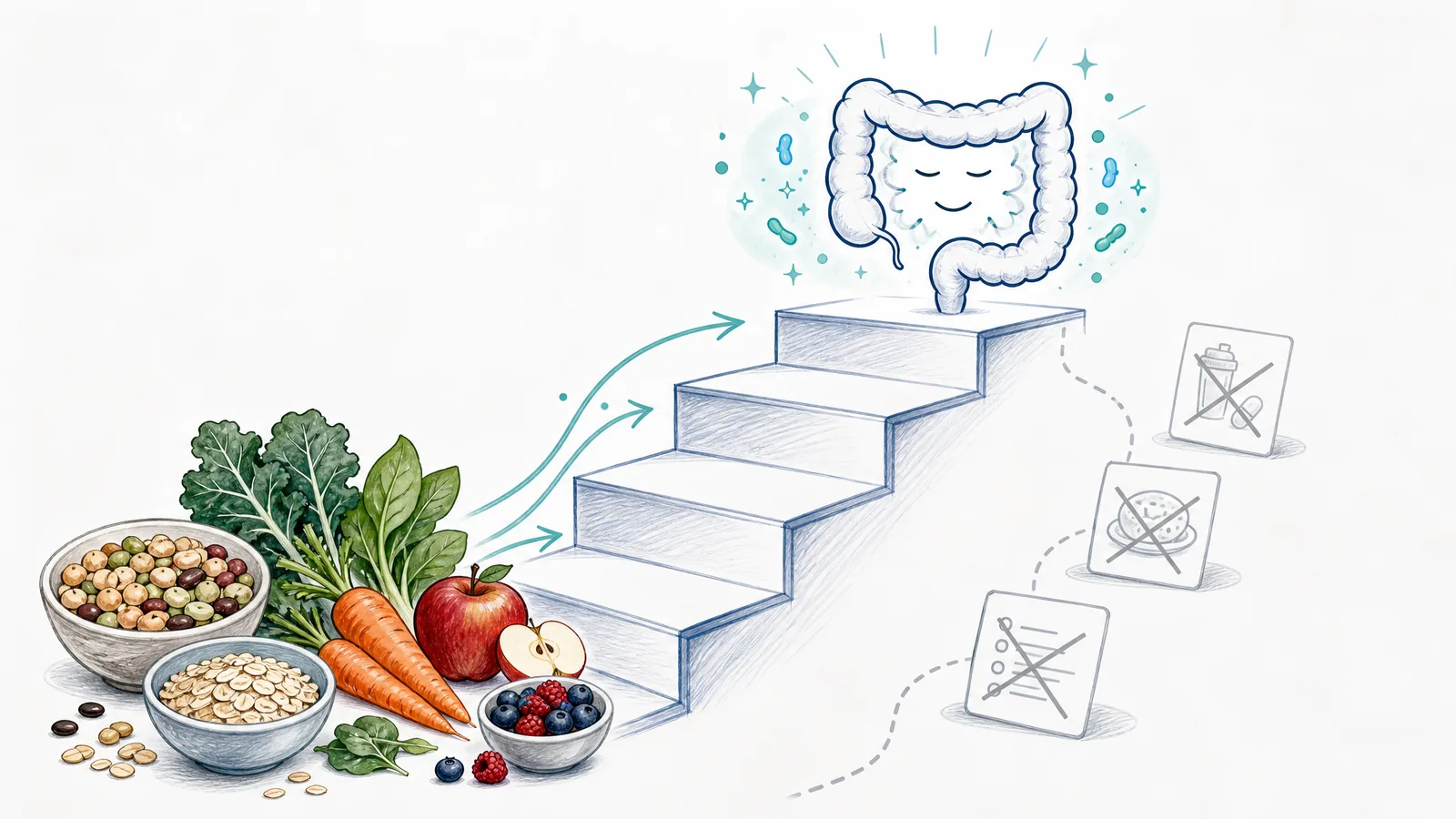
Short answer: There is no single clinically validated “microbiome diet.” The best-supported version is not a brand or rigid protocol, but a pattern: diverse plant foods, enough fiber, fewer ultra-processed foods, and changes that can be sustained. Diet shapes the gut microbiome quickly, but the effect is personal, context-dependent, and not reducible to one universal meal plan.
What does “microbiome diet” actually mean?
In clinical and research language, the phrase usually refers to dietary patterns that support microbial diversity, fermentation of fiber, and production of beneficial metabolites such as short-chain fatty acids. In marketing language, it often means a productized plan claiming to “fix” the microbiome quickly.
The evidence favors the first meaning more than the second.
Evidence summary
- Diet can reshape the gut microbiome, sometimes within days, but not all changes are equally meaningful or durable.
- Diverse plant intake and adequate fiber are more strongly supported than restrictive branded protocols.
- Mediterranean-style patterns have some of the best overall evidence for metabolic and gut-related benefit.
- Individual responses differ, so “the” perfect microbiome diet for everyone is not established.
- Microbiome-friendly eating does not replace evaluation of true GI red flags or disease-specific nutrition needs.
Which dietary features have the strongest evidence?
The most consistent signals point toward variety and regularity rather than gimmicks. Whole grains, legumes, nuts, seeds, fruits, vegetables, and other fiber-rich foods provide substrates that many gut microbes use. Fermented foods may also help some people, though the evidence is not identical across products or symptoms.
Mediterranean-style patterns repeatedly perform well because they combine plant diversity, polyphenol-rich foods, and lower reliance on highly processed items. That is more evidence-based than a promise that one powder, fasting hack, or elimination template can “reset” the microbiome.
Can diet change the microbiome quickly?
Yes. Human feeding studies show that the gut microbiome can shift within days. But fast change is not the same as long-term health benefit. A transient signal after one week is different from a clinically meaningful improvement in symptoms, inflammation, or disease risk over months.
What marketing gets wrong about microbiome diets
One common mistake is treating the microbiome like a machine with a single ideal setting. Another is assuming that if a dietary pattern changes the microbiome, the change must therefore be beneficial. Some shifts may be neutral, temporary, or hard to interpret. Consumer articles also tend to oversell personalized precision before the field can reliably deliver it.
Do you need a microbiome test to follow a microbiome-friendly diet?
Usually not. For most people, the core advice is surprisingly conventional: eat more diverse plant foods, aim for sustainable fiber intake, avoid over-reliance on ultra-processed foods, and adjust for real symptoms or diagnoses. A test may add curiosity or context, but it is not a prerequisite for the basics.
When should you avoid self-prescribing a “microbiome diet”?
If you have unintentional weight loss, GI bleeding, persistent vomiting, swallowing problems, anemia, severe pain, malnutrition risk, or suspected IBD, celiac disease, or eating disorder, you need targeted medical and dietetic assessment rather than a generic microbiome plan.
Bottom line
The microbiome diet is best understood as a sustained pattern of diverse, fiber-rich eating rather than a magic protocol. Diet matters. The microbiome matters. But the science still does not support the idea that one branded plan can precisely optimize every person’s gut.
Evidence notes
- Stanton et al. (2025). The gut microbiome connects nutrition and human health. Nature Reviews Gastroenterology & Hepatology. 10.1038/s41575-025-01077-5
- Stanton et al. (2024). The interplay between diet and the gut microbiome: implications for health and disease. Nature Reviews Microbiology. 10.1038/s41579-024-01068-4
- Valdes et al. (2019). You are what you eat: diet, health and the gut microbiota. Nature Reviews Gastroenterology & Hepatology. 10.1038/s41575-018-0061-2
- Dinan et al. (2024). Feeding gut microbes to nourish the brain: unravelling the diet–microbiota–gut–brain axis. Nature Metabolism. 10.1038/s42255-024-01108-6
- Wastyk et al. (2021). The gut microbiome modulates the protective association between a Mediterranean diet and cardiometabolic disease risk. Nature Medicine. 10.1038/s41591-020-01223-3
- David et al. (2014). Diet rapidly and reproducibly alters the human gut microbiome. Nature. 10.1038/nature12820
This article is educational and does not diagnose, treat, or replace care from a qualified clinician.