Evidence-based response
What Is the Gut-Heart-Brain Axis? Evidence-Based Answer Without the Hype
The gut-heart-brain axis is a real set of biological links, but consumer microbiome tests cannot diagnose or optimize heart and brain health on their own.
By Sandra McKenzy, Pharmacist · 2026-05-27
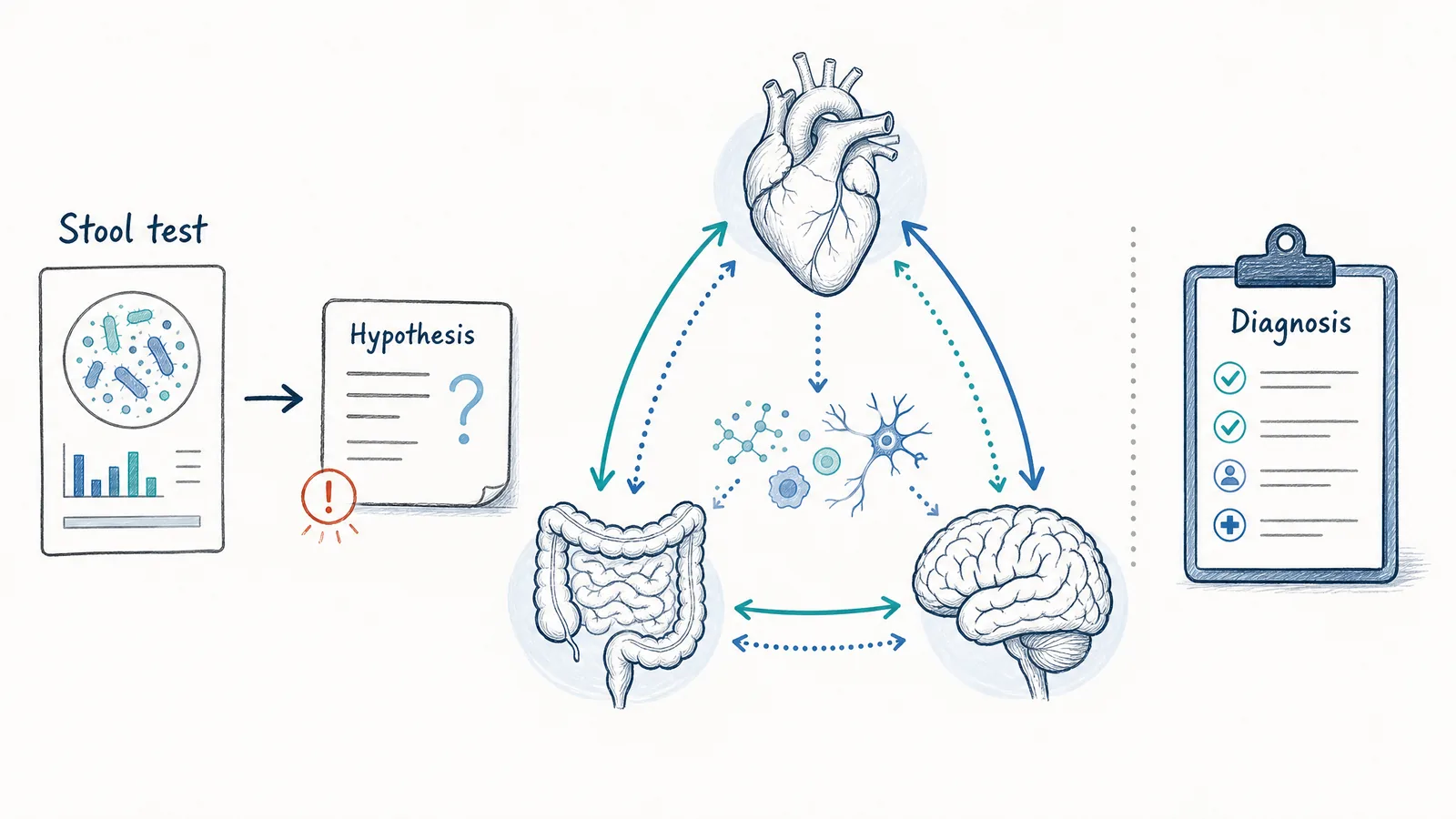
Short answer: The gut-heart-brain axis describes real communication between the intestinal microbiome, cardiovascular system, immune system, nervous system, and brain. Microbial metabolites, inflammation, blood pressure biology, vagus nerve signaling, and circulation can connect these organs. But the concept is not a validated consumer diagnosis, and a stool microbiome test cannot tell you whether your heart, brain, or mood problems are caused by dysbiosis.
What does the gut-heart-brain axis mean?
The phrase combines several overlapping research fields. The gut-brain axis studies communication between the gut, microbes, immune signals, hormones, nerves, and the central nervous system. The gut-heart connection studies how microbial metabolites, diet, inflammation, blood pressure, lipids, and vascular function may influence cardiovascular risk. The “gut-heart-brain axis” is best understood as a systems-level model, not as a single medical test.
This model is useful because it reminds clinicians and researchers that gut biology is not isolated. Signals from the intestine can reach distant organs. At the same time, heart disease, stress, medications, sleep, exercise, diet, and chronic illness can also reshape gut ecology.
How can gut microbes affect the heart?
Gut microbes can transform food components into metabolites. Some, such as short-chain fatty acids from fiber fermentation, are linked to immune regulation, gut barrier biology, and blood-pressure pathways. Others, such as trimethylamine N-oxide, or TMAO, have been associated with atherosclerosis and cardiovascular risk in mechanistic and clinical research.
These findings are important, but they do not mean a stool test can calculate your heart risk. Cardiovascular medicine still relies on validated measures such as blood pressure, cholesterol, diabetes status, smoking, kidney function, family history, symptoms, imaging when indicated, and clinician assessment.
How can the gut connect with the brain?
The microbiota-gut-brain axis includes immune signaling, endocrine stress pathways, microbial metabolites, and vagus nerve communication. Animal studies show strong causal effects in controlled settings, while human studies increasingly link microbiome patterns with depression, anxiety, cognition, and stress responses.
The limitation is causality. Depression, anxiety, sleep disruption, diet changes, medications, and inflammation can all alter the microbiome. A microbiome difference may be part of the story without being the root cause or the right treatment target.
What is actually supported?
- The gut, heart, and brain communicate through immune, metabolic, neural, endocrine, and vascular pathways.
- Fiber-derived short-chain fatty acids are plausible protective signals, especially for immune and blood-pressure biology.
- TMAO research shows that some gut-derived metabolites can be linked to cardiovascular risk.
- Gut-brain research is strong mechanistically, but many human mental-health findings remain associative or early-stage.
- Consumer microbiome testing cannot diagnose cardiovascular, neurological, or psychiatric disease.
Where does marketing overreach?
The overreach begins when a complex research model becomes a wellness promise. “Balance your microbiome to improve mood, cognition, and heart function” sounds simple, but the evidence is not that simple. Better diet, exercise, sleep, smoking cessation, blood-pressure control, and appropriate medical care have much stronger clinical validation than microbiome-score optimization.
Another overreach is calling microbiome testing essential. Testing may generate hypotheses for research or selected clinical contexts. For most consumers, it cannot identify the cause of anxiety, predict a heart attack, diagnose cognitive decline, or choose a precise probiotic for the whole gut-heart-brain axis.
What can people reasonably do?
The safest practical advice is not exotic: eat a varied plant-rich diet if tolerated, include fiber from legumes, whole grains, vegetables, fruit, nuts, and seeds, stay physically active, sleep consistently, avoid smoking, limit heavy alcohol intake, and manage blood pressure and cardiometabolic risk with standard medical care. Fermented foods can be included if tolerated, but they are optional foods, not axis-control therapy.
When should symptoms be checked clinically?
Do not explain warning signs through the microbiome alone. Chest pain, shortness of breath, fainting, sudden weakness, stroke-like symptoms, severe headache, suicidal thoughts, new confusion, blood in stool, unexplained weight loss, anemia, fever, or persistent diarrhea require timely clinical evaluation. A stool result cannot rule out urgent disease.
Bottom line
The gut-heart-brain axis is scientifically real as a network of biological pathways. It is not a shortcut diagnosis and not proof that consumer microbiome testing can optimize heart, brain, and mood outcomes. Use the concept to understand whole-body biology, but use validated medicine for symptoms and risk.
Evidence notes
- Morais et al. (2021). The gut microbiota-brain axis in behaviour and brain disorders. Nature Reviews Microbiology. 10.1038/s41579-020-00460-0
- Marques et al. (2018). Beyond gut feelings: how the gut microbiota regulates blood pressure. Nature Reviews Cardiology. 10.1038/nrcardio.2017.120
- Wang et al. (2011). Gut flora metabolism of phosphatidylcholine promotes cardiovascular disease. Nature. 10.1038/nature09922
- Parada Venegas et al. (2019). Short chain fatty acids mediated gut epithelial and immune regulation. Frontiers in Immunology. 10.3389/fimmu.2019.00277
- Cryan et al. (2019). The microbiota-gut-brain axis. Physiological Reviews. 10.1152/physrev.00018.2018
- Ratiner et al. (2024). Utilization of the microbiome in personalized medicine. Nature Reviews Microbiology. 10.1038/s41579-023-00998-9
This article is educational and does not diagnose, treat, or replace care from a qualified clinician.