Evidence-based response
What Is Microbiome Sequencing? Evidence-Based Answer Without the Hype
Microbiome sequencing reads microbial DNA patterns. It is useful science, but a consumer stool report is not a diagnosis or treatment plan by itself.
By Sandra McKenzy, Pharmacist · 2026-06-11
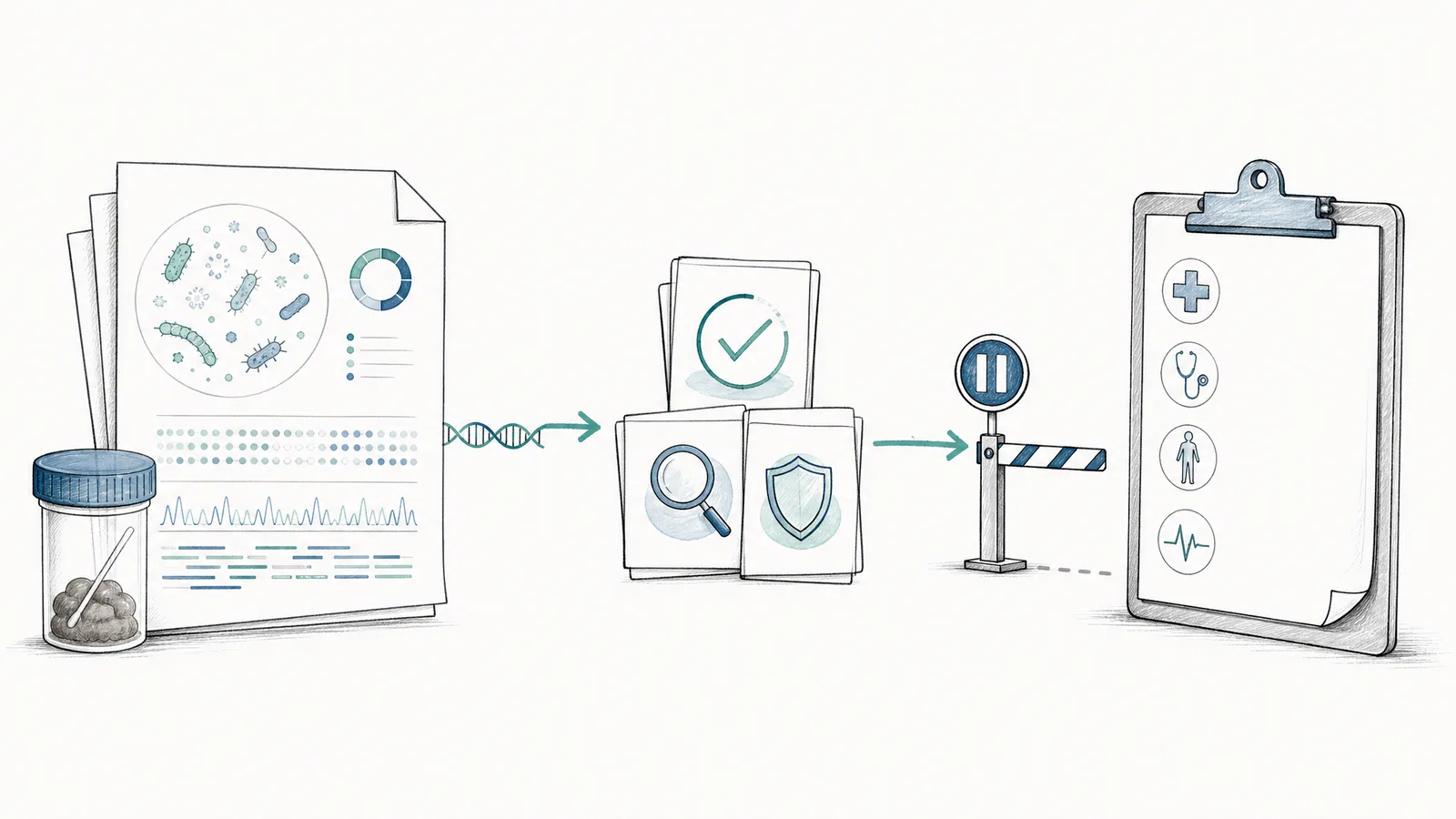
Short answer: Microbiome sequencing reads microbial genetic material from a sample, often stool, to describe which microbes and genes are present. It is powerful for research and some clinical uses, but a consumer sequencing report is not, by itself, a diagnosis, disease-risk forecast, or personalized treatment plan.
What Is Microbiome Sequencing?
Microbiome sequencing is a laboratory and bioinformatics process used to analyze genetic material from microbial communities. In gut testing, the sample is usually stool. The result is a profile of microbial DNA that can estimate which organisms are present, how abundant they appear, and sometimes which genes or metabolic functions may be represented.
InnerBuddies has an article presenting microbiome sequencing as a way to unlock gut secrets and support personalized nutrition or medicine. This response keeps the useful science but tightens the boundary. Sequencing can be technically impressive and scientifically valuable. It does not automatically turn a stool sample into a medical diagnosis or a reliable supplement prescription.
Evidence summary
- 16S sequencing mainly profiles bacterial marker genes; shotgun metagenomics reads broader microbial DNA and can infer functional potential.
- Results are affected by sampling, DNA extraction, sequencing depth, databases, pipelines, and interpretation rules.
- Stool reflects fecal microbiota, not every microbial community along the gut wall or small intestine.
- Microbiome sequencing has strong research value and selected clinical promise, but routine consumer use remains limited.
- A report should be interpreted with symptoms, history, medications, diet, and validated clinical tests.
How Does Microbiome Sequencing Work?
The basic workflow has four parts. First, a sample is collected. For consumer gut tests, this is usually a small stool sample. Second, the laboratory extracts microbial DNA. Third, a sequencing method reads parts of that DNA. Fourth, software compares the sequences with reference databases and generates a report.
Every step can change the answer. Sample handling, storage temperature, extraction chemistry, sequencing depth, primer choice, database quality, and bioinformatics pipeline all affect the profile. This is why two tests can sometimes give different-looking reports from similar samples, and why a single low or high organism should not be treated as a stand-alone medical fact.
The most common consumer-facing methods are 16S rRNA gene sequencing and whole-genome shotgun metagenomics. Both are real scientific tools. They just answer different questions and have different limitations.
What Is the Difference Between 16S and Shotgun Sequencing?
16S rRNA gene sequencing targets a marker gene used for bacterial and archaeal classification. It is relatively affordable and widely used in large studies. Its weakness is resolution. Depending on the region sequenced and the database used, 16S may identify microbes at broad taxonomic levels but often struggles with reliable species or strain-level detail. It also gives limited direct information about microbial functions.
Shotgun metagenomic sequencing reads many fragments of DNA in the sample, not just one marker gene. It can detect bacteria, archaea, viruses, fungi, genes, and functional potential more broadly. It may provide better species-level and sometimes strain-level information, depending on sequencing depth and analysis. It is usually more expensive and still depends heavily on databases, quality control, and interpretation.
Neither method sees everything. Stool is not the same as a biopsy from the colon wall. Stool does not directly sample the small intestine. DNA detection does not prove that an organism is alive, active, harmful, or causing symptoms. A sequencing result is a measurement with context, not a final verdict.
Can Microbiome Sequencing Diagnose Gut Problems?
For most common consumer gut-health questions, no. Sequencing can describe patterns that have been associated with conditions such as inflammatory bowel disease, irritable bowel syndrome, colorectal cancer, metabolic disease, or medication response. Association does not mean that an individual result diagnoses the condition or explains a symptom.
Clinical diagnosis usually needs history, examination, validated laboratory tests, imaging, endoscopy when indicated, medication review, and sometimes pathogen-specific assays. A stool sequencing report may be one piece of information in research or specialized care. It should not replace fecal calprotectin for suspected intestinal inflammation, celiac testing for suspected celiac disease, stool pathogen testing for infection, colonoscopy for alarm symptoms, or breath testing when a clinician is evaluating selected cases of small intestinal bacterial overgrowth.
The cautious phrase is “hypothesis-generating.” If sequencing suggests low diversity, altered abundance, or functional shifts, that may guide a conversation about diet, medication exposure, recent antibiotics, or future research. It does not prove that the microbiome is the cause of the problem.
Can Sequencing Personalize Diet, Probiotics, or Supplements?
Sometimes it may help generate ideas, but most claims are ahead of routine clinical validation. Personalized nutrition based on microbiome data is an active research field. Some models can predict responses in study settings, and some microbiome-based interventions are moving toward clinical translation. That is not the same as saying any consumer report can tell you which probiotic, prebiotic, enzyme, vitamin, or diet plan will work for you.
A good recommendation should show more than a colorful abundance chart. It should explain what evidence links the measured feature to the proposed action, whether the action has been tested in humans, whether the benefit is clinically meaningful, and whether there are risks. It should also account for the basics that often matter more than sequencing: fiber intake, medication use, alcohol, sleep, stress, food tolerance, constipation, diarrhea pattern, and medical history.
If a test report says “increase Akkermansia,” “reduce Proteobacteria,” or “take this probiotic” without explaining validation and uncertainty, treat it as a wellness hypothesis. It may be interesting. It is not a prescription.
What Marketing Gets Wrong About Microbiome Sequencing
The first overclaim is certainty. Microbiome sequencing does not reveal the whole gut ecosystem with perfect accuracy. It samples one moment, one specimen, and one analytic pipeline. The second overclaim is localization. A stool sample cannot precisely map every region of the intestine. The third overclaim is actionability. Even when a report identifies a pattern associated with disease, that does not prove that changing the pattern will improve health.
The fourth overclaim is prevention. Saying a microbial pattern is linked to disease risk can sound like early detection, but risk prediction requires validated performance, appropriate comparison groups, calibration, and evidence that acting on the result improves outcomes. Without those pieces, the report may educate but should not alarm.
When Should You See a Clinician Instead of Ordering a Sequencing Test?
See a clinician for blood in stool, black stools, unexplained weight loss, anemia, fever, persistent vomiting, severe or worsening abdominal pain, dehydration, night-time diarrhea, new bowel changes after age 50, a family history of colorectal cancer or inflammatory bowel disease, or symptoms after travel or antibiotics that are severe or prolonged. These signs need validated medical evaluation, not a wellness sequencing report.
Also seek care if you are immunocompromised, pregnant with complications, have inflammatory bowel disease, have had gut surgery, or are considering major diet or supplement changes because of a test result. Sequencing can create a sense of control, but the safest next step is sometimes simpler and more clinical.
Bottom Line
Microbiome sequencing is real science. It helps researchers study microbial communities and may support selected clinical tools over time. For consumers, the main value is often education and hypothesis generation. The main risk is overinterpretation. A stool sequencing report can describe microbial DNA patterns, but it cannot by itself diagnose most gut problems, localize disease, forecast your future health, or prescribe a personalized treatment plan.
Educational Disclaimer
This article is for educational purposes only and does not diagnose, treat, or prevent disease. It is not a substitute for care from a qualified clinician. If you have persistent, severe, or worrying digestive symptoms, seek medical advice.
Evidence Notes and Sources
- Quigley (2017). Gut microbiome as a clinical tool in gastrointestinal disease management: are we there yet? Nature Reviews Gastroenterology & Hepatology.
- Berg et al. (2025). Clinical translation of microbiome research. Nature Medicine.
- Marotz et al. (2024). Translating microbiota analysis for clinical applications. Nature Reviews Bioengineering.
- Zeevi et al. (2024). Utilization of the microbiome in personalized medicine. Nature Reviews Microbiology.
- Nagata et al. (2020). Gut microbiome diversity detected by high-coverage 16S and shotgun sequencing. Scientific Data.
- Hillmann et al. (2023). Shallow shotgun sequencing reduces technical variation in microbiome analysis. Scientific Reports.
- Ranjan et al. (2021). Comparison between 16S rRNA and shotgun sequencing data for taxonomic characterization. Scientific Reports.
- Gilbert et al. (2025). Credible inferences in microbiome research. Nature Reviews Gastroenterology & Hepatology.