Evidence-based response
What Is Bowel Movement Like With Disrupted Gut Flora? Evidence-Based Answer Without the Hype
Disrupted gut flora can be linked with stool changes, but bowel patterns alone cannot diagnose dysbiosis or replace clinical evaluation.
By Sandra McKenzy, Pharmacist · 2026-06-11
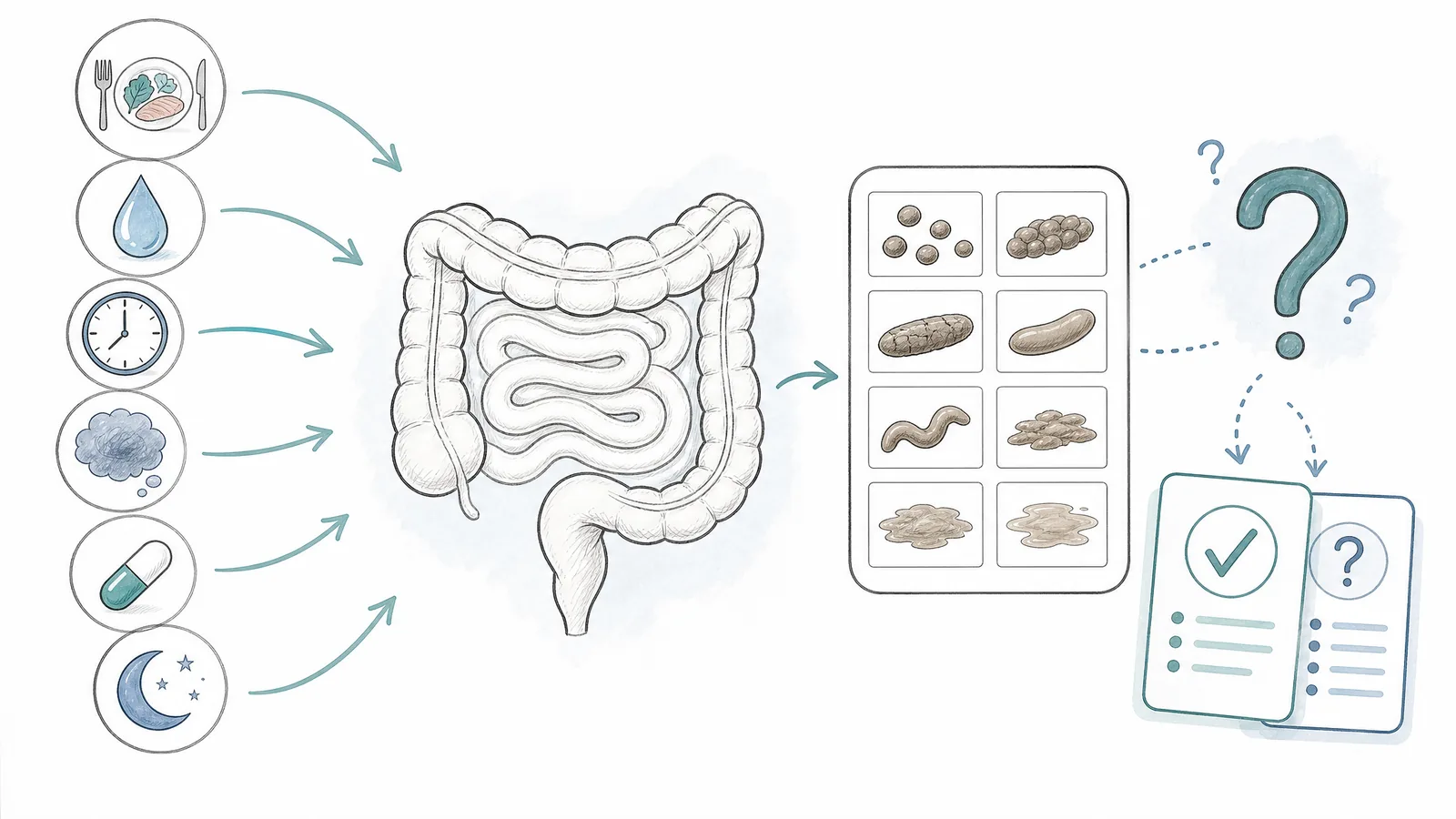
Short answer: Bowel movements with disrupted gut flora can be loose, hard, urgent, irregular, gassy, or changeable, but stool changes do not prove dysbiosis on their own. The same patterns can come from diet, infection, IBS, medicines, inflammation, bile acid problems, celiac disease, or other conditions.
What Is Bowel Movement Like With Disrupted Gut Flora?
A disrupted gut flora, often called dysbiosis, can be associated with bowel changes. Some people report diarrhea, constipation, alternating stool form, bloating, urgency, mucus, excess gas, or a sense that bowel habits are less predictable. Those symptoms are real. The unsafe leap is treating them as proof that the microbiome is the root cause.
InnerBuddies has an article describing disrupted flora and bowel movement changes while promoting microbiome testing. This response answers the same question with tighter clinical boundaries. Stool form can reflect microbial metabolism, transit time, water handling, bile acids, inflammation, diet, and gut-brain signaling. Because many causes overlap, symptoms should guide a careful evaluation rather than a single explanation.
Evidence summary
- Dysbiosis means an altered microbial community associated with function or disease, not a symptom-based diagnosis.
- Stool consistency is linked with transit time and microbiota composition, but the relationship is not specific enough for self-diagnosis.
- IBS, constipation, diarrhea, infection, inflammation, medicines, diet, and stress can produce overlapping bowel patterns.
- Microbiome tests can generate hypotheses, but they do not replace standard evaluation of persistent bowel changes.
- Blood, weight loss, fever, anemia, severe pain, dehydration, and nighttime symptoms are red flags for medical care.
Can Disrupted Gut Flora Change Stool Consistency?
Yes, it can be associated with changes in stool consistency. Gut microbes ferment fibers, produce short-chain fatty acids, interact with bile acids, and influence the intestinal environment. These processes can affect water movement, transit, gas production, and sensitivity. Studies also show links between stool consistency and microbiota richness or composition.
The word associated matters. A loose stool does not tell you which microbes changed. Constipation does not prove low diversity. Floating, foul-smelling, pale, greasy, bloody, or black stool can point to issues beyond ordinary microbiome variation and may need medical evaluation. The stool is a clue, not a microbiome report.
What Types of Bowel Movement Changes Are Commonly Reported?
People often describe several patterns. Loose or watery stools may appear with infection, food intolerance, bile acid diarrhea, IBS, inflammatory disease, medications, stress, or recent antibiotic exposure. Hard stools and infrequent bowel movements may reflect low fiber intake, dehydration, slow transit, pelvic floor problems, medicines, endocrine conditions, or functional constipation. Alternating diarrhea and constipation can occur in IBS and other conditions.
Gas and bloating may rise when fermentation patterns change, but they are also common after sudden fiber increases, poorly absorbed carbohydrates, constipation, swallowing air, or gut hypersensitivity. Mucus can occur in IBS, but persistent mucus with blood, fever, weight loss, or pain needs assessment. None of these patterns is specific enough to diagnose disrupted gut flora from symptoms alone.
Does Stool Smell Prove Dysbiosis?
No. Stool odor can change with diet, sulfur-containing foods, supplements, bleeding, infection, malabsorption, antibiotics, and transit time. Microbial metabolism contributes to odor, but smell is too nonspecific to diagnose dysbiosis. A strong smell may be unpleasant, but it is not a validated microbiome test.
Greasy, floating, pale, or very foul stools deserve more caution if they persist, especially with weight loss or nutrient deficiency. Those features may raise questions about fat malabsorption, pancreatic function, bile flow, celiac disease, infection, or other medical causes. A consumer microbiome test is not the best tool to rule those in or out.
Can a Microbiome Test Identify the Cause of Bowel Changes?
A microbiome test can describe organisms or genes in a stool sample. It may show patterns that are interesting or worth discussing. It cannot, by itself, prove that the microbiome caused a symptom. It also cannot reliably separate IBS, inflammatory bowel disease, infection, bile acid diarrhea, medication effects, celiac disease, colorectal cancer, or endocrine disease when those are clinically possible.
This is where marketing often overreaches. A test may detect lower abundance of certain taxa or differences from a reference population. That does not automatically identify the cause of your bowel habit. Clinical interpretation needs timing, diet, medications, travel, antibiotic exposure, alarm symptoms, physical findings, and targeted tests.
What Does the Science Actually Show?
The science supports a real relationship between the microbiome and bowel function. Dysbiosis is described in inflammatory and functional gut disorders. Stool consistency has been linked to microbiota composition and microbial growth patterns. Short-chain fatty acids and bile acid metabolism can influence motility and water handling. IBS research increasingly studies microbial and metabolic subgroups.
But the science also shows complexity. Different studies use different sampling methods, populations, sequencing platforms, and definitions. A pattern seen in a group does not always predict an individual. A stool profile can help research progress, but it should not be sold as a stand-alone explanation for every bowel change.
What Marketing Gets Wrong About Disrupted Flora
Marketing often turns a nonspecific symptom into a single story: your gut flora is disrupted, so test it, then restore it. That story is attractive because it is simple. It is also incomplete. Bowel habits are shaped by motility, nerves, immune activity, diet, hydration, medications, hormones, infections, inflammation, and anatomy.
Another overclaim is that early detection of dysbiosis prevents wider health problems. Preventive care is valuable, but broad claims about immunity, fatigue, skin, mood, and autoimmunity need condition-specific evidence. A stool test should not make a reader feel that every symptom has been explained by an imbalance.
What Should You Track Before Testing?
Before buying any test, track the basics for one to two weeks if symptoms are mild and there are no red flags. Note stool form, frequency, urgency, pain, blood, nighttime symptoms, meals, alcohol, caffeine, fiber changes, stress, sleep, menstrual timing, travel, infections, and medications. This information is often more clinically useful than a single microbiome score.
The Bristol Stool Form Scale can help describe stool form in plain language, from hard separate lumps to watery stool. It does not diagnose the cause, but it improves communication with a clinician. If a test is later considered, this context makes interpretation safer.
When Should You See a Clinician?
Seek medical care for blood in stool, black stool, unexplained weight loss, fever, anemia, persistent vomiting, dehydration, severe pain, progressive symptoms, nighttime diarrhea, greasy pale stools, new bowel changes after midlife, or a family history of colorectal cancer, inflammatory bowel disease, or celiac disease. Also seek care after travel, after antibiotics, with immune suppression, during pregnancy, or when symptoms interfere with daily life.
Persistent diarrhea, constipation, or alternating bowel habits deserve evaluation when they last, worsen, or do not fit a clear short-term trigger. The right workup may include history, examination, medication review, blood tests, stool pathogen testing, fecal calprotectin, celiac testing, thyroid testing, colonoscopy, imaging, or referral. The choice depends on the pattern and risk factors.
Bottom Line
Disrupted gut flora can be associated with bowel movement changes, but bowel movement changes do not prove disrupted flora. The safest answer is to treat stool patterns as clues. They can justify better diet tracking, medical review when persistent, and cautious discussion of microbiome testing, but not self-diagnosis.
If symptoms are mild and temporary, basic supportive steps such as hydration, regular meals, tolerated fiber, movement, and avoiding obvious triggers may help. If symptoms are persistent, severe, new, or paired with red flags, the priority is clinical evaluation. Microbiome curiosity should not delay diagnosis.
The Simple Version
Your stool can change when your gut ecosystem changes, but it can also change for many other reasons. Loose stool, constipation, gas, urgency, or alternating patterns are like warning lights on a dashboard. They tell you something may be happening. They do not tell you the exact cause.
A microbiome test may show interesting information about bacteria in a stool sample. It should not be treated as a magic answer. If symptoms are mild and short-lived, tracking food, stress, medicines, and stool form may be enough at first. If there is blood, weight loss, fever, severe pain, dehydration, nighttime symptoms, or long-lasting change, see a clinician.
Evidence notes
- Mechanisms of inflammation-driven bacterial dysbiosis in the gut. Mucosal Immunology. 10.1038/mi.2016.75
- Stool consistency is strongly associated with gut microbiota richness and composition, enterotypes and bacterial growth rates. Gut. 10.1136/gutjnl-2015-309618
- Understanding the physiology of human defaecation and disorders of continence and evacuation. Nature Reviews Gastroenterology & Hepatology. 10.1038/s41575-021-00487-5
- Microbiota and short chain fatty acid relationships underlie clinical heterogeneity and identify key microbial targets in irritable bowel syndrome. Scientific Reports. 10.1038/s41598-025-19363-2
- Temporal nutrition analysis associates dietary regularity and quality with gut microbiome diversity: insights from the Food & You digital cohort. Nature Communications. 10.1038/s41467-025-63799-z
- Potential role of fecal microbiota from patients with slow transit constipation in the regulation of gastrointestinal motility. Scientific Reports. 10.1038/s41598-017-00612-y
- Defecation frequency and timing, and stool form in the general population: a prospective study. Gut. 10.1136/gut.33.6.818
This article is educational and does not diagnose, treat, or replace care from a qualified clinician.