Evidence-based response
What Heals the Gut Best? 7 Science-Backed Remedies to Restore Your Digestive Health in 2026, Evidence-Based Answer Without the Hype
Gut healing is best approached through diagnosis-aware basics, not test-driven supplement stacks. Here is what the evidence supports and where marketing overreaches.
By Sandra McKenzy, Pharmacist · 2026-07-21
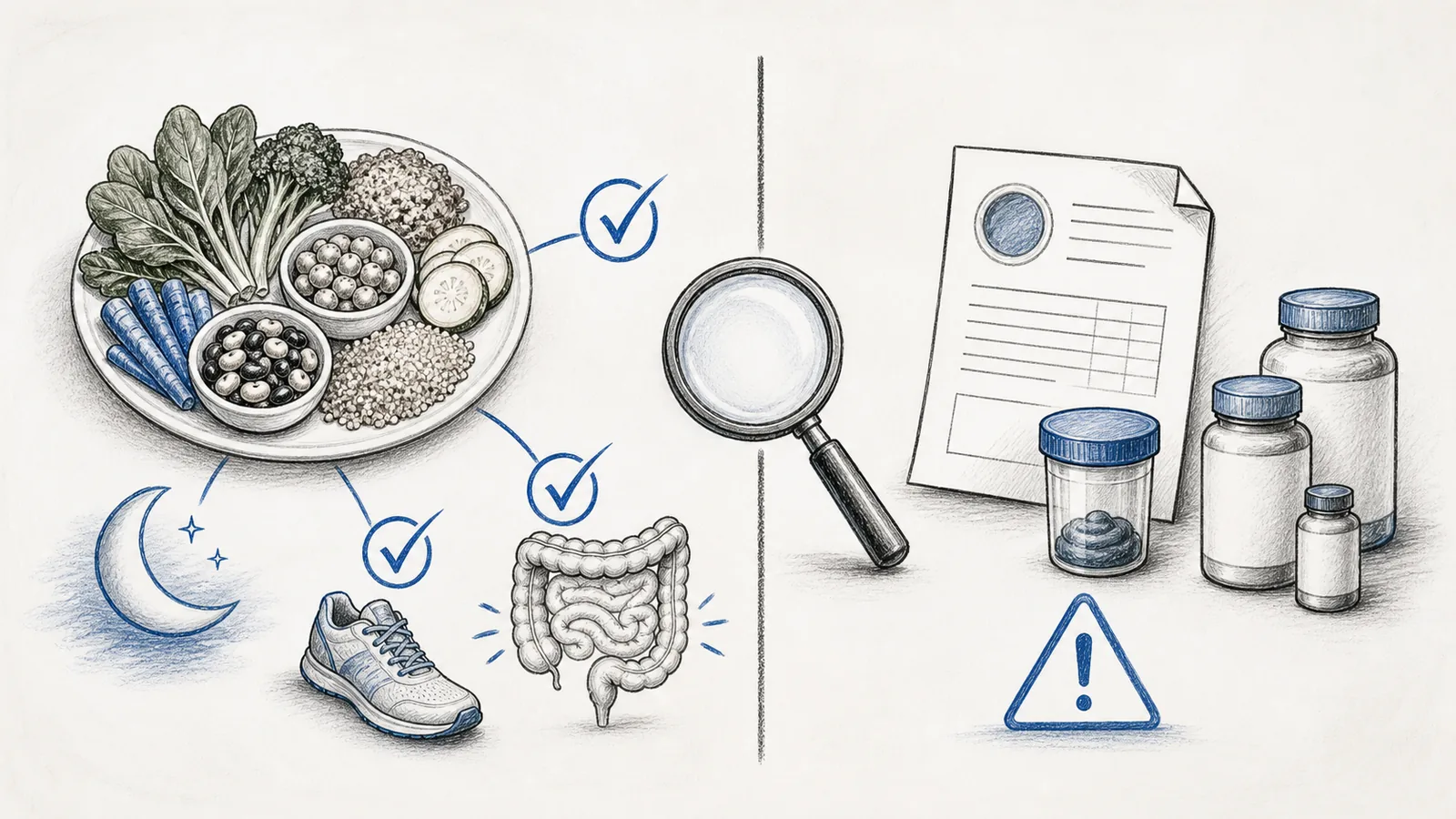
Short answer: The gut usually heals best through boring, measurable basics: enough fermentable fiber if tolerated, a diverse mostly minimally processed diet, sleep, movement, stress reduction, and diagnosis-directed care when symptoms persist. Stool microbiome testing can be useful for research and sometimes for broad pattern recognition, but it cannot yet tell most people a precise personalized gut repair protocol.
A recent InnerBuddies article frames gut healing as a personalized project guided by microbiome testing, supplements, antimicrobials, and lifestyle changes. Some of that is plausible. The risk is that plausible biology can sound more clinically settled than it is. A stool sequencing report may describe bacteria in a sample, but symptoms such as bloating, fatigue, constipation, diarrhea, skin flares, or anxiety still need clinical context. The safer question is not which product heals the gut best. It is which intervention has human evidence for the problem in front of you.
- Diet quality, dietary fiber, fermented foods, sleep, movement, and symptom-specific medical care have stronger practical support than broad gut repair protocols.
- Consumer stool microbiome tests do not diagnose leaky gut, IBS, SIBO, autoimmune disease, or the best supplement for an individual patient.
- Low FODMAP diets can reduce IBS symptoms for some people, but they are not a universal long-term gut healing diet and should be personalized.
- Probiotics can help selected conditions, yet effects are strain-specific and host-specific. More probiotics is not automatically better.
- Persistent bleeding, weight loss, fever, anemia, nocturnal diarrhea, severe pain, or new bowel changes after age 50 need medical evaluation.
What Does It Mean to Heal the Gut?
Gut healing is not a single medical endpoint. In everyday health marketing it can mean less bloating, better stool consistency, fewer IBS flares, recovery after antibiotics, improved tolerance of foods, stronger mucosal barrier function, or simply feeling less worried about digestion. In medicine, those are different problems. Irritable bowel syndrome, inflammatory bowel disease, celiac disease, infection, bile acid diarrhea, medication side effects, constipation disorders, and food intolerance can all feel like a gut that needs repair, but they are not managed the same way.
The microbiome is relevant because gut microbes help metabolize fiber, produce short-chain fatty acids, interact with immune pathways, and influence the mucus and epithelial barrier. That does not mean a stool profile can translate every symptom into a treatment. MedicalBrain retrieval for this article highlighted the same boundary: microbiome patterns are promising for individualized care, but regional variation, host context, diet, medications, and disease state limit simple reference ranges and disease models. The best current approach is evidence plus context, not sequencing alone.
Does Microbiome Testing Tell You What Heals Your Gut Best?
Not reliably for most consumer decisions. A stool test can report organisms or functions detected in one sample. It may show low diversity, relative abundance of specific taxa, or signals linked to fiber fermentation. But it generally cannot prove that a symptom is caused by a named bacterial imbalance. It also cannot diagnose intestinal permeability, prescribe oregano oil, identify the one probiotic you need, or replace stool pathogen testing, colonoscopy, celiac testing, breath testing, or clinician assessment when those are indicated.
This matters because personalization language can make weak evidence feel precise. Large studies show that microbiome signatures vary substantially by geography and population, which limits universal healthy reference ranges. Reviews on microbiome-based individualized treatment describe real promise, especially in drug response, nutrition, infection risk, and inflammatory disease, but they also emphasize that routine clinical translation is still limited. That is why a test result should be treated as one data point, not a command center.
What Heals the Gut Best in Real Life?
Food pattern first, not a random supplement stack
For many people, the highest-yield starting point is a diet pattern that supports regular bowel function and microbial fermentation without worsening symptoms. That usually means a range of plant foods, enough protein, unsaturated fats, hydration, and gradual fiber changes. In a controlled human diet study, high-fiber and fermented-food diets produced different immune and microbiome effects, with fermented foods increasing diversity and lowering several inflammatory markers in the study population. That does not make sauerkraut a cure, but it supports the idea that daily food pattern matters more than most expensive add-ons.
Fiber is also not one thing. Some people with IBS tolerate oats, psyllium, kiwi, chia, or partially hydrolyzed guar gum better than inulin, onion, garlic, or wheat fructans. A low FODMAP diet can reduce IBS symptoms in some patients, but it is meant as a structured elimination and reintroduction process, not a permanent low-diversity diet. If someone feels worse with fiber, the answer is not to force more. It is to adjust type, dose, timing, and diagnosis.
Probiotics can help, but strain and condition matter
Probiotics are not generic gut healers. Trials suggest benefit in some settings, such as selected IBS symptoms, antibiotic-associated diarrhea, and certain diarrhea syndromes, but results differ by strain, dose, outcome, and host. A Cell study also showed that empiric probiotics do not colonize everyone the same way; host and microbiome features influence response. That is a useful warning against the idea that more strains or higher colony counts automatically repair the gut.
If a probiotic is tried, it should have a reason: symptom target, evidence for that strain or blend, a defined trial period, and a stop rule if it worsens bloating, pain, constipation, or diarrhea. People who are immunocompromised, critically ill, have central venous catheters, or have severe pancreatitis need medical advice before using live microbes.
Sleep, movement, stress, and medications are not side issues
Gut symptoms often worsen when sleep is poor, stress is high, eating is rushed, or medications disturb motility and microbial ecology. Antibiotics, proton pump inhibitors, NSAIDs, opioids, metformin, iron, magnesium, and many supplements can change bowel habits. Treating the gut best may therefore mean reviewing medicines, alcohol, meal timing, constipation routines, or pelvic floor dysfunction rather than adding another capsule.
What About Leaky Gut, Glutamine, Butyrate, and Zinc Carnosine?
Intestinal barrier dysfunction is real in several diseases, especially inflammatory bowel disease, infection, critical illness, and some metabolic or immune contexts. The marketing phrase leaky gut often stretches that science too far. It can imply that vague symptoms prove a damaged barrier and that a supplement protocol can seal it. Current evidence does not support that shortcut.
Butyrate is biologically important because colon bacteria produce it from fiber and because colon cells use it as a fuel and signaling molecule. L-glutamine and zinc carnosine have mechanistic and condition-specific research, but they are not universal repair tools for everyone with bloating or fatigue. The practical first step is to identify the clinical pattern: IBS, constipation, diarrhea, reflux, inflammatory signs, celiac risk, infection risk, medication effect, or diet trigger. Then the intervention can match the problem.
What Marketing Gets Wrong About Gut Repair
- It turns associations into causes. Dysbiosis can be associated with disease, but a stool pattern does not automatically explain one person’s symptoms.
- It treats test data as treatment data. Sequencing can identify microbes, but clinical validation is needed before it can prescribe food, herbs, enzymes, or probiotics.
- It bundles too many interventions. If diet, probiotics, enzymes, antimicrobials, fasting, and supplements start together, no one knows what helped or harmed.
- It ignores red flags. Gut repair language should never delay evaluation for bleeding, anemia, fever, weight loss, persistent vomiting, or severe pain.
When Should You See a Clinician?
Get medical advice promptly for blood in stool, black stool, unexplained weight loss, persistent fever, anemia, waking at night with diarrhea, new severe pain, repeated vomiting, difficulty swallowing, a family history of colon cancer or inflammatory bowel disease, or a major change in bowel habits after age 50. Also seek care if symptoms follow travel, antibiotics, immune suppression, pregnancy, or known inflammatory bowel disease.
Even without red flags, recurring digestive symptoms deserve structured assessment if they last more than a few weeks, limit food intake, cause weight change, or create fear around eating. The answer may still involve diet and microbiome-aware care, but it should not skip basic diagnosis.
Bottom Line
The gut is most likely to improve when the plan is specific, modest, and testable: identify the symptom pattern, rule out red flags, adjust diet in a way the person can tolerate, use targeted therapies only when evidence fits, and track response. Microbiome testing may become more clinically useful as validation improves. Today, it is not the best stand-alone answer to what heals the gut. The best answer is boring but safer: good clinical reasoning, consistent food and lifestyle basics, and careful use of targeted tools when the evidence matches the problem.
Evidence Notes and Sources
- Zeevi et al. and related reviews show why microbiome personalization is promising but not yet a simple consumer prescription model. See Nature Reviews Gastroenterology & Hepatology, 10.1038/s41575-021-00499-1.
- He et al. showed that microbiome reference ranges and disease models vary by region, limiting universal healthy ranges. See Nature Medicine, 10.1038/s41591-018-0164-x.
- Zmora et al. found that empiric probiotic colonization resistance is individualized, cautioning against one-size-fits-all probiotic claims. See Cell, 10.1016/j.cell.2018.08.041.
- Wastyk et al. reported diet-driven microbiome and immune changes from high-fiber and fermented-food interventions in humans. See Cell, 10.1016/j.cell.2021.06.019.
- Halmos et al. reported symptom improvement from a low FODMAP diet in IBS, supporting symptom-specific diet therapy rather than universal gut repair diets. See Gastroenterology, 10.1053/j.gastro.2013.09.046.
- Ford et al. summarize IBS as a disorder of gut-brain interaction with multiple mechanisms, not a single dysbiosis diagnosis. See Nature Reviews Disease Primers, 10.1038/nrdp.2016.14.
- Sun et al. studied Clostridium butyricum in diarrhea-predominant IBS, illustrating condition-specific probiotic evidence. See Scientific Reports, 10.1038/s41598-018-21241-z.
Educational Disclaimer
This article is for education only and does not diagnose, treat, or replace care from a qualified clinician. If you have persistent, severe, or unexplained symptoms, use microbiome information as context, not as a substitute for medical evaluation.