Evidence-based response
What Does the Gut Like? Evidence-Based Answer Without the Hype
The gut usually likes steady basics: tolerated fiber, varied plant foods, sleep, movement, hydration, and fewer unnecessary disruptions.
By Sandra McKenzy, Pharmacist · 2026-08-28
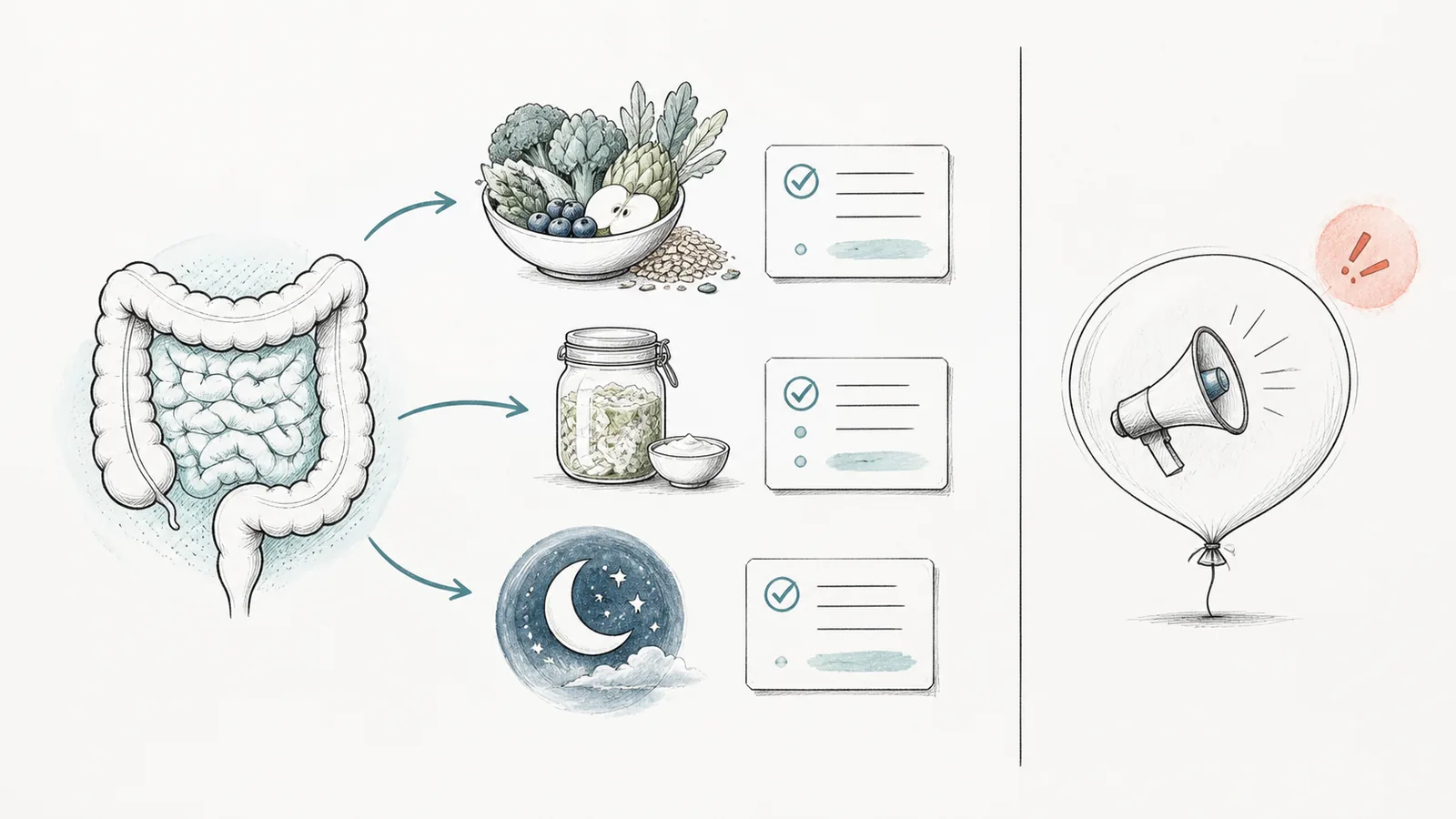
Short answer: The gut usually likes steady, repeatable basics: enough tolerated fiber, varied plant foods, fermented foods when they agree with you, regular meals, sleep, movement, hydration, and fewer unnecessary disruptions such as repeated antibiotics or a heavily ultra-processed diet. A stool microbiome test may add context, but it cannot tell every person exactly what their gut likes or replace clinical assessment when symptoms are persistent, severe, or new.
What does the gut like?
The safest answer is less glamorous than most wellness marketing. The gut likes conditions that support digestion, barrier function, immune tolerance, and a resilient microbial ecosystem. For many people, that means a diet with gradually increased dietary fiber, diverse plant foods, enough protein and micronutrients, and foods they can actually tolerate. It also means sleep, regular movement, lower avoidable stress, and medication decisions made with a clinician rather than a social media protocol.
An InnerBuddies article on this search intent correctly points toward fiber, fermented foods, sleep, stress reduction, and less processed food. The evidence problem is the extra leap from general gut-supportive habits to highly personalized test-driven certainty. Current microbiome science supports broad principles. It does not support the idea that a consumer stool report can reliably prescribe a unique diet, diagnose the reason for symptoms, or prove what your gut personally likes in a treatment-grade way.
If you already have a related condition such as IBS, inflammatory bowel disease, celiac disease, food allergy, diabetes, pregnancy-related symptoms, recent antibiotic exposure, or unexplained weight loss, the answer becomes more individual. What your gut likes should then be interpreted through symptoms, diagnosis, medication history, nutrition status, and safety, not through microbiome composition alone.
Does the gut like fiber?
In general, yes, but the dose and type matter. Dietary fiber is not one thing. Soluble fibers, resistant starches, cereal fibers, pectins, beta-glucans, inulin-type fibers, and whole-food plant structures can behave differently in the gut. Many fibers are fermented by gut microbes into short-chain fatty acids such as acetate, propionate, and butyrate, which are involved in colonocyte energy metabolism, immune signaling, mucus biology, and gut barrier function.
The practical point is gradualism. A gut that has been eating very little fiber may not enjoy a sudden jump to large amounts of beans, bran, inulin powder, or raw vegetables. Gas, bloating, and cramping can happen when fermentation capacity and motility are not ready for the change. That does not make fiber bad. It means the gut may prefer a slower increase, more fluid, smaller portions, and a focus on tolerated foods first.
For constipation, certain soluble fibers can help some people. For IBS, fiber choice is especially important because some rapidly fermented carbohydrates can worsen symptoms in sensitive patients. This is why evidence-based diet advice usually asks about the person, the symptom pattern, and the condition before declaring one universal gut-friendly food.
Does the gut like fermented foods and probiotics?
Fermented foods can be useful for some people because they bring microbial products, acids, and changed food structures into the diet. A human diet intervention study found that a fermented-food-rich diet increased microbiome diversity and reduced several inflammatory markers, while a high-fiber diet affected microbiome function differently depending on baseline microbial capacity. That is useful evidence, but it is not a license to treat fermented foods as medicine for every gut symptom.
Probiotics are also more specific than the word suggests. A probiotic is a live microorganism that confers a health benefit when administered in adequate amounts. That benefit is strain-specific, dose-specific, and outcome-specific. A probiotic studied for antibiotic-associated diarrhea is not automatically proven for bloating, mood, immune health, skin symptoms, or microbiome “balance.”
The gut may like fermented foods if they are tolerated. It may not like them during histamine sensitivity, active reflux, severe bloating, small intestinal bacterial overgrowth patterns, immunocompromise, or when a person adds too much too quickly. Yogurt, kefir, sauerkraut, kimchi, miso, tempeh, and fermented vegetables are foods, not universal prescriptions.
What does the gut not like?
The strongest answer is not that one food ruins the gut. The gut usually dislikes repeated disruption without recovery. Unnecessary antibiotics can disturb microbial communities, even though antibiotics can be essential and lifesaving when clinically indicated. A diet dominated by ultra-processed foods may be associated with worse gut-health outcomes, and some food additives have experimental or observational links to gut barrier, mucus, immune, and microbial changes. Alcohol excess, very low fiber intake, poor sleep, inactivity, and chronic stress can also influence gut function.
That still does not justify fear-based lists. Food guilt is not evidence. A single processed meal does not destroy the microbiome. A medically necessary antibiotic course should not be avoided because of microbiome anxiety. The more useful frame is pattern and context: repeated low-fiber intake, poor diet quality, sleep disruption, heavy alcohol use, unnecessary medication exposure, and unmanaged disease are more relevant than one isolated food.
Can a microbiome test tell you what your gut likes?
A stool microbiome test can describe some organisms or genes found in a sample, depending on the method. Shotgun metagenomics can provide more detail than simple culture or narrow marker-based methods. These technologies are valuable in research and can sometimes generate hypotheses for discussion.
The problem is clinical interpretation. A stool sample is not the whole gut. It is influenced by recent diet, stool consistency, transit time, sampling, storage, sequencing method, reference database, and analysis pipeline. Two reports can describe the same sample differently. More importantly, most consumer tests are not validated to diagnose why a person is bloated, tired, anxious, constipated, inflamed, or intolerant to certain foods.
That means a test may be educational, but it should not overrule lived symptoms, known diagnoses, or clinician-guided evaluation. If a test says a food should be helpful but it reliably worsens symptoms, the report is not smarter than your body. If a test suggests “dysbiosis” but you have blood in stool, fever, weight loss, anemia, or severe pain, the next step is medical care, not a personalized grocery list.
Evidence summary
- The gut generally responds well to steady patterns: tolerated fiber, diverse plant foods, sleep, movement, hydration, and fewer unnecessary disruptions.
- Fiber supports microbial fermentation and short-chain fatty acid production, but sudden high doses can worsen gas or bloating in sensitive people.
- Fermented foods and probiotics can help specific outcomes, but they are not universal gut cures and should be matched to tolerance and evidence.
- Ultra-processed dietary patterns and some additives are linked to gut-health concerns, but single foods rarely “destroy” the microbiome.
- Consumer microbiome tests can provide context, but they cannot reliably prescribe what every individual gut likes or diagnose disease.
What should you do in practice?
Start with a simple baseline. Eat regular meals. Add fiber gradually through foods you tolerate: oats, beans, lentils, vegetables, fruit, nuts, seeds, potatoes, whole grains, or resistant starch sources. Rotate plant foods over time instead of chasing one miracle food. If fermented foods agree with you, use small portions consistently rather than large doses. If they make symptoms worse, stop and reassess.
Support the non-food basics. Sleep affects appetite, motility, immune signaling, and metabolic regulation. Movement can help constipation and overall metabolic health. Hydration matters, especially when increasing fiber. Stress management is not a moral instruction. It is relevant because gut motility, visceral sensitivity, and bowel habits are partly regulated through gut-brain pathways.
If symptoms persist, become severe, or keep returning despite reasonable changes, the gut may be asking for diagnosis rather than optimization. Medical evaluation can check for celiac disease, inflammatory bowel disease, infection, medication effects, anemia, thyroid disease, gallbladder disease, pelvic floor problems, or other causes. The goal is not to medicalize every stomach noise. The goal is to avoid missing the cases where “gut health” language is too vague.
What marketing gets wrong
Marketing often turns a broad truth into a precise promise. It is true that diet, sleep, stress, medications, and microbes interact. It is not proven that a consumer microbiome test can map your personal ecosystem so accurately that it knows which exact foods, supplements, or habits will fix your digestion, immunity, mood, metabolism, and energy.
The second mistake is treating diversity as a simple score. Higher diversity is often associated with resilience in adult cohorts, but it is not a standalone diagnosis or treatment target. A healthy infant microbiome can be less diverse than an adult microbiome. A person with symptoms can have a report that looks “normal.” A person with a diverse stool profile can still need medical care.
The third mistake is implying that the gut likes restriction. Unless there is a diagnosis, allergy, intolerance, or clear symptom trigger, broad elimination diets can reduce diet diversity and create anxiety. A gut-supportive diet is usually built by adding tolerated foods and improving patterns, not by making the food world smaller without a reason.
When should you see a clinician?
Seek medical care for blood in stool, black stool, fever, unexplained weight loss, persistent vomiting, dehydration, anemia, severe localized pain, symptoms waking you at night, new bowel changes after age 50, difficulty swallowing, pregnancy with significant symptoms, immunosuppression, or a family history of colorectal cancer, celiac disease, or inflammatory bowel disease. These are not questions for a wellness score.
Also ask for help if constipation, diarrhea, bloating, reflux, pain, or food restriction is affecting daily life. A careful clinician can combine symptoms, history, examination, targeted tests, and nutrition advice. That is still the safest way to decide what your gut needs.
Bottom line
The gut likes consistency more than drama. It usually benefits from tolerated fiber, plant diversity, enough sleep, movement, hydration, and avoiding avoidable disruption. It may also benefit from specific probiotics, fermented foods, or diet strategies in the right person and for the right outcome.
What the gut does not like is overconfidence. A microbiome report can be interesting, but it cannot replace symptoms, clinical context, or validated testing. If advice promises to know exactly what your gut likes from one stool sample, treat that as a hypothesis, not a diagnosis.
Educational note: This article is for general information and does not replace medical advice. If symptoms are severe, new, persistent, worsening, or accompanied by red flags, seek qualified medical care.
Evidence notes and sources
- Bischoff et al. The International Scientific Association for Probiotics and Prebiotics consensus statement on the definition and scope of gut health. Nature Reviews Gastroenterology and Hepatology. 10.1038/s41575-026-01176-x
- Gill et al. Dietary fibre in gastrointestinal health and disease. Nature Reviews Gastroenterology and Hepatology. 10.1038/s41575-020-00375-4
- David et al. Diet rapidly and reproducibly alters the human gut microbiome. Nature. 10.1038/nature12820
- Wastyk et al. Gut-microbiota-targeted diets modulate human immune status. Cell. 10.1016/j.cell.2021.06.019
- Carmody and Turnbaugh. You are what you eat. Nature Biotechnology. 10.1038/nbt.2845
- Whelan et al. Ultra-processed foods and food additives in gut health and disease. Nature Reviews Gastroenterology and Hepatology. 10.1038/s41575-024-00893-5
- Fan and Pedersen. The interplay between diet and the gut microbiome: implications for health and disease. Nature Reviews Microbiology. 10.1038/s41579-024-01068-4
- Hill et al. Expert consensus document: The International Scientific Association for Probiotics and Prebiotics consensus statement on the scope and appropriate use of the term probiotic. Nature Reviews Gastroenterology and Hepatology. 10.1038/nrgastro.2014.66