Evidence-based response
What Does Microbiome Mean? Evidence-Based Guide Without the Wellness Hype
The microbiome means the microbial community and its genes in a habitat. It matters, but meaning is not the same as diagnosis or personalized treatment.
By Sandra McKenzy, Pharmacist · 2026-06-08
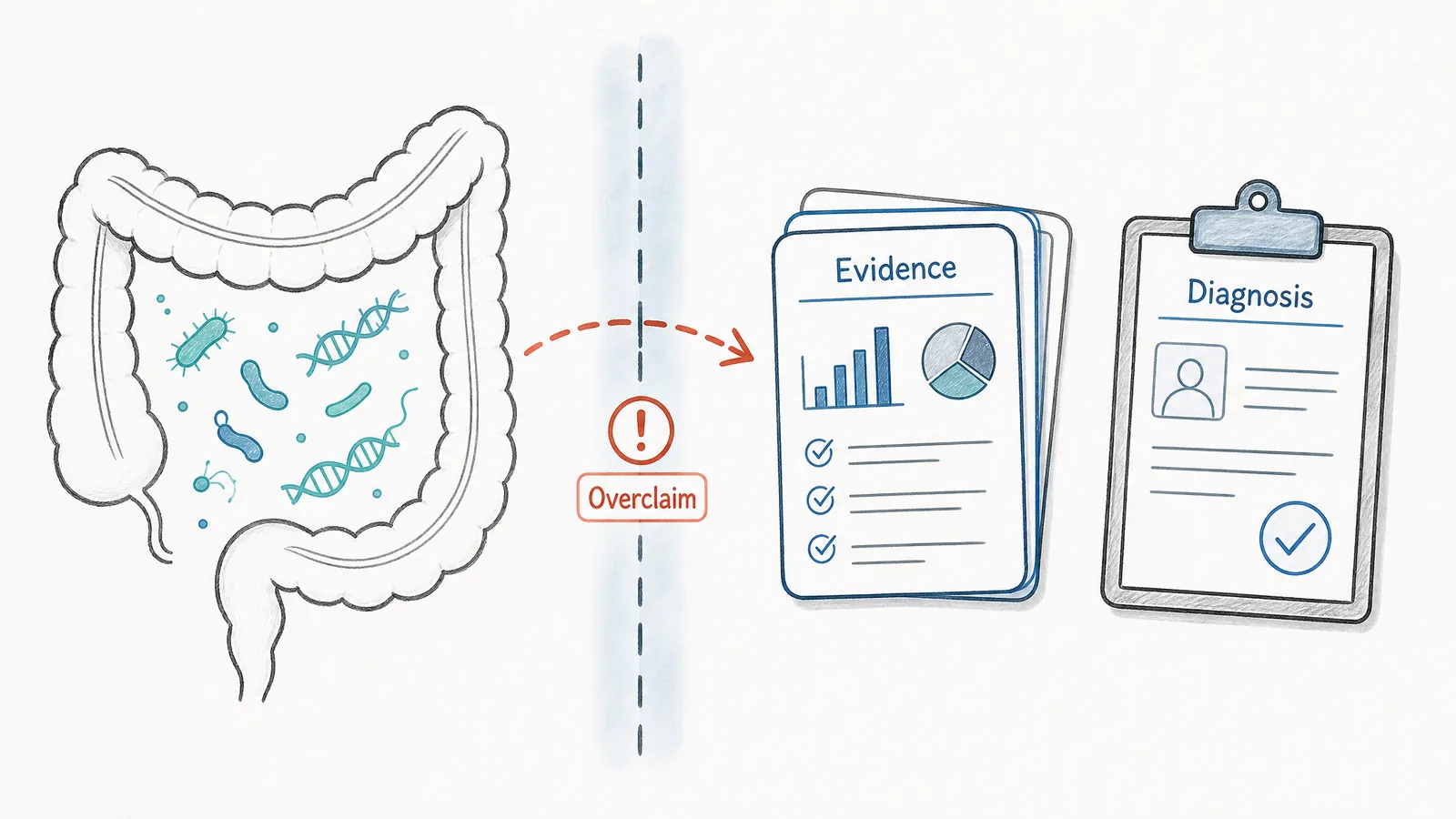
Short answer: The microbiome means the microbial community and its genes in a habitat. It matters, but meaning is not the same as diagnosis or personalized treatment. Treat broad wellness promises as hypotheses until tested in the specific clinical setting.
What Does Microbiome Mean?
A microbiome is the community of microorganisms, and often their genes and functions, living in a specific habitat. In the gut, that includes bacteria, archaea, viruses, fungi, metabolites, and interactions with diet and host immunity.
InnerBuddies has an article targeting this question, Why Microbiome Meaning Matters in 2026: A Science-Based Guide to Your Gut Health. This response uses that search intent as a starting point and applies a stricter clinical standard. The useful question is not whether the microbiome matters. It does. The safer question is what a reader can reasonably conclude from symptoms, stool tests, diet advice, or research headlines without turning early science into personal medical certainty.
Evidence summary
- Microbiome refers to a microbial ecosystem and its genetic potential, not a single score.
- The gut microbiome affects digestion, immune education, metabolism, and barrier biology.
- Many disease links are associative and do not prove personal causation.
- Consumer microbiome tests can be educational but are not routine diagnostic tools for most conditions.
- Diet, medicines, age, geography, and sampling methods influence results.
What does this topic actually mean clinically?
Clinically, the word microbiome helps explain why microbes are not just contaminants. They are part of digestion, immune education, metabolic signaling, and mucosal ecology.
The important boundary is actionability. Research can describe patterns, but clinical care asks whether a test or intervention improves a meaningful outcome for the person in front of us.
What is well supported?
Supported evidence shows that gut microbes help ferment fiber, produce metabolites, interact with bile acids, influence immune signaling, and vary with diet, medicines, age, and geography.
The strongest statements are narrow. They name the population, test, exposure, endpoint, and limitation. Broad statements about “optimizing gut health” are weaker because they skip those details.
Which claims go beyond the evidence?
The overclaim is that understanding the microbiome or buying a microbiome test gives a clear personalized roadmap for energy, immunity, digestion, or chronic disease prevention.
A second overclaim is implying that more data automatically means better health advice. Sequencing can generate impressive reports, but advice needs validation, not just attractive charts.
What does MedicalBrain validation show?
MedicalBrain validation for this queue item found sources that support the biological importance of the topic but also repeatedly show limits in individual interpretation. The strongest papers are useful because they separate measurement, association, mechanism, and clinical action. That separation is the difference between evidence-based gut health communication and wellness marketing.
MedicalBrain found reviews on clinical translation, personalization, community ecology, childhood microbiota development, and hype versus hope. The evidence supports microbiome importance but warns against treating early science as routine personal medicine.
What does marketing often get wrong?
Marketing often turns microbiome meaning into microbiome destiny. A report may make complex ecology look like a simple dashboard of good and bad bacteria.
Reader-protective communication should slow that jump down. It should explain what is measured, what is inferred, what is unproven, and what should be handled by a clinician.
How should a reader use this information?
Use the word microbiome as a map, not a verdict. It tells you that microbes matter, but it does not tell you from one stool sample what disease you have or exactly what supplement you need.
If the proposed next step is low risk and broadly healthy, such as eating more tolerated fiber-rich foods, it may be reasonable. If the next step is treatment, restriction, supplement stacks, or delaying care, ask for stronger evidence.
What should you not conclude from this?
Do not conclude that every microbiome association is false. The field is important and moving quickly. The safer conclusion is narrower: personal medical advice requires the right evidence for the right person, not a broad citation attached to a wellness claim.
Do not conclude that consumer information is useless either. It can help people ask better questions, notice symptom patterns, and understand why diet, medicines, infection, and inflammation matter. The line is crossed when education becomes diagnosis or treatment without validation.
Practical evidence checklist
Before acting on any microbiome claim, ask five practical questions. What exactly was measured? Was the result validated in people like you? Did the study test symptoms, disease outcomes, or only microbial composition? Would the proposed action be safe if the report were wrong? Is there a clinician-guided alternative that answers the question more directly?
This checklist is intentionally conservative. It protects readers from two common errors: rejecting useful science because marketing sounds exaggerated, and accepting weak advice because it borrows the language of sequencing, biomarkers, diversity, or personalization.
When should you see a clinician?
Seek medical care for persistent bowel changes, blood in stool, unexplained weight loss, fever, anemia, severe pain, dehydration, malnutrition, or symptoms that interfere with daily life.
Also seek care when symptoms are new, persistent, worsening, unexplained, or accompanied by weight loss, fever, dehydration, blood, nighttime symptoms, severe pain, immune suppression, pregnancy, older age, recent travel, or recent antibiotic exposure. A consumer article or stool profile should never delay urgent assessment.
Bottom line
Microbiome means a living microbial ecosystem and its genes. It is central to biology, but it is not a shortcut to diagnosis. The safest interpretation is curiosity plus caution.
The simple version
The microbiome is the tiny ecosystem of microbes and genes that lives with you, especially in the gut. It helps with digestion and immune signaling. But a microbiome score is not a diagnosis or a guaranteed plan.
Evidence notes
- Translating the gut microbiome: ready for the clinic?. Nature Reviews Gastroenterology & Hepatology. 10.1038/s41575-019-0204-0
- The human gut microbiota: a dynamic interplay with the host from birth to senescence settled during childhood. Pediatric Research. 10.1038/pr.2014.49
- Community ecology as a framework for human microbiome research. Nature Medicine. 10.1038/s41591-019-0464-9
- Utilization of the microbiome in personalized medicine. Nature Reviews Microbiology. 10.1038/s41579-023-00998-9
- Clinical translation of microbiome research. Nature Medicine. 10.1038/s41591-025-03615-9
- Hype or hope?. Nature Reviews Microbiology. 10.1038/s41579-019-0283-5
This article is educational and does not diagnose, treat, or replace care from a qualified clinician.