Evidence-based response
What Really Affects Gut Microbiome? Evidence-Based Answer Without the Hype
Antibiotics, diet, infections, medications, sleep, stress, alcohol, and smoking can shift the gut microbiome, but stool tests cannot diagnose microbiota destruction by themselves.
By Sandra McKenzy, Pharmacist · 2026-06-06
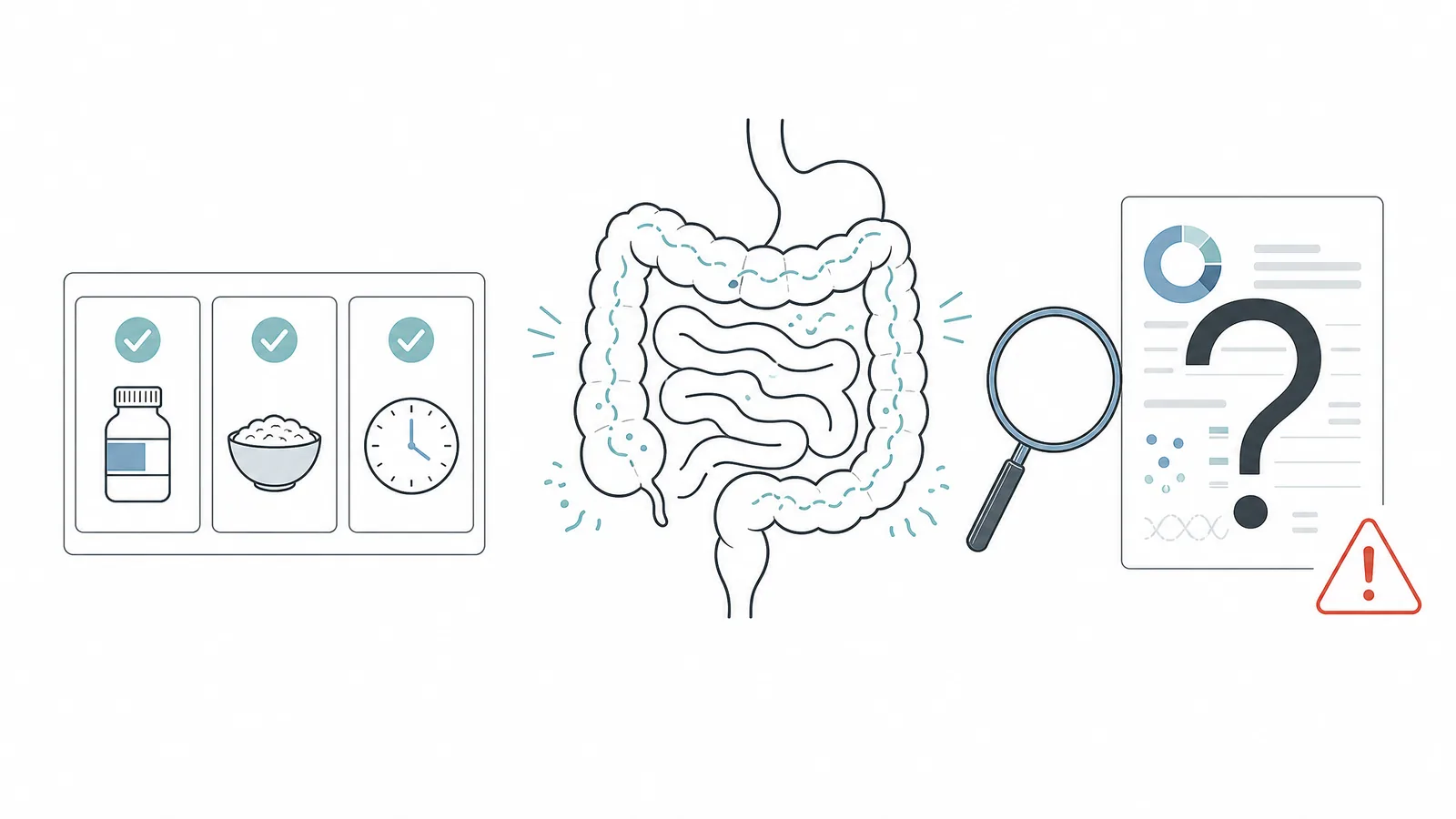
Short answer: Antibiotics, severe infections, low-fiber diets, major dietary extremes, some medications, sleep disruption, smoking, alcohol excess, and chronic stress can all shift the gut microbiome. The cautious correction is that a stool microbiome test may describe patterns, but it cannot prove “microbiota destruction,” predict hidden disease, or guarantee a personalized repair plan by itself.
What really affects the gut microbiome?
The gut microbiome is not fragile glass, but it is not immune to disruption either. It is a living ecosystem shaped by diet, medicines, infections, immune activity, age, geography, sleep, stress physiology, and the microbes we repeatedly encounter. Some changes are short lived. Others can last weeks or months, especially after broad antibiotic exposure, gastrointestinal infection, hospitalization, or a major shift in diet.
A recent InnerBuddies article frames this topic around microbiota destruction and consumer testing. That search intent is reasonable because people want to know what harms their gut bacteria. The evidence-based answer is narrower: many exposures can perturb the microbiome, but “destroyed microbiota” is not a standard diagnosis that a consumer report can precisely confirm or reverse.
Evidence summary
- Antibiotics are among the clearest disruptors of gut microbiome composition, diversity, and resistance-gene ecology.
- Dietary pattern matters, especially fiber intake, plant diversity, severe restriction, and ultra-processed diet exposure.
- Common non-antibiotic drugs, including proton pump inhibitors and metformin, can be associated with measurable microbiome differences.
- Stress, poor sleep, alcohol, smoking, infection, and inflammatory disease may influence the microbiome, but effects vary by person.
- Consumer stool tests can generate hypotheses. They cannot diagnose “microbiota destruction” or promise a validated restoration protocol.
Can antibiotics destroy the microbiota?
Antibiotics are the most concrete example because they directly target bacteria. In healthy adults exposed to a short course of broad antibiotics, shotgun metagenomics has shown a sharp initial disturbance with blooms of opportunistic organisms and then partial recovery over months. Recovery is not identical in every person, and antibiotic resistance genes can affect the process. That does not mean every antibiotic course causes permanent damage. It does mean antibiotics should be used when clinically justified, not casually, and their effects should not be minimized.
The practical boundary is simple. Antibiotics save lives and prevent serious complications. Refusing them when they are needed can be dangerous. The microbiome-aware approach is not antibiotic fear. It is good prescribing, correct duration, avoiding unnecessary use, and discussing risk if someone has recurrent antibiotic exposure, previous Clostridioides difficile infection, inflammatory bowel disease, immune compromise, or severe ongoing symptoms.
Does diet damage or protect gut bacteria?
Diet is one of the strongest daily inputs into the gut microbiome. Fiber and other fermentable carbohydrates feed microbes that produce short-chain fatty acids such as butyrate, acetate, and propionate. These metabolites are linked to gut barrier function, immune regulation, and metabolic signaling. Diets that are consistently low in fiber, low in plant diversity, or heavy in ultra-processed foods can reduce the substrate available for beneficial fermentation.
The evidence also warns against simplistic rules. A high-fiber diet is not automatically tolerated by everyone, especially during active inflammatory bowel disease flares, strictures, severe IBS symptoms, or certain motility disorders. A very-low-calorie diet can restructure the microbiome in ways that may not be uniformly beneficial. The correct conclusion is not “eat one magic gut food.” It is that stable, diverse, minimally processed dietary patterns usually have stronger support than short detox plans or single supplement fixes.
Can stress, sleep, and lifestyle harm the microbiome?
Stress and sleep affect the gut through the nervous system, immune signaling, motility, hormones, appetite, and behavior. A stressed person may sleep poorly, move less, drink more alcohol, eat differently, and take more medication. All of those routes can interact with the microbiome. The biology is real, but the measurement is messy. A stool test cannot usually tell whether stress, sleep loss, food, medication, infection, or disease caused a specific pattern.
This distinction matters because wellness marketing often turns a plausible mechanism into a confident personal explanation. If someone has bloating after months of poor sleep and stress, the microbiome may be involved. So may IBS, reflux, constipation, food intolerance, gallbladder disease, medication effects, thyroid disease, infection, anxiety physiology, or another condition. The microbiome is part of the map, not the whole diagnosis.
Which medications besides antibiotics affect gut microbes?
Large human studies show that non-antibiotic medications can be associated with gut microbiome composition and metabolic function. Proton pump inhibitors are repeatedly linked with shifts toward bacteria more typical of the mouth and upper gastrointestinal tract. Metformin has a recognizable microbiome signature, which matters because early diabetes microbiome studies sometimes confused disease effects with treatment effects. Other medication classes may also leave signals.
None of this means people should stop medication to protect bacteria. Stopping acid suppression, diabetes treatment, anti-inflammatory medication, antidepressants, or immune therapy without medical guidance can be harmful. The evidence supports awareness, medication review, and appropriate use. It does not support self-directed discontinuation based on a microbiome score.
Can a microbiome test diagnose microbiota destruction?
Consumer stool tests can measure microbial DNA, estimate relative abundance, and sometimes report functional potential from sequencing data. Those outputs can be educational. They can show that a sample contains certain organisms or predicted pathways. They may help generate hypotheses for diet discussion, research enrollment, or follow-up questions.
They cannot, by themselves, diagnose a clinical syndrome called microbiota destruction. They also cannot reliably localize small-intestinal overgrowth, prove intestinal permeability, predict autoimmune disease, diagnose depression, or prescribe the exact supplement plan a person needs. Microbiome science becomes clinically useful when results are tied to validated outcomes, reproducible methods, conventional history and examination, and clear treatment decisions.
What does marketing often get wrong?
The most common mistake is turning association into certainty. A paper may show that people with a disease have different microbiome features. That does not prove the microbiome caused the disease, that reversing the pattern will treat it, or that a consumer report can detect the same pattern accurately in one person. Another mistake is using the language of early detection. A changing microbiome can be interesting, but it should not be marketed like cholesterol, blood glucose, colonoscopy, or validated inflammatory markers unless the same clinical standard has been met.
Reader-protective advice should be proportional. Use antibiotics responsibly. Eat enough fiber if tolerated. Avoid extreme restriction unless supervised. Sleep, movement, alcohol moderation, and smoking cessation are reasonable health priorities. Review long-term medication use with a clinician when appropriate. Be skeptical of plans that promise to rebuild the entire ecosystem from one test.
When should you see a clinician?
Seek medical care for blood in stool, black stools, unexplained weight loss, persistent fever, anemia, dehydration, severe or worsening abdominal pain, persistent vomiting, new bowel changes after age 50, symptoms that wake you from sleep, difficulty swallowing, pregnancy-related concerns, immune suppression, recent travel with severe diarrhea, or symptoms after antibiotics that raise concern for C. difficile. Also get evaluated if symptoms persist despite reasonable dietary changes or interfere with eating, work, sleep, or daily life.
A clinician can check for conditions that microbiome content can easily blur together: inflammatory bowel disease, celiac disease, infection, colorectal cancer risk, medication side effects, pancreatic or gallbladder disease, thyroid disease, pelvic disorders, and IBS. The goal is not to ignore the microbiome. The goal is to keep it in the right clinical lane.
Bottom line
The microbiome is shaped by real exposures, especially antibiotics, diet, infection, medications, and the wider environment around sleep, stress, alcohol, and smoking. Protecting it is sensible. The evidence does not support treating “microbiota destruction” as a precise consumer diagnosis or selling restoration as a guaranteed personalized protocol from one stool sample.
The safest answer is practical and modest: reduce unnecessary antibiotic use, build a tolerable high-quality diet, avoid extreme interventions, take red flags seriously, and use microbiome testing as context rather than a medical verdict.
The Simple Version
Your gut bacteria are like a busy neighborhood. Antibiotics, infections, big diet changes, poor sleep, heavy alcohol use, smoking, and some medicines can change who lives there and what they do. Sometimes the neighborhood bounces back quickly. Sometimes it needs time and medical context.
A stool test can take a snapshot of that neighborhood, but it cannot tell the whole story. It should not be used to prove that your gut is destroyed, to explain every symptom, or to replace normal medical checks. The most useful approach is boring but strong: use antibiotics wisely, eat enough fiber if your body tolerates it, sleep, move, avoid smoking, moderate alcohol, and see a clinician when symptoms are serious or persistent.
Evidence notes
- Interaction between microbiota and immunity in health and disease. Cell Research. 10.1038/s41422-020-0332-7
- Recovery of gut microbiota of healthy adults following antibiotic exposure. Nature Microbiology. 10.1038/s41564-018-0257-9
- The gut microbiome and dietary fibres: implications in obesity, cardiometabolic diseases and cancer. Nature Reviews Microbiology. 10.1038/s41579-024-01108-z
- Impact of commonly used drugs on the composition and metabolic function of the gut microbiota. Nature Communications. 10.1038/s41467-019-14177-z
- Disentangling type 2 diabetes and metformin treatment signatures in the human gut microbiota. Nature. 10.1038/nature15766
- Baseline intestinal microbiota composition influences response to a real-world dietary fiber intervention. npj Biofilms and Microbiomes. 10.1038/s41522-025-00817-4
This article is educational and does not diagnose, treat, or replace care from a qualified clinician.