Evidence-based response
What Damages the Intestinal Lining? Evidence-Based Answer Without the Hype
The intestinal lining can be damaged by inflammation, infection, celiac disease, frequent NSAIDs, heavy alcohol, and severe illness, but symptoms alone cannot prove barrier damage.
By Sandra McKenzy, Pharmacist · 2026-07-17
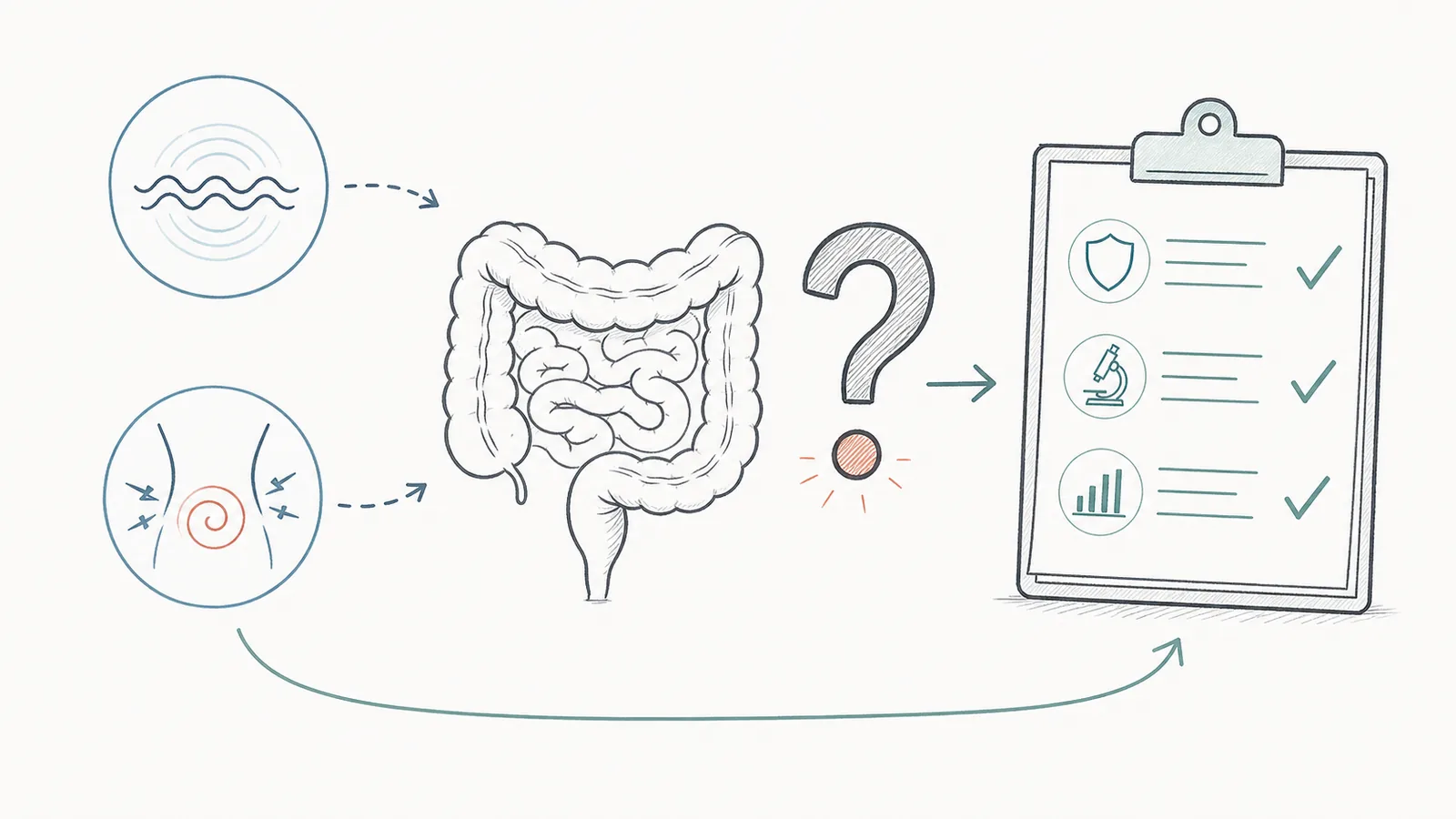
Short answer: The intestinal lining is most clearly damaged by diagnosed inflammation, infection, celiac disease, some medicines such as frequent NSAIDs, heavy alcohol exposure, and severe illness. Diet quality, stress, additives, and microbiome shifts may influence barrier function, but symptoms alone cannot prove a damaged gut lining.
This evidence-based response addresses a public gut-health article about what damages the intestinal lining. The safer answer is not that every vague symptom means a broken barrier. The safer answer is that intestinal barrier biology is real, clinically important, and often oversimplified when it is used to sell microbiome testing or broad wellness protocols.
What Damages the Intestinal Lining? Evidence-Based Answer Without the Hype
The intestinal lining is a living barrier, not a passive wall. It includes epithelial cells, tight junction proteins, mucus, immune cells, antimicrobial peptides, blood flow, nerves, and a dense microbial ecosystem. Its job is selective. It must absorb water and nutrients while limiting contact between microbes, toxins, food antigens, and the immune system. That balance can be disrupted, but the disruption is not usually visible from symptoms alone.
MedicalBrain retrieval for this article found strong support for a cautious answer. Reviews in mucosal immunology and gastroenterology describe intestinal permeability as a measurable biological process, especially in inflammatory bowel disease, celiac disease, infection, critical illness, and drug injury. They also warn that barrier leakiness can be cause, consequence, amplifier, or marker depending on context. That distinction matters because marketing often treats leaky gut as one diagnosis behind many unrelated complaints.
Evidence summary
Evidence summary
- Barrier injury is real in conditions such as inflammatory bowel disease, celiac disease, infection, NSAID injury, alcohol-related gut dysfunction, and severe systemic illness.
- Increased permeability is not a stand-alone diagnosis for most people with bloating, fatigue, skin symptoms, or food reactions.
- Symptoms can overlap with barrier problems, but they are nonspecific and need clinical context.
- Consumer microbiome tests may describe microbial patterns, but they do not prove intestinal lining damage.
- Diet, alcohol, medicines, stress, and additives can plausibly affect barrier biology, yet the strength of evidence differs by exposure and condition.
- Red flags such as bleeding, weight loss, fever, anemia, persistent night symptoms, or severe pain need medical evaluation.
What Does Intestinal Lining Damage Actually Mean?
Clinically, intestinal lining damage can mean several different things. It may mean visible mucosal injury, such as erosions, ulcers, villous blunting, bleeding, or inflammation seen with endoscopy or biopsy. It may mean altered permeability measured in research or specialist settings. It may mean disrupted mucus, immune activation, epithelial stress, or changes in tight junction regulation. These are related, but they are not identical.
This is why the phrase damaged intestinal lining needs caution. A person with celiac disease can have villous injury from an immune reaction to gluten. A person with Crohn's disease can have ulcers, inflammation, strictures, or fistulas. Someone using high-dose nonsteroidal anti-inflammatory drugs can develop erosions or enteropathy. A person after severe infection may have temporary barrier disturbance. These are not the same situation as a healthy person feeling bloated after a stressful week.
Can NSAIDs and Medicines Damage the Gut Barrier?
Yes, some medicines can injure the gastrointestinal lining, especially when used frequently, at high doses, or in higher-risk patients. NSAIDs such as ibuprofen, naproxen, and indomethacin can reduce protective prostaglandins and contribute to erosions, ulcers, bleeding, and small-bowel enteropathy. MedicalBrain retrieved a Scientific Reports study showing that gut microbiota can mediate protection against indomethacin-induced enteropathy in mice, which supports the idea that drug injury, microbes, and barrier biology can interact.
This does not mean everyone who takes an occasional NSAID has a damaged intestinal lining. Risk depends on dose, duration, age, prior ulcer history, kidney disease, anticoagulants, steroids, alcohol, and other medicines. People who need pain relief should not stop prescribed treatment because of a wellness article. They should discuss personal risk with a clinician, especially if they have abdominal pain, black stool, anemia, vomiting blood, or long-term NSAID use.
Does Alcohol Damage the Intestinal Lining?
Heavy alcohol exposure can impair barrier function through several plausible mechanisms, including acetaldehyde effects, oxidative stress, immune activation, altered mucus defense, and microbial shifts. A Translational Psychiatry review on alcohol dependence describes proposed pathways linking alcohol, gut leakiness, microbiota, inflammation, and brain-related outcomes. The important word is heavy. Evidence for clinically meaningful damage is strongest in high exposure or alcohol-use disorder contexts, not in a single glass of wine.
For readers, the practical boundary is simple. Alcohol is not a gut-health supplement. If digestion worsens with alcohol, reducing intake is reasonable. If there is dependence, liver disease, pancreatitis, vomiting blood, black stool, severe pain, or withdrawal risk, the issue needs medical care, not just microbiome optimization.
Can Diet and Food Additives Harm the Intestinal Lining?
Diet affects the gut barrier through fiber availability, microbial metabolites, bile acids, mucus interactions, immune signaling, and epithelial energy supply. Diets low in fiber and high in ultra-processed foods can plausibly reduce microbial production of short-chain fatty acids such as butyrate, which help support colonocyte function. Some emulsifiers, including carboxymethylcellulose and polysorbate 80, have produced barrier and microbiome changes in animal models. A Nature review discussed this as a possible contributor to inflammation-related disease biology.
The evidence is not equal for every additive, every dose, and every human. A mouse study cannot tell an individual that one ingredient has damaged their intestinal lining. The evidence supports a conservative dietary pattern: more minimally processed plants when tolerated, enough protein and micronutrients, and fewer ultra-processed foods. It does not support panic, restrictive lists, or expensive protocols that promise to repair the barrier on command.
Do Stress and the Gut-Brain Axis Damage the Lining?
Stress can influence digestion, motility, pain sensitivity, immune signaling, mast cells, and barrier regulation. That makes the gut-brain axis clinically relevant, especially in disorders such as irritable bowel syndrome. But stress is often used too casually online. It should not become a way to blame patients or dismiss medical symptoms.
The cautious version is this: stress can worsen symptoms and may affect permeability in some contexts, but it is not proof that the lining is damaged. Sleep regularity, psychological support, symptom tracking, gentle activity, and clinician-guided care can help many people. They should sit beside medical evaluation when warning signs are present.
Can Celiac Disease, IBD, and Infection Damage the Intestinal Lining?
Yes. These are among the clearest clinical contexts. In celiac disease, gluten exposure in genetically susceptible people can drive immune-mediated injury to the small-intestinal villi. In inflammatory bowel disease, chronic immune activation, microbial signals, genetics, and barrier dysfunction interact in Crohn's disease and ulcerative colitis. Acute gastroenteritis can disrupt the lining temporarily, and some infections or post-infectious states can produce longer symptom courses.
These conditions need appropriate diagnosis. Celiac testing should usually be done before starting a strict gluten-free diet, because removing gluten first can make diagnosis harder. Suspected IBD may require blood tests, stool inflammatory markers, imaging, colonoscopy, and biopsy. Infection may require stool testing or treatment depending on severity and risk. A consumer microbiome report is not a substitute for these pathways.
What Marketing Gets Wrong About Intestinal Lining Damage
The main overclaim is turning a complex barrier system into a single explanation for bloating, fatigue, skin changes, mood symptoms, food sensitivity, low energy, and metabolic problems. Those symptoms are real, but they are not specific. They can come from IBS, constipation, infection, celiac disease, IBD, thyroid disease, anemia, medication effects, sleep problems, eating disorders, anxiety, depression, bile acid diarrhea, pancreatic disease, gynecologic disease, or many other causes.
The second overclaim is implying that microbiome testing can show whether the intestinal lining is damaged. A stool microbiome test can describe detected microbial DNA or inferred functions in a sample. It may generate hypotheses. It does not directly visualize villi, measure ulcers, diagnose permeability, prove leaky gut, or replace validated clinical tests.
When Should You See a Clinician?
Seek medical advice promptly for blood in stool, black stool, unexplained weight loss, persistent fever, anemia, severe or worsening abdominal pain, persistent vomiting, dehydration, night-time diarrhea, difficulty swallowing, new digestive symptoms after age 50, symptoms after travel or possible foodborne infection, or symptoms during pregnancy, infancy, immunosuppression, or significant chronic disease. Also seek care if you need frequent NSAIDs or if symptoms persist despite sensible dietary changes.
Bottom Line
What damages the intestinal lining? The strongest answers are medical and exposure-specific: inflammatory bowel disease, celiac disease, infections, frequent NSAID exposure, heavy alcohol use, severe illness, and some treatment-related injuries. Diet quality, stress, microbiome disruption, and additives can matter, but they are context-dependent. The evidence does not support diagnosing intestinal lining damage from symptoms or from a consumer microbiome profile alone.
The Simple Version
Your intestinal lining is like a smart border. It lets useful nutrients through and keeps many irritants and microbes away from the rest of the body. Some things can clearly hurt that border, such as gut inflammation, celiac disease, infections, heavy alcohol use, and some medicines when risk is high. Food quality and stress can also affect how the gut behaves, but they do not prove the lining is damaged. If symptoms are mild, steady basics may help. If symptoms are severe, persistent, bloody, or unexplained, the safer answer is a clinician and the right test for the problem.
Educational Disclaimer
This article is for educational purposes only and does not provide personal medical advice, diagnosis, or treatment. If you have concerning, persistent, or severe symptoms, speak with a qualified clinician.
Evidence Notes and Sources
- Turner JR. Intestinal mucosal barrier function in health and disease. Nature Reviews Immunology. 10.1038/nri2653
- Camilleri M. Leaky gut: mechanisms, measurement and clinical implications in humans. Gut. 10.1136/gutjnl-2019-318427
- Luissint AC, Parkos CA, Nusrat A. Inflammation and the intestinal barrier: leukocyte-epithelial cell interactions, cell junction remodeling, and mucosal repair. Gastroenterology. 10.1053/j.gastro.2015.07.008
- Takiishi T, Fenero CIM, Câmara NOS. Intestinal barrier and gut microbiota: shaping our immune responses throughout life. Tissue Barriers. 10.1080/21688370.2017.1373208
- Chassaing B et al. Dietary emulsifiers impact the mouse gut microbiota promoting colitis and metabolic syndrome. Nature. 10.1038/nature14232
- Liang X et al. Gut microbiota mediates protection against enteropathy induced by indomethacin. Scientific Reports. 10.1038/srep40317
- Leclercq S et al. The link between inflammation, bugs, the intestine and the brain in alcohol dependence. Translational Psychiatry. 10.1038/tp.2017.15
- Buckley A and Turner JR. Cell biology of tight junction barrier regulation and mucosal disease. Cold Spring Harbor Perspectives in Biology. 10.1101/cshperspect.a029314