Evidence-based response
What Are Stools Like With Gut Dysbiosis? Evidence-Based Answer Without the Hype
Stool changes can occur with infections, IBS, IBD, diet shifts, medications, and transit changes. Appearance alone cannot diagnose gut dysbiosis or leaky gut.
By Sandra McKenzy, Pharmacist · 2026-05-31
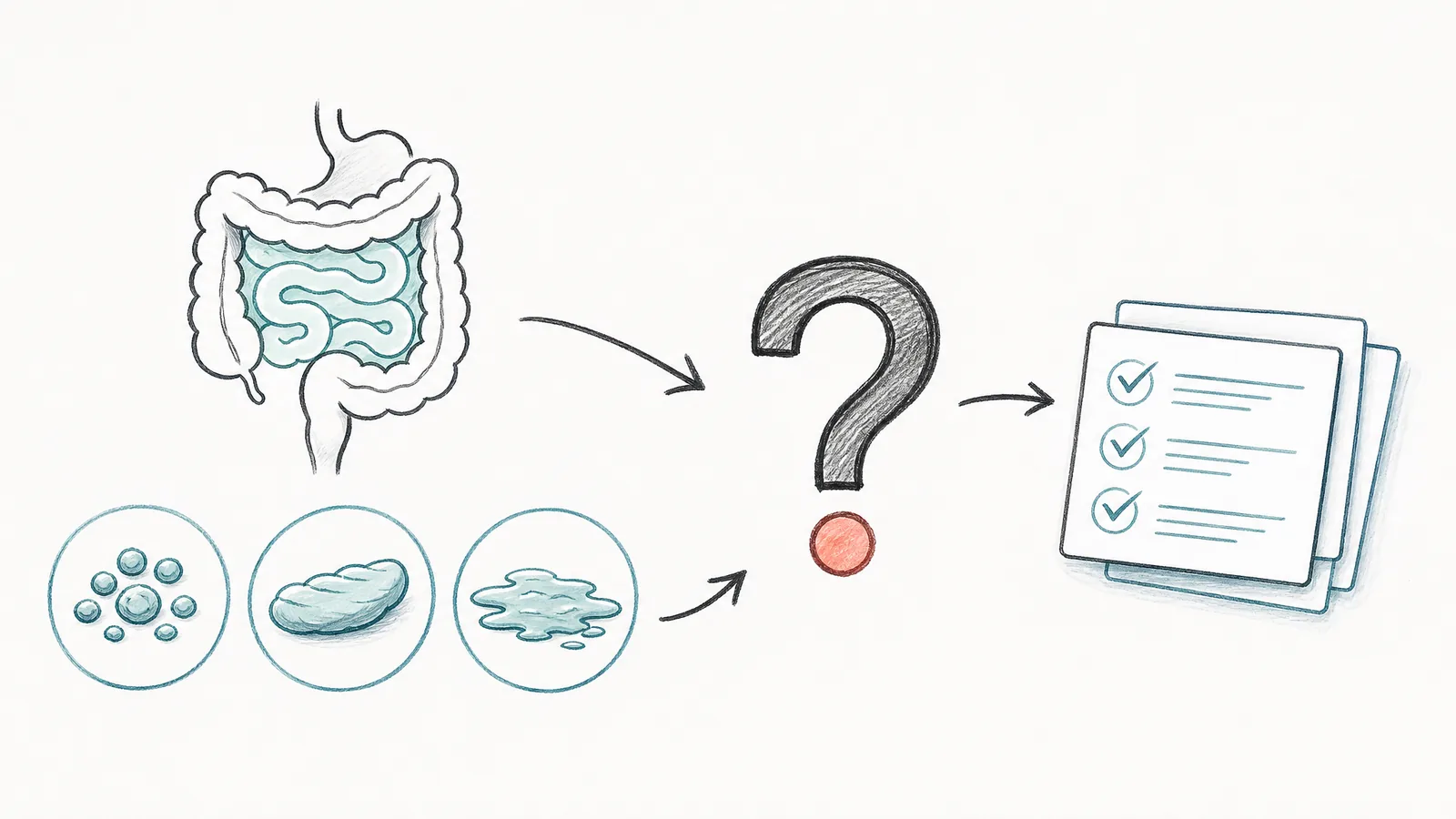
Short answer: Stools with gut dysbiosis do not have one reliable look or smell. Loose stool, constipation, mucus, floating stool, foul odor, color change, or alternating bowel habits can happen with microbiome disruption, but they can also come from diet, infection, IBS, IBD, bile acid problems, medications, bleeding, pancreatic issues, or transit time. Stool appearance can raise a question. It cannot diagnose dysbiosis by itself.
What are stools like with gut dysbiosis?
They may be loose, hard, irregular, unusually foul-smelling, mucus-containing, greasy, floating, or simply more frequent or less frequent than usual. But those descriptions are not specific enough to prove the cause. The same Bristol stool type can appear after a high-fat meal, a viral infection, antibiotics, stress, a new fiber supplement, inflammatory bowel disease, or functional bowel symptoms.
Dysbiosis means a disturbed microbial community. It is a research and clinical concept, not a visual diagnosis. A person cannot look in the toilet and reliably decide that the microbiome is imbalanced, that the gut is leaky, or that one bacterial group is overgrown.
Evidence summary
- Stool consistency is useful for describing bowel pattern, but it is not specific for dysbiosis.
- IBS and other functional gut disorders can involve microbiome and metabolite differences, but findings vary by subgroup.
- Transit time strongly affects stool form and microbial metabolism.
- Methane production is linked with slower transit and constipation in some contexts, but breath or stool findings need interpretation.
- Blood, black stool, fever, weight loss, anemia, dehydration, or persistent diarrhea are red flags.
- Microbiome tests can describe patterns, but symptoms and stool appearance still require clinical context.
Can stool smell diagnose gut dysbiosis?
No. Odor can change with diet, sulfur-containing foods, protein intake, supplements, infection, malabsorption, transit time, and microbial fermentation. Hydrogen sulfide and other microbial metabolites are biologically relevant, but a strong smell is not a validated diagnostic test.
Very foul diarrhea after antibiotics, fever, blood, dehydration, or severe pain is different. That pattern should not be interpreted as ordinary dysbiosis. It may need testing for infection or other urgent causes.
Can stool color diagnose gut dysbiosis?
Usually no. Brown is typical because of bile pigment metabolism. Green stool can reflect rapid transit or diet. Pale or clay-colored stool can suggest reduced bile flow and needs medical attention if persistent. Black, tarry stool can indicate upper gastrointestinal bleeding, especially if not explained by iron or bismuth. Bright red blood needs clinical assessment.
Microbial metabolism can influence bile acids and stool chemistry, but color alone is too crude to diagnose a microbiome state.
What does constipation say about the microbiome?
Constipation can be linked to slower transit, hydration, low fiber intake, medications, pelvic floor dysfunction, thyroid disease, neurological conditions, and gut microbial metabolism. Methane-producing archaea have been associated with slower transit in some research, but that does not mean every hard stool is a methane problem or that every person needs antimicrobials.
Transit time itself shapes the stool microbiome. A firm stool may reflect longer transit, which changes microbial metabolism. That makes cause and effect difficult: the microbiome may influence transit, and transit also changes the microbiome measured in stool.
What does diarrhea say about the microbiome?
Diarrhea can occur with infection, inflammatory bowel disease, bile acid diarrhea, medication effects, celiac disease, pancreatic insufficiency, food intolerance, stress physiology, and functional gut disorders. Dysbiosis can be part of some of these patterns, but it is rarely the whole diagnosis.
Persistent watery diarrhea, nighttime diarrhea, fever, blood, weight loss, dehydration, recent travel, immune suppression, or recent antibiotic exposure should be assessed medically rather than treated as a simple microbiome imbalance.
What about mucus, floating stool, or greasy stool?
Small amounts of mucus can occur with irritation or IBS-type symptoms. Persistent mucus with blood, pain, fever, or weight loss is more concerning. Floating stool can happen from gas. Greasy, pale, difficult-to-flush stool can suggest fat malabsorption and deserves clinical evaluation, especially if it persists.
These signs can overlap with microbiome changes, but they are not microbiome-specific. They point to a clinical question, not to a final answer.
What marketing gets wrong about leaky gut poop
“Leaky gut poop” is not a validated clinical category. Intestinal permeability is real biology, but it cannot be diagnosed from stool shape, smell, or social-media descriptions. Claims that stringy stool, floating stool, mucus, or odor proves leaky gut overstate the evidence.
A microbiome test may report diversity, taxa, metabolites, or inflammatory markers. That information can be useful when interpreted carefully, but it should not turn nonspecific stool changes into a confident diagnosis or supplement protocol.
When should stool changes be checked urgently?
Seek medical advice for blood in stool, black or tarry stool, persistent pale stool, fever, severe or worsening abdominal pain, unexplained weight loss, anemia, dehydration, persistent vomiting, nighttime diarrhea, symptoms after recent antibiotics, immune suppression, known inflammatory bowel disease, or a family history of colorectal cancer.
Bottom line
Gut dysbiosis can be associated with stool changes, but there is no single dysbiosis stool pattern. The safest interpretation is this: stool appearance is a screening clue, not a diagnosis. If changes are persistent, severe, or paired with red flags, the next step is clinical evaluation, not a guess based only on look or smell.
Evidence notes
- Shin et al. (2025). Microbiota and short chain fatty acid relationships underlie clinical heterogeneity and identify key microbial targets in irritable bowel syndrome. Scientific Reports. 10.1038/s41598-025-19363-2
- Shang et al. (2022). Altered metabolome and microbiome features provide clues in understanding irritable bowel syndrome and depression comorbidity. The ISME Journal. 10.1038/s41396-021-01123-5
- Holvoet et al. (2024). Fecal microbiota transplantation influences microbiota without connection to symptom relief in irritable bowel syndrome patients. npj Biofilms and Microbiomes. 10.1038/s41522-024-00549-x
- Roager et al. (2016). Colonic transit time is related to bacterial metabolism and mucosal turnover in the gut. Nature Microbiology. 10.1038/nmicrobiol.2016.93
- Gaci et al. (2022). Methanogenic archaea in the human gastrointestinal tract. Nature Reviews Gastroenterology & Hepatology. 10.1038/s41575-022-00673-z
- Leite et al. (2019). Small intestinal microbial dysbiosis underlies symptoms associated with functional gastrointestinal disorders. Nature Communications. 10.1038/s41467-019-09964-7
- Mowat et al. (2022). Faecal immunochemical test for patients with high-risk bowel symptoms: a large prospective cohort study and updated literature review. British Journal of Cancer. 10.1038/s41416-021-01653-x
This article is educational and does not diagnose, treat, or replace care from a qualified clinician.