Evidence-based response
Can Boosting Roseburia Hominis Ease IBD Symptoms? What Science Actually Says
Roseburia hominis is a plausible butyrate-producing marker, but boosting one species is not a proven treatment for IBD symptoms.
By Sandra McKenzy, Pharmacist · 2026-05-27
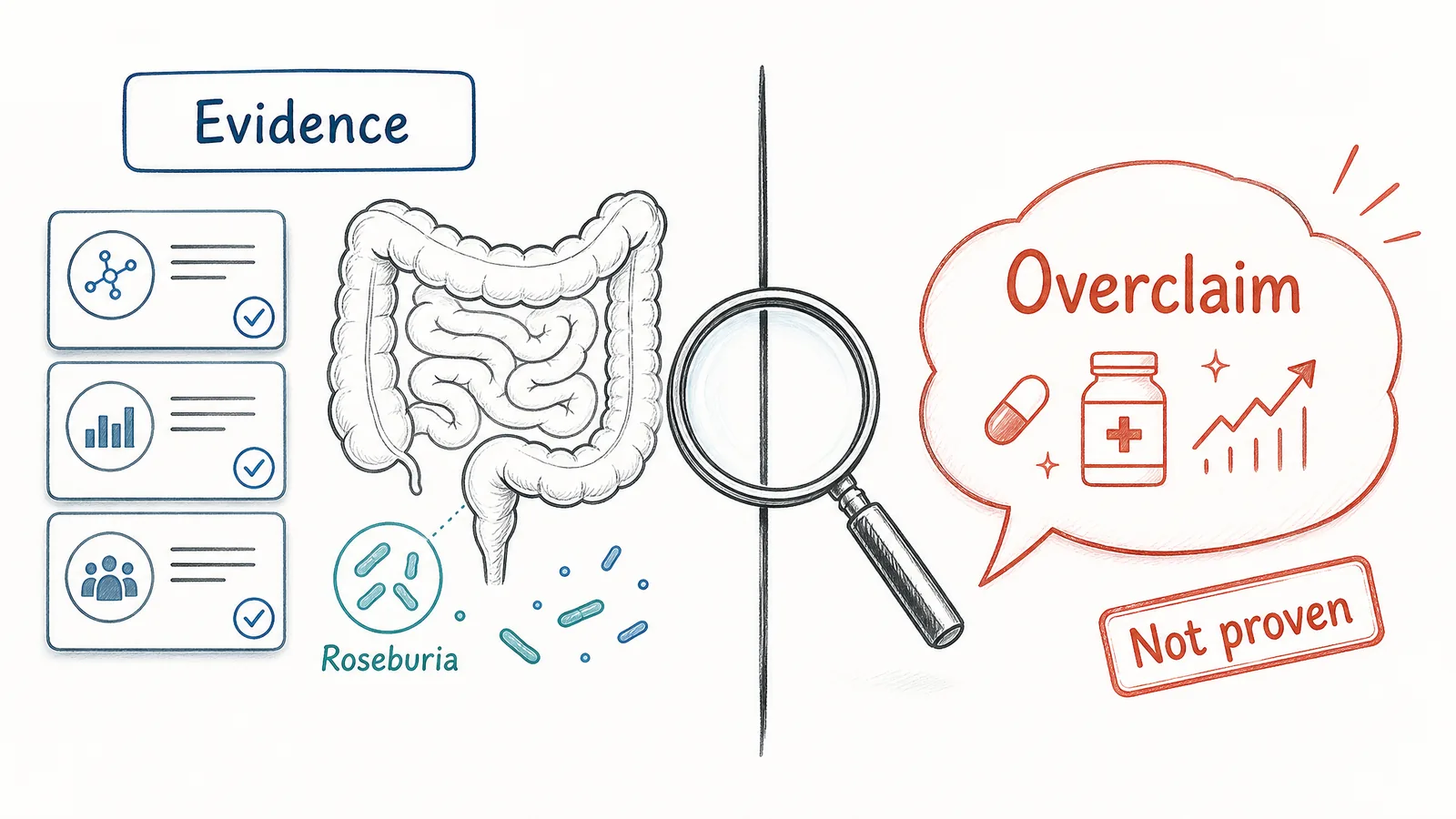
Short answer: Roseburia hominis is a real butyrate-producing gut bacterium, and lower Roseburia has been reported in some inflammatory bowel disease research. But boosting one species has not been proven to ease IBD symptoms, prevent flares, or replace medical treatment. A stool test may raise a hypothesis, not provide an IBD treatment plan.
What is Roseburia hominis?
Roseburia hominis is an anaerobic bacterium found in the human colon. It belongs to a wider group of fiber-fermenting organisms that can produce short-chain fatty acids, especially butyrate. Butyrate matters because colon cells use it for energy, and because it is involved in intestinal barrier function and immune regulation.
That makes Roseburia biologically interesting. It does not make it a validated treatment target. In microbiome science, an organism can be associated with a healthier ecosystem without being proven as the cause of symptom improvement.
Can Roseburia hominis ease IBD symptoms?
The evidence supports a cautious answer: Roseburia and butyrate biology are relevant to IBD, but direct human proof for boosting R. hominis as an IBD symptom treatment is not established. Ulcerative colitis and Crohn’s disease involve immune activity, genetics, epithelial barrier changes, medications, diet, infections, and many microbial shifts at once.
Some studies report lower butyrate-producing organisms, including Roseburia hominis or related Roseburia species, in IBD. Mechanistic studies also show that short-chain fatty acids can influence immune regulation. The clinical leap is the problem. Low abundance does not prove that Roseburia deficiency caused the flare, and raising a stool abundance number does not prove symptom control.
Can a microbiome test guide Roseburia treatment?
A consumer stool test can report whether Roseburia is detected and sometimes estimate relative abundance. That may be useful background information for a patient who is already working with a clinician. It is not a substitute for fecal calprotectin, CRP, blood counts, colonoscopy, imaging, medication review, or medical assessment of disease activity.
InnerBuddies and similar services may frame microbiome results as personalized guidance. The safer interpretation is that testing can generate dietary hypotheses, especially around fiber tolerance and fermentation. It cannot diagnose IBD activity or tell a person to change prescribed IBD medication.
What is actually supported?
- Roseburia species are recognized butyrate-producing members of the gut microbiome.
- Butyrate is involved in colonocyte energy use, epithelial barrier support, and immune signaling.
- IBD is often associated with reduced short-chain fatty acid production and altered butyrate-producing taxa.
- Association does not prove that boosting R. hominis will ease IBD symptoms.
- Consumer microbiome tests are exploratory and should not replace validated IBD monitoring.
What can people reasonably do?
For people without active red flags, a gradual increase in tolerated fiber variety is more evidence-grounded than chasing one species. Oats, legumes, vegetables, nuts, seeds, whole grains, and resistant starches can feed fermentation pathways. The right approach depends on symptoms. During active flares, strictures, severe IBS overlap, or after bowel surgery, sudden fiber increases can worsen discomfort and should be individualized.
Probiotics, prebiotics, and synbiotics may help in selected contexts, but they are not interchangeable with Roseburia restoration. Most commercial probiotics do not contain R. hominis, and a supplement claim should be judged by strain-specific human trials, not by general microbiome language.
When should IBD symptoms be checked clinically?
Blood in stool, persistent diarrhea, night-time bowel movements, fever, anemia, unexplained weight loss, dehydration, severe abdominal pain, or symptoms returning after medication changes deserve prompt clinical review. A Roseburia result cannot rule in or rule out inflammation.
Bottom line
Roseburia hominis is part of a credible scientific story about fiber fermentation, butyrate, barrier biology, and inflammation. It is not yet a proven lever for easing IBD symptoms. Treat stool-test results as context for a clinician-guided conversation, not as a stand-alone roadmap for inflammation relief.
Evidence notes
- Machiels et al. (2014). A decrease of the butyrate-producing species Roseburia hominis and Faecalibacterium prausnitzii defines dysbiosis in patients with ulcerative colitis. Gut. 10.1136/gutjnl-2013-304833
- Parada Venegas et al. (2019). Short chain fatty acids mediated gut epithelial and immune regulation. Frontiers in Immunology. 10.3389/fimmu.2019.00277
- Smith et al. (2013). The microbial metabolites, short-chain fatty acids, regulate colonic Treg cell homeostasis. Science. 10.1126/science.1241165
- Patterson et al. (2018). Interactions between Roseburia intestinalis and diet modulate atherogenesis in a murine model. Nature Microbiology. 10.1038/s41564-018-0272-x
- Lavelle and Sokol (2020). Gut microbiota-derived metabolites as key actors in inflammatory bowel disease. Nature Reviews Gastroenterology & Hepatology. 10.1038/s41575-019-0258-z
- Quigley (2017). Gut microbiome as a clinical tool in gastrointestinal disease management: are we there yet? Nature Reviews Gastroenterology & Hepatology. 10.1038/nrgastro.2017.29
This article is educational and does not diagnose, treat, or replace care from a qualified clinician.