Evidence-based response
What Are the Symptoms of Bad Bacteria in the Gut? Evidence-Based Answer Without the Hype
Symptoms such as bloating, diarrhea, constipation, pain, fatigue, and mood changes can overlap with dysbiosis, but they do not prove bad bacteria without clinical context.
By Sandra McKenzy, Pharmacist · 2026-05-29
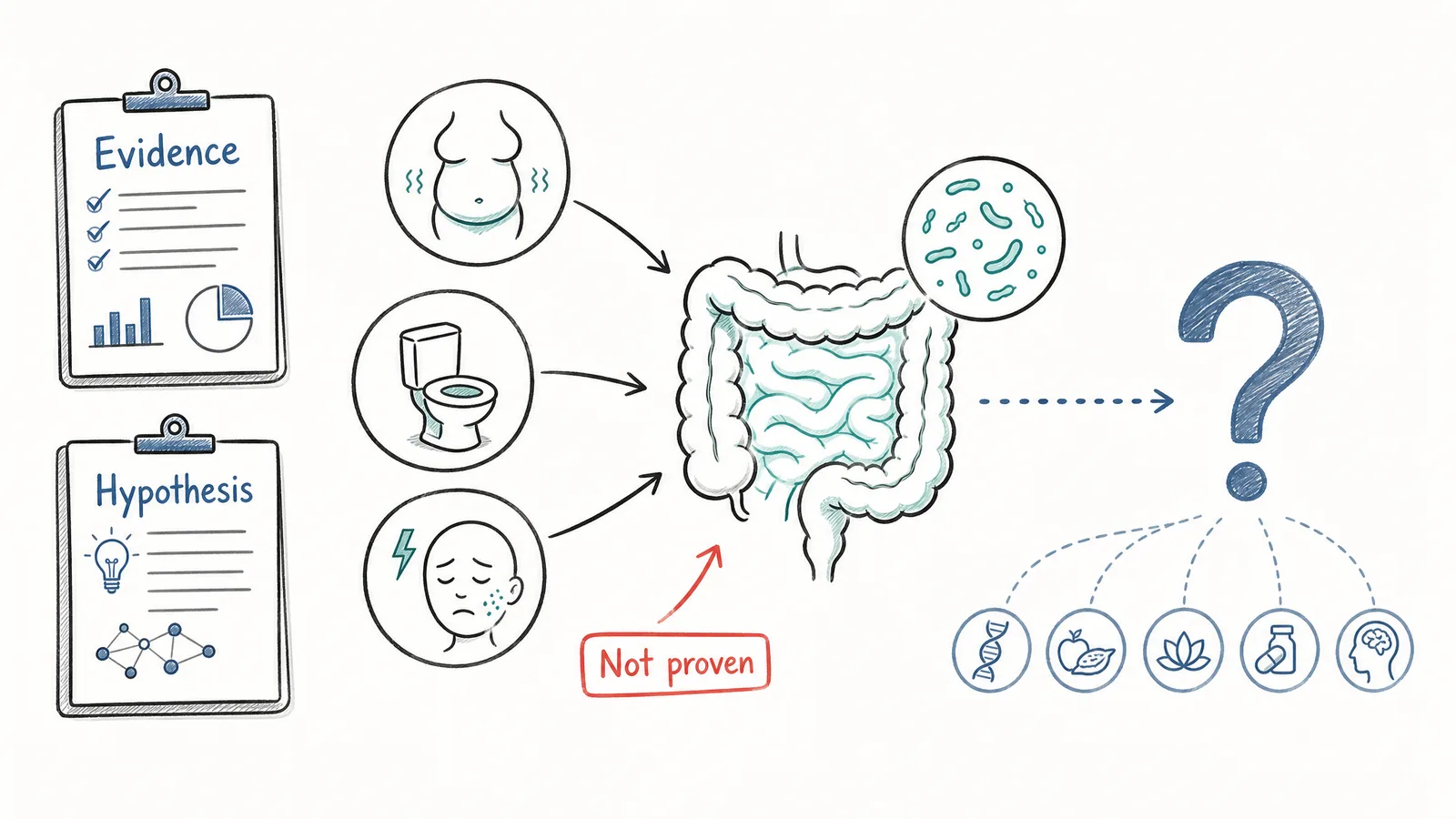
Short answer: Possible symptoms linked with gut microbial disruption include bloating, excess gas, diarrhea, constipation, abdominal pain, and sometimes symptoms outside the gut. But these symptoms do not prove that “bad bacteria” are the cause. They are nonspecific and can also come from IBS, infection, inflammatory bowel disease, food intolerance, medications, stress, thyroid disease, anemia, or other medical problems.
What are the symptoms of bad bacteria in the gut?
The phrase “bad bacteria” is simple, but the biology is not. The gut contains thousands of organisms that can be helpful in one setting, neutral in another, and harmful if they expand in the wrong place or during inflammation. Dysbiosis means a disrupted microbial community. It is not a diagnosis you can confirm from symptoms alone.
Digestive symptoms that may overlap with dysbiosis include bloating, gas, abdominal cramping, loose stools, constipation, urgency, nausea, and changes in stool pattern. These symptoms are real, but they are not specific. The same pattern can appear with IBS, lactose intolerance, coeliac disease, bile acid diarrhea, inflammatory bowel disease, medication side effects, small intestinal bacterial overgrowth, or an acute infection.
Can bloating and gas prove bacterial overgrowth?
No. Bloating and gas can reflect fermentation of carbohydrates by intestinal microbes, but that does not mean harmful bacteria have taken over. Many people with IBS report bloating and pain without a dangerous infection. Some studies show microbial differences in IBS and functional gastrointestinal disorders, including altered diversity or metabolism, yet those findings do not turn everyday bloating into a precise microbiome diagnosis.
Diet matters too. Large changes in fiber, FODMAP intake, sugar alcohols, protein supplements, alcohol, and meal timing can alter gas and stool pattern. That can be uncomfortable without being a sign of toxin-producing bacteria.
Evidence summary
- Dysbiosis is an altered microbial ecosystem, not a symptom checklist.
- Bloating, diarrhea, constipation, and abdominal pain can overlap with microbiome changes but have many causes.
- True pathogens such as Salmonella, pathogenic E. coli, or Clostridioides difficile require clinical context and targeted testing.
- Fatigue, mood changes, skin symptoms, and cravings are too nonspecific to diagnose gut bacteria problems.
- Consumer microbiome tests cannot replace medical evaluation for persistent or red-flag symptoms.
What symptoms are more concerning?
Watery diarrhea after antibiotics raises a different concern than mild gas after beans. Fever, blood in stool, severe pain, dehydration, persistent vomiting, recent travel with acute diarrhea, immune suppression, or symptoms after high-risk food exposure may justify targeted stool testing for pathogens. In those settings, clinicians use tests designed for infections, not broad wellness microbiome reports.
Clostridioides difficile is a good example. It can follow antibiotic exposure and cause significant diarrhea, but diagnosis depends on compatible symptoms plus appropriate toxin or molecular testing. A list of bacteria on a consumer report is not the same thing.
Do fatigue, mood changes, or skin symptoms mean dysbiosis?
Usually, they should be treated as clues, not proof. The gut-brain axis is real, and microbiome research has shown links with immune signaling, metabolites, stress biology, and behavior. Still, fatigue may come from poor sleep, anemia, thyroid disease, depression, infection, medication effects, or chronic inflammation. Skin changes can have allergic, hormonal, immune, infectious, or irritant causes. Mood symptoms deserve proper mental-health and medical assessment.
It is misleading when marketing takes broad microbiome science and turns it into a self-diagnosis pathway. A stool profile may generate hypotheses, but it cannot prove that low energy or anxiety is caused by one bacterial imbalance.
What does microbiome testing get right and wrong?
Microbiome testing can show that your stool sample contains certain organisms at certain relative abundances. It may also estimate diversity or compare patterns with a database. That can be useful for research and sometimes for guided nutrition conversations. It becomes unsafe when the report claims to diagnose the reason for symptoms or prescribe antibiotics, probiotics, supplements, or restrictive diets without clinical oversight.
If symptoms are mild and short-lived, basic steps such as hydration, regular meals, gradual fiber changes, sleep, and avoiding obvious triggers may be enough. If symptoms persist, the better next step is usually a clinician-guided evaluation, not guessing which bacteria are “bad.”
When should you see a clinician?
Seek care promptly for blood in stool, black stools, fever, dehydration, severe or worsening abdominal pain, unintentional weight loss, anemia, persistent diarrhea, nighttime diarrhea, new bowel changes after age 50, recent antibiotics with watery diarrhea, pregnancy, immune suppression, or a family history of colorectal cancer or inflammatory bowel disease.
Bottom line
Symptoms can suggest that something in the gut needs attention, but they cannot identify bad bacteria by themselves. Dysbiosis is a research and clinical concept that requires context. The safest approach is to separate everyday digestive discomfort from red flags, use targeted clinical tests when needed, and treat consumer microbiome reports as hypothesis-generating rather than diagnostic.
Evidence notes
- Zeng et al. (2017). Mechanisms of inflammation-driven bacterial dysbiosis in the gut. Mucosal Immunology. 10.1038/mi.2016.75
- Leite et al. (2019). Small intestinal microbial dysbiosis underlies symptoms associated with functional gastrointestinal disorders. Nature Communications. 10.1038/s41467-019-09964-7
- Simrén et al. (2014). A role for the gut microbiota in IBS. Nature Reviews Gastroenterology & Hepatology. 10.1038/nrgastro.2014.40
- Enck et al. (2016). Irritable bowel syndrome. Nature Reviews Disease Primers. 10.1038/nrdp.2016.14
- DuPont (2013). New concepts in diagnostics for infectious diarrhea. Mucosal Immunology. 10.1038/mi.2013.50
- Cryan et al. (2019). The microbiota-gut-brain axis. Physiological Reviews. 10.1152/physrev.00018.2018
This article is educational and does not diagnose, treat, or replace care from a qualified clinician.