Evidence-based response
Why Do Probiotics Cause Loose Stools? Evidence-Based Answer Without the Hype
Probiotics can temporarily change bowel habits, but loose stools are not proof they are working. Strain, dose, baseline symptoms and clinical context matter.
By Sandra McKenzy, Pharmacist · 2026-07-15
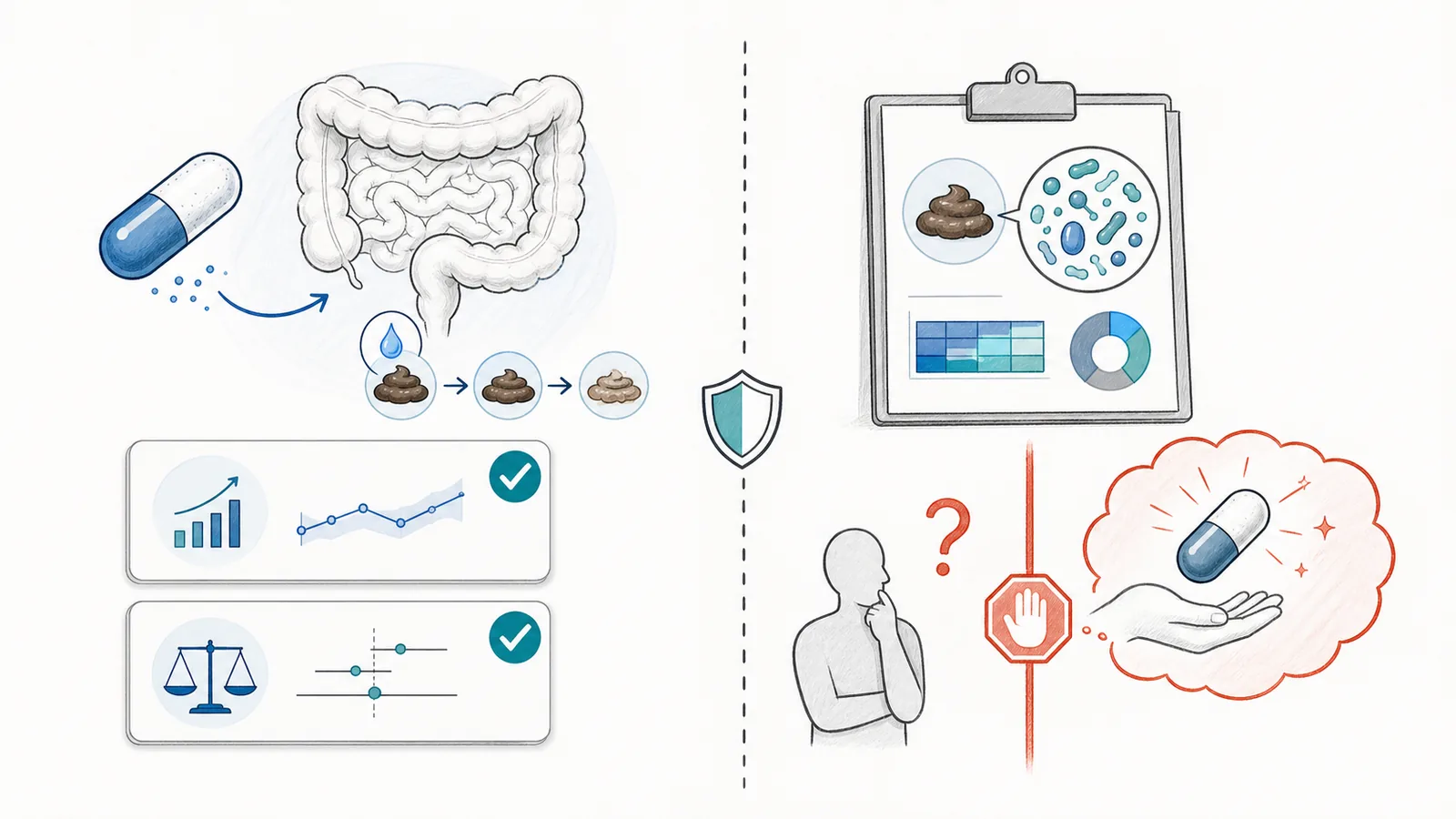
Short answer: Probiotics can cause loose stools because live microbes, capsule ingredients, fermented foods, prebiotic fibers or dose changes can alter fermentation, gas, water handling and gut motility. Mild changes may settle, but diarrhea is not a sign that a probiotic is cleansing the gut or definitely working. Persistent, severe or bloody diarrhea needs clinical assessment.
Many probiotic articles make the topic sound predictable: start a product, expect a short adjustment period, then use a microbiome test to choose the right strain. The evidence is more cautious. Probiotics are defined as live microorganisms that confer a health benefit when given in adequate amounts, but the benefit is strain-specific, condition-specific and not guaranteed for a healthy person with ordinary bowel changes.
Why Do Probiotics Cause Loose Stools?
Loose stools after starting a probiotic can have several explanations. Some probiotic strains influence intestinal transit, immune signalling or microbial metabolism. Some products contain prebiotic fibers such as inulin or fructo-oligosaccharides, which can increase fermentation and draw water into the bowel in sensitive people. Fermented foods can add histamine, sugars, acids or other compounds that affect tolerance. A sudden high dose can also change gas production before the gut adapts.
That does not mean the probiotic is damaging the gut. It also does not mean the product is correcting dysbiosis. A bowel movement is a nonspecific output. It reflects diet, infection risk, medications, bile acids, stress, motility, hydration, menstrual cycle, alcohol, coffee, fiber intake and underlying disease. A probiotic may be one contributor, not the whole diagnosis.
Evidence summary
Evidence summary
- Probiotics are not one intervention. Effects differ by strain, dose, formulation, host and clinical indication.
- Loose stools can occur after starting probiotics, especially with high doses, synbiotics or products that add fermentable fibers.
- Clinical evidence is strongest for selected strains in selected settings, such as preventing antibiotic-associated diarrhea, not for routine self-personalization.
- Consumer stool microbiome tests cannot diagnose probiotic intolerance or prescribe the exact probiotic a person should take.
- Severe, persistent, bloody or dehydration-related diarrhea should not be managed by trial-and-error supplementation.
Are Loose Stools a Normal Probiotic Side Effect?
They can be, but normal is too broad a word. Transient gas, bloating, softer stool or a change in frequency is commonly reported when people introduce probiotics or fermented foods. In many cases, this is mild and self-limited. The practical response is usually to stop escalating the dose, simplify the product list, review added prebiotics and track whether symptoms settle.
The problem is when loose stools are reframed as proof of detox, cleansing or successful bacterial replacement. That language is not evidence-based. Diarrhea is a symptom. If it is intense, prolonged or paired with red flags, it should be treated as a clinical signal, not as a wellness milestone.
Can a Microbiome Test Predict Which Probiotic Will Cause Diarrhea?
A stool microbiome test can describe organisms and inferred functions in a sample. It may show diversity, relative abundance patterns or changes over time. That can be educational. It does not clinically prove that a specific probiotic strain will help or harm a specific person, and it cannot rule out infection, inflammatory bowel disease, celiac disease, medication effects or bile acid diarrhea.
Personalized probiotic science is real as a research direction. Some studies show that baseline microbiome features influence whether supplemented organisms persist or pass through. But that is different from a consumer report reliably choosing the right capsule for loose stools. Clinical history, medication list, symptom pattern, immune status and diagnosis still matter more than a stool barcode alone.
Do Probiotics Help Diarrhea or Cause It?
Both can be true, depending on the setting. Systematic reviews and guidelines have found evidence that selected probiotics can reduce antibiotic-associated diarrhea in some groups. Evidence also exists for certain strains in some infectious or pediatric diarrhea contexts. This does not mean every probiotic helps every diarrhea pattern.
For a person with chronic loose stools, a probiotic might help, do nothing or worsen symptoms. Someone taking antibiotics is not the same as someone with IBS-D, post-infectious symptoms, inflammatory bowel disease, pancreatic insufficiency, lactose intolerance or anxiety-related urgency. A product studied in one condition should not be automatically applied to another.
What Marketing Gets Wrong About Probiotic Side Effects
Marketing often turns a cautious concept into a confident funnel. It says probiotics may affect bowel habits, then implies a microbiome test can personalize the solution and reduce trial and error. That can sound scientific, but the clinical bridge is weak. Most consumer microbiome tests have not been validated to diagnose probiotic intolerance, identify the cause of loose stool or prescribe strain-level treatment.
Another common mistake is treating all probiotics as interchangeable. Lactobacillus rhamnosus GG, Saccharomyces boulardii, Bifidobacterium animalis and multi-strain blends are not the same intervention. Dose, viability, quality control and formulation also matter. Even within the same species, strain differences can be clinically important.
How Should You Respond if Probiotics Loosen Your Stool?
A cautious approach is to pause and simplify. Check whether the product contains added prebiotic fibers, sugar alcohols, magnesium, herbs or multiple strains. Avoid stacking several gut products at once. If symptoms are mild, some people discuss a lower dose, every-other-day use or a different formulation with a clinician or pharmacist. If symptoms are significant, stopping the supplement is usually more sensible than pushing through.
Do not start antibiotics, anti-diarrheal medicines or multiple supplements just to counter a probiotic reaction without medical advice. Also remember that timing can mislead. If loose stools begin after travel, restaurant meals, a new medication, a viral illness or antibiotic use, the probiotic may not be the main cause.
Who Should Be More Careful With Probiotics?
People who are immunocompromised, critically ill, premature infants, people with central venous catheters, recent major surgery, severe pancreatitis, advanced liver disease or complex intestinal disease should not treat probiotics as automatically harmless. Rare bloodstream infections and fungemia have been reported, especially in vulnerable hosts. For healthy adults, serious events are uncommon, but low risk is not the same as no risk.
Pregnancy, infancy, older age and chronic disease also justify more caution, especially when symptoms are active. A pharmacist or clinician can help review whether a product has evidence for the actual indication and whether the person has risk factors that change the safety equation.
When Should Loose Stools After Probiotics Be Checked?
Seek medical care for blood in stool, black stool, fever, severe abdominal pain, dehydration, fainting, persistent vomiting, unexplained weight loss, night-time diarrhea, symptoms lasting more than a few days, diarrhea after antibiotics, symptoms after travel, pregnancy, infancy, older age, immune suppression or known inflammatory bowel disease. Also get help if diarrhea is frequent enough to interfere with work, sleep or hydration.
A microbiome test should not delay care for those signs. It may be interesting after the urgent problem is handled, but it is not a substitute for stool pathogen testing, blood work, medication review, colon evaluation or clinician-guided differential diagnosis when red flags are present.
Bottom Line
Probiotics can cause loose stools because they can change fermentation, motility and microbial interactions, especially when introduced quickly or combined with fermentable fibers. Mild temporary changes can happen. Persistent or severe diarrhea is not something to normalize.
The most evidence-based answer is boring but safer: choose probiotics only for a clear reason, prefer strains and products with evidence for that reason, introduce one change at a time and stop treating stool changes as proof of success. Microbiome testing may add context, but it cannot replace clinical judgement.
Educational disclaimer: This article is for general science education. It does not diagnose diarrhea, prescribe probiotics, interpret a personal microbiome test or replace care from a licensed clinician.
Evidence Notes and Sources
- Expert consensus document: The International Scientific Association for Probiotics and Prebiotics consensus statement on the scope and appropriate use of the term probiotic (2014). Nature Reviews Gastroenterology and Hepatology. DOI: 10.1038/nrgastro.2014.66
- The pros, cons, and many unknowns of probiotics (2019). Nature Medicine. DOI: 10.1038/s41591-019-0439-x
- Post-antibiotic gut mucosal microbiome reconstitution is impaired by probiotics and improved by autologous FMT (2018). Cell. DOI: 10.1016/j.cell.2018.08.047
- Probiotics for the prevention and treatment of antibiotic-associated diarrhea: a systematic review and meta-analysis (2012). JAMA. DOI: 10.1001/jama.2012.3507
- AGA Clinical Practice Guidelines on the Role of Probiotics in the Management of Gastrointestinal Disorders (2020). Gastroenterology. DOI: 10.1053/j.gastro.2020.05.059
- Risk and Safety of Probiotics (2015). Clinical Infectious Diseases. DOI: 10.1093/cid/civ085