Evidence-based response
Postbiotics Explained: Evidence-Based Benefits, Limits, and Red Flags
Postbiotics are biologically plausible gut-health tools, but broad claims about strengthening the gut need product-specific human evidence.
By Sandra McKenzy, Pharmacist · 2026-05-26
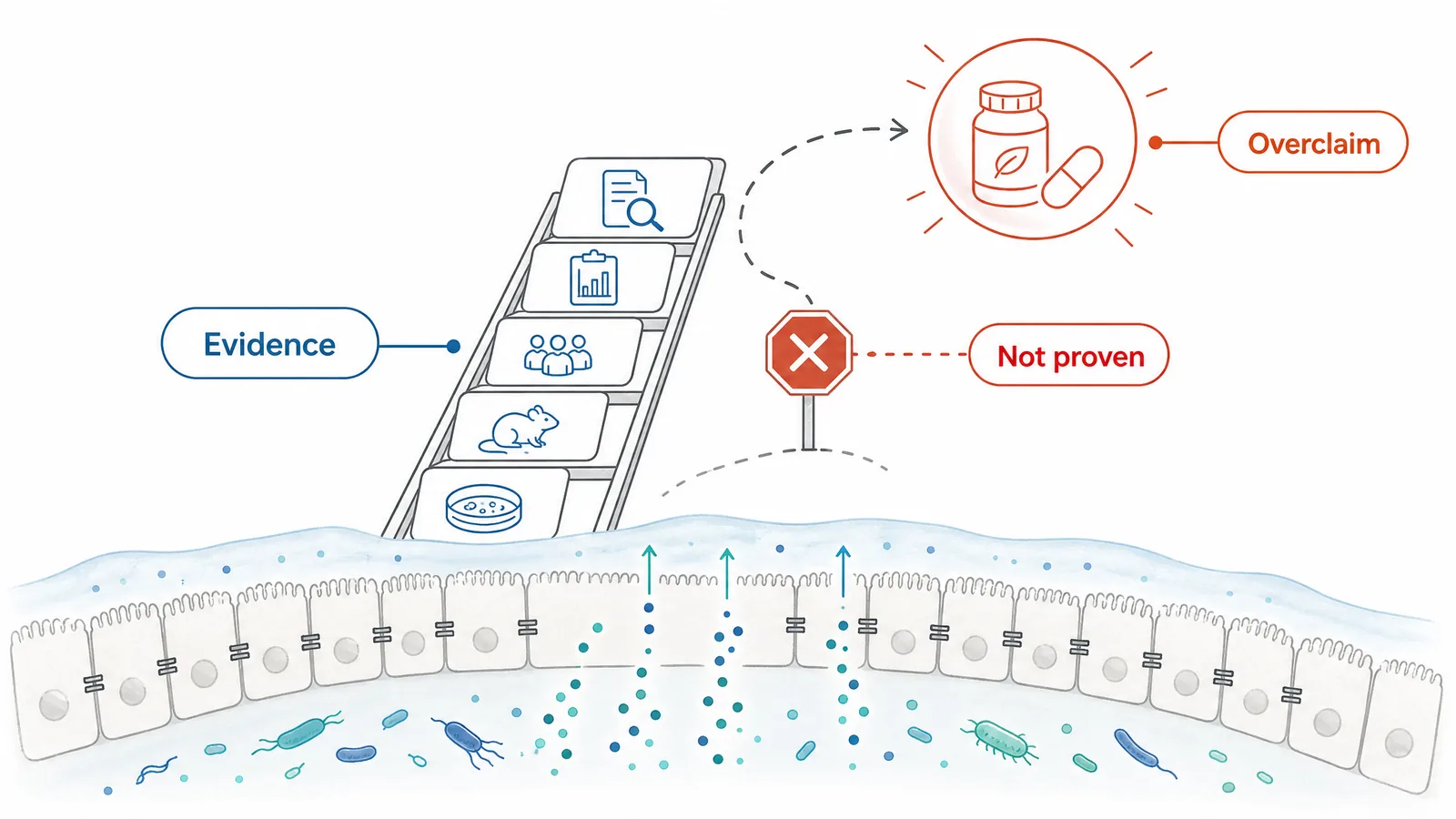
Short answer: Postbiotics are not simply any bacterial byproduct. The accepted scientific definition is a preparation of inanimate microorganisms and/or their components that confers a health benefit. Short-chain fatty acids such as butyrate are important microbial metabolites, but purified metabolites are not automatically postbiotics. Postbiotics may support gut barrier and immune signaling, but benefit claims need product-specific human evidence.
What are postbiotics?
The most useful definition comes from the International Scientific Association for Probiotics and Prebiotics. It defines a postbiotic as a preparation of inanimate microorganisms and/or their components that confers a health benefit on the host. That definition is narrower than many wellness articles suggest.
This matters because marketing often uses postbiotic to mean any beneficial compound made by gut bacteria. Short-chain fatty acids, enzymes, peptides, cell-wall fragments, and other microbial products can all be biologically active. But a purified metabolite, a fermented food, a dead cell fragment, and a tested postbiotic preparation are not interchangeable.
Do postbiotics strengthen the gut barrier?
There is a plausible biological basis. Microbial products can interact with epithelial cells, mucus, immune receptors, and inflammatory signaling. Short-chain fatty acids, especially butyrate, are central to this discussion because colon cells use butyrate as an energy source, and SCFAs help regulate epithelial barrier function and mucosal immunity.
That does not mean every postbiotic supplement strengthens every person’s gut lining. Barrier biology is complex. Effects can depend on the microbial strain or preparation, dose, manufacturing method, disease state, diet, medications, and the outcome measured. A mechanism is not the same as a clinically proven result.
Are short-chain fatty acids postbiotics?
SCFAs are among the most important microbiome-derived metabolites. Acetate, propionate, and butyrate link diet, microbial fermentation, epithelial metabolism, and immune regulation. They help explain why fermentable fibers matter.
But the ISAPP consensus draws a distinction: purified microbial metabolites alone are not postbiotics under its definition. They may mediate postbiotic effects, and they may be useful research targets, but they should not be automatically marketed as postbiotic products unless the preparation and benefit are properly defined.
What claims go beyond the evidence?
Broad statements such as postbiotics reduce inflammation, heal leaky gut, prevent gut permeability conditions, or improve overall health can be too strong unless tied to a specific preparation and specific human outcome. Some evidence comes from cell, animal, or mechanistic studies. Some human trials exist for particular microbial products, but findings cannot be generalized to all postbiotics.
InnerBuddies and similar gut-health platforms are right that microbial byproducts matter. The overreach happens when that real biology becomes a simple consumer promise: take or target postbiotics and your gut barrier becomes stronger. Current evidence is not that simple.
What is actually supported?
- Postbiotics have a consensus definition: inanimate microorganisms and/or their components with demonstrated health benefit.
- SCFAs are important microbial metabolites involved in epithelial and immune signaling.
- Butyrate biology supports the idea that fermentation products can influence barrier function.
- Product claims should be strain-specific, preparation-specific, and outcome-specific.
- Consumer microbiome tests cannot prove that a person needs a specific postbiotic intervention.
Can diet increase useful microbial metabolites?
Yes, diet is the safest practical lever for most people. Fermentable fibers from legumes, oats, barley, vegetables, fruit, nuts, seeds, and resistant starch can feed microbes that produce SCFAs. This does not require a postbiotic label. It requires tolerable, consistent dietary substrates.
People with active inflammatory bowel disease, strictures, severe IBS, immune suppression, recent gastrointestinal surgery, or major food intolerance should be careful with abrupt fiber or supplement changes. The right intervention depends on the clinical context.
Can microbiome testing personalize postbiotics?
Stool testing can show detected taxa and broad ecological patterns, but it does not directly measure all microbial metabolites at the intestinal surface. It also cannot diagnose gut barrier dysfunction, prescribe a postbiotic product, or prove that symptoms are caused by a missing metabolite. Personalized microbiome care is developing, but routine consumer claims remain ahead of clinical validation.
When should symptoms be checked clinically?
Seek medical evaluation for blood in stool, persistent diarrhea, unexplained weight loss, anemia, fever, severe abdominal pain, night-time symptoms, dehydration, persistent vomiting, or new bowel changes after age 50. Do not use postbiotics or test results to delay care for red flags.
Bottom line
Postbiotics are a serious scientific category, but the word is often stretched. The evidence supports careful interest in inactivated microbial preparations and microbial metabolites. It does not support broad promises that bacterial byproducts will automatically strengthen the gut or replace clinical evaluation.
Evidence notes
- Salminen et al. (2021). The ISAPP consensus statement on the definition and scope of postbiotics. Nature Reviews Gastroenterology & Hepatology. 10.1038/s41575-021-00440-6
- Ratajczak et al. (2024). Short-chain fatty acids: linking diet, the microbiome and immunity. Nature Reviews Immunology. 10.1038/s41577-024-01014-8
- Parada Venegas et al. (2019). Short chain fatty acids mediated gut epithelial and immune regulation. Frontiers in Immunology. 10.3389/fimmu.2019.00277
- Kim et al. (2018). Human-origin probiotic cocktail increases short-chain fatty acid production via modulation of mice and human gut microbiome. Scientific Reports. 10.1038/s41598-018-30114-4
- Gilbert et al. (2025). Clinical translation of microbiome research. Nature Medicine. 10.1038/s41591-025-03615-9
This article is educational and does not diagnose, treat, or replace care from a qualified clinician.