Evidence-based response
How Personalized Wellness Begins with Gut Health: What Science Actually Says
Gut health can inform personalized wellness, but a consumer microbiome test cannot diagnose symptoms or prescribe a complete plan by itself. Here is the evidence boundary.
By Sandra McKenzy, Pharmacist · 2026-07-11
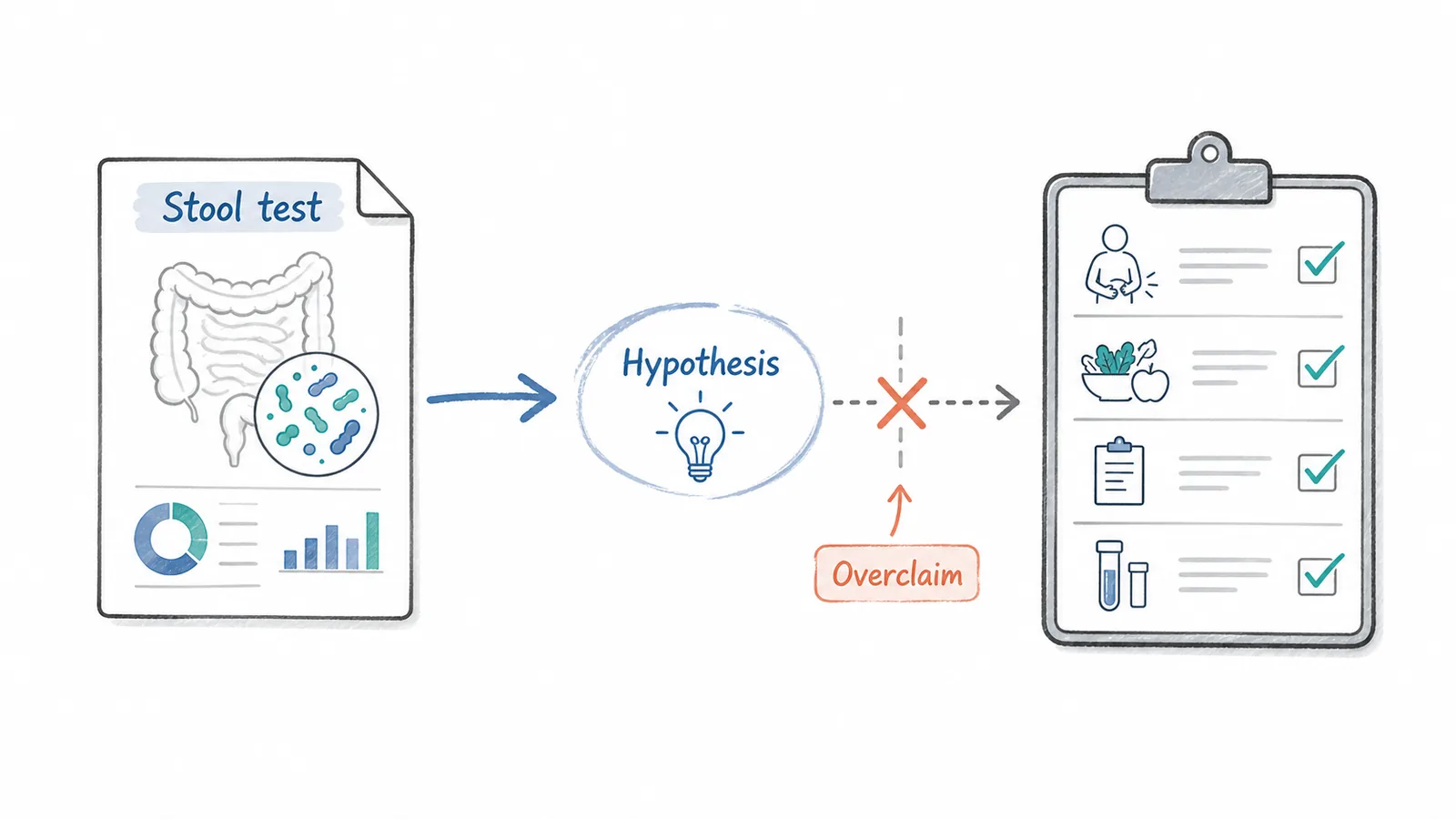
Short answer: Gut health can be a useful starting point for personalized wellness because diet, symptoms, medicines and microbial metabolism are connected. But a consumer stool microbiome test is not enough by itself to diagnose why you feel unwell, prescribe a diet, or prove that a wellness plan is personally right for you.
The idea behind personalized wellness is reasonable. People do not respond to food, fiber, fermented products, sleep loss, stress or medication in exactly the same way. The gut microbiome is one part of that variation. The problem starts when a broad scientific idea becomes a simple sales claim: test your stool, discover your gut profile, then follow personalized recommendations. The evidence is more nuanced.
How Personalized Wellness Begins with Gut Health
Gut health is a sensible place to begin because the digestive tract is where food, microbes, immune cells, bile acids, medications and the nervous system meet every day. Human studies show large differences in post-meal glucose, triglyceride and inflammatory responses, even after standardized meals. Microbiome features can contribute to those differences, together with genetics, body composition, sleep, activity, meal timing and usual diet.
That means the gut can help explain why one generic plan does not fit every person. It does not mean the gut microbiome is the master key to wellness. A stool sample mostly reflects microbes and microbial DNA in the sample. It does not directly measure the whole intestinal lining, small-intestinal function, immune activation, pain signalling, mental health, nutrient absorption or the safety of a supplement plan.
Evidence summary
Evidence summary
- Personalized nutrition is scientifically plausible because humans vary in metabolic and microbial responses to food.
- Microbiome data can add useful context, especially in research and selected clinical settings, but it is not a stand-alone wellness prescription.
- Fiber-rich foods, diverse plant intake and fermented foods can support gut ecology for many people, but individual tolerance matters.
- Symptoms such as bloating, low energy, irregular stools or mood changes are nonspecific and cannot be diagnosed from microbiome patterns alone.
- Red flags, persistent symptoms and medical conditions require clinical assessment, not only app-based recommendations.
Can a Microbiome Test Personalize Your Wellness Plan?
A microbiome test can describe patterns in a stool sample. Depending on the method, it may estimate bacterial groups, diversity, possible functional genes or predicted metabolic pathways. That can be educational. It may help someone understand why fiber, plant variety, fermented foods and antibiotics matter. It may also raise better questions for a clinician or dietitian.
The limitation is validation. A recommendation is clinically useful only if it reliably improves outcomes for the person who receives it. Many consumer reports move from a microbial pattern to advice about foods, probiotics, supplements or habits. Some of that advice may be harmless and generally healthy. But general advice is not the same as a proven personalized intervention based on your test result.
Nature reviews on microbiome-based personalized medicine describe real opportunities, including nutrition, infection risk, drug response and targeted microbial therapies. They also emphasize major barriers: population differences, measurement methods, causality, confounding, reproducibility and the difficulty of moving from association to treatment. That is why the cautious answer is yes, microbiome testing can contribute context. No, it should not be treated as a personal medical dashboard.
What Does Gut Health Actually Mean Clinically?
Clinically, gut health is not a single score. It includes comfortable digestion, regular bowel habits, adequate nutrient absorption, an intact gut barrier, balanced immune responses, safe medication use, and the absence of warning signs for infection, inflammation or malignancy. The microbiome interacts with these processes, but it does not replace them.
For example, bloating after meals can be related to fermentable carbohydrates, constipation, irritable bowel syndrome, celiac disease, lactose intolerance, medication effects, small intestinal bacterial overgrowth, endometriosis, anxiety, eating patterns or other causes. A stool test cannot sort those out alone. A low abundance of one microbe does not prove the cause of symptoms, and a high abundance of another does not guarantee health.
Which Gut Health Habits Are Best Supported?
The strongest everyday advice does not require an expensive test. Most people benefit from dietary patterns that include enough fiber, varied plant foods, minimally processed staples, adequate hydration, regular movement and sleep. Fermented foods can be helpful for some people, but tolerance differs. Increasing fiber too quickly can worsen gas, pain or diarrhea, especially in people with IBS or active gastrointestinal disease.
Dietary fiber is one of the better supported levers because gut microbes ferment many fibers into short-chain fatty acids and other metabolites. These compounds can influence barrier function, immune signalling and energy metabolism. Still, not all fibers behave the same way. Trials show that baseline microbiome composition can affect response to fiber interventions, which supports the idea of personalization while also showing why simple one-size-fits-all claims are too neat.
What Personalized Wellness Claims Go Too Far?
The overreach is not saying that gut health matters. It does. The overreach is implying that gut testing can reliably reveal what your body needs, explain daily energy, identify hidden imbalance, or turn broad lifestyle advice into precise personal instructions. These claims often blend validated science with speculative interpretation.
Be especially cautious when a test is framed as the best starting point for symptoms such as persistent fatigue, pain, diarrhea, constipation, anxiety, food reactions or weight change. Those symptoms deserve context. Some are functional and lifestyle-responsive. Some reflect medication effects. Some require blood tests, stool pathogen testing, endoscopy, celiac testing, inflammatory markers or other validated tools. A microbiome report should not delay that assessment.
Can Gut Data Replace Generic Wellness Advice?
Not yet. Gut data may eventually make some recommendations more precise. Large human studies have shown that people differ substantially in postprandial responses, and microbiome features can help prediction models. Research also suggests that microbial profiles may predict who responds better to certain fiber or dietary interventions.
But most consumer wellness decisions still start with basics: what symptoms you have, what you eat now, which medicines you take, your medical history, your goals, your budget, your culture, and what you can actually sustain. A microbiome report can be one layer. It should not become the whole map.
What Marketing Often Gets Wrong
Marketing loves a simple before and after story: discover your gut profile, follow personalized recommendations, feel better. Biology is slower and messier. Microbiomes vary by geography, diet, age, method and health status. Reference ranges are not universal. A score can hide uncertainty, and a colorful report can feel more clinically certain than it really is.
Another problem is turning correlation into instruction. If a microbial pattern is associated with a dietary response in one study, that does not prove that changing one food will fix one person’s symptoms. It also does not prove that the same pattern applies across test platforms, populations and conditions. Good personalized care uses evidence, but it also admits uncertainty.
When Should You See a Clinician?
Get medical care for blood in stool, black stools, persistent fever, severe or worsening abdominal pain, dehydration, fainting, persistent vomiting, unexplained weight loss, anemia, night-time diarrhea, difficulty swallowing, new symptoms after age 50, symptoms during pregnancy, symptoms in infants or older adults, or symptoms in anyone who is immunocompromised. Also seek help when diarrhea, constipation, pain, bloating or appetite change persists or disrupts daily life.
These situations can involve infection, inflammatory bowel disease, celiac disease, medication injury, endocrine disease, cancer, malabsorption or other conditions. No wellness test should be used to rule them out.
Bottom Line
Personalized wellness can begin with gut health, but it should not end with a stool report. The evidence supports a balanced view: gut microbes help process food, interact with immunity and metabolism, and may help personalize nutrition in selected contexts. The same evidence also shows that clinical translation is still uneven.
If you use a microbiome test, treat it as context rather than a diagnosis. Use it to ask better questions, not to replace medical assessment. The safest foundation remains boring but powerful: enough fiber if tolerated, diverse plant foods, appropriate fermented foods, cautious antibiotic use, sleep, movement, and professional care when symptoms need it.
Educational disclaimer: This article is for general science education. It does not diagnose disease, prescribe a diet or supplement, interpret a personal microbiome test, or replace care from a licensed clinician.
Evidence Notes and Sources
- Utilization of the microbiome in personalized medicine (2024). Nature Reviews Microbiology. DOI: 10.1038/s41579-023-00998-9
- Clinical translation of microbiome research (2025). Nature Medicine. DOI: 10.1038/s41591-025-03615-9
- Human postprandial responses to food and potential for precision nutrition (2020). Nature Medicine. DOI: 10.1038/s41591-020-0934-0
- Baseline intestinal microbiota composition influences response to a real-world dietary fiber intervention (2025). npj Biofilms and Microbiomes. DOI: 10.1038/s41522-025-00817-4
- Effects of dietary fibre on metabolic health and obesity (2024). Nature Reviews Gastroenterology and Hepatology. DOI: 10.1038/s41575-023-00891-z
- Regional variation limits applications of healthy gut microbiome reference ranges and disease models (2018). Nature Medicine. DOI: 10.1038/s41591-018-0164-x
- Gut microbiome as a clinical tool in gastrointestinal disease management: are we there yet? (2017). Nature Reviews Gastroenterology and Hepatology. DOI: 10.1038/nrgastro.2017.29