Evidence-based response
Why Microbiome Diversity Matters in 2026: Evidence-Based Answer Without the Hype
Gut microbiome diversity is often linked with health at the population level, but a diversity score is not a diagnosis or a personalized treatment plan.
By Sandra McKenzy, Pharmacist · 2026-05-25
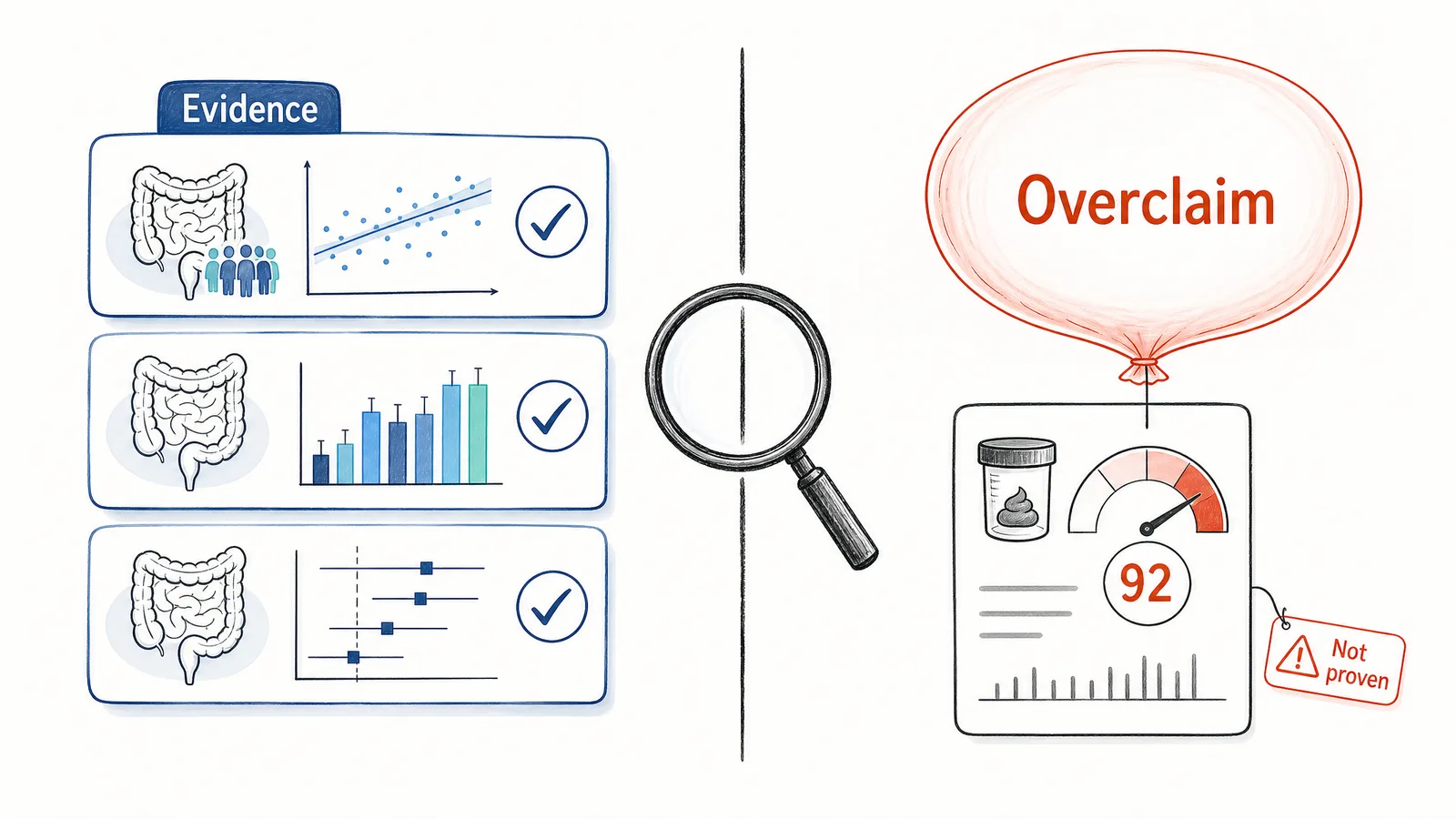
Short answer: Microbiome diversity matters because lower gut microbial diversity is repeatedly associated with several diseases and with ecological instability after stressors such as antibiotics. But diversity is a broad research marker, not a personal health grade. A higher Shannon index does not automatically mean you are healthy, and a lower score does not diagnose dysbiosis, inflammatory bowel disease, obesity, weak immunity, or the supplement you need.
What Does Microbiome Diversity Actually Mean?
In gut microbiome research, diversity usually describes how many different organisms are detected and how evenly they are distributed. Alpha diversity measures diversity within one sample. The Shannon index considers richness and evenness. Beta diversity compares one microbial community with another.
These metrics are useful because they compress a complex ecosystem into numbers that can be compared across people, time points, diets, disease groups, or treatments. The catch is that compression loses context. A single number cannot tell whether the organisms present are producing helpful metabolites, whether inflammation is active, whether symptoms are caused by the gut microbiome, or whether a person needs medical care.
Is Higher Gut Microbiome Diversity Always Better?
Not always. In broad adult population studies, higher diversity is often associated with metabolic resilience, varied diets, and fewer disease-associated patterns. Very low diversity can appear after antibiotics, during serious illness, or in some inflammatory and metabolic diseases. That is a real signal.
But "more diversity" is not a universal rule. Infants normally have lower diversity than adults. Some healthy communities are stable without being maximally diverse. Different regions, diets, ages, medications, and sampling methods shift what looks typical. Research has also shown that healthy reference ranges vary by geography, which limits the use of one universal microbiome standard.
What Do Shannon Index and Beta Diversity Tell You?
The Shannon index can show whether a stool sample has a relatively broad and even bacterial community compared with a reference group. Beta diversity can show whether your sample clusters near or far from other samples in a dataset. These are ecological comparisons. They are not disease tests.
A diversity report may be useful for tracking large shifts over time, such as before and after antibiotics or a major dietary change. It may also support a conversation about fiber variety, fermented foods, medication history, or gut symptoms. It should not be used alone to diagnose dysbiosis or to claim that a specific food, probiotic, or supplement will correct a medical problem.
Evidence Summary
- Lower alpha diversity is associated with several diseases, but association is not the same as diagnosis.
- Healthy microbiome reference ranges vary by population, geography, diet, and method.
- Shannon index and beta diversity are useful research metrics, not complete clinical interpretations.
- Microbiome testing can generate hypotheses, especially when repeated over time, but it does not replace clinical evaluation.
- Broad habits such as varied plant intake, adequate fiber, sleep, and careful antibiotic use have stronger practical support than chasing a perfect score.
What Marketing Often Gets Wrong
The overclaim is subtle: diversity is presented as if it were a dashboard for whole-body health. A gut test may detect lower diversity, but that does not prove the cause of bloating, fatigue, skin symptoms, mood symptoms, immune weakness, or weight gain. Those symptoms overlap with many conditions outside the microbiome.
The other problem is personalization. A test can describe what was detected in one stool sample. It cannot reliably prove that one specific recommendation will improve your clinical outcome unless that recommendation is backed by intervention evidence for people like you, with your condition, using the same endpoint.
Can You Improve Microbiome Diversity Safely?
For most people, the safest evidence-aligned approach is not exotic. Eat a wider variety of plant foods, increase fiber gradually if tolerated, include legumes, whole grains, nuts, seeds, vegetables, and fruit, avoid unnecessary antibiotics, sleep enough, move regularly, and address persistent symptoms medically. Fermented foods may help some people, but responses vary. Probiotics are strain-specific and condition-specific, not generic diversity boosters.
When Should You See a Clinician?
Do not rely on a diversity score if you have blood in stool, unexplained weight loss, persistent diarrhea, anemia, fever, severe abdominal pain, night symptoms, new symptoms after age 50, suspected inflammatory bowel disease, celiac disease, recurrent infections, or symptoms that are worsening. Those require ordinary medical assessment.
Bottom Line
Microbiome diversity matters, but mostly as context. It is one ecological signal among many. The strongest conclusion is that a diverse, stable, fiber-supported gut ecosystem is generally desirable. The weakest conclusion is that a single diversity number diagnoses your health or tells you exactly what to buy.
Evidence Notes and Sources
- He et al. (2018). Regional variation limits applications of healthy gut microbiome reference ranges and disease models. Nature Medicine. https://doi.org/10.1038/s41591-018-0164-x
- Wilmanski et al. (2019). Blood metabolome predicts gut microbiome alpha-diversity in humans. Nature Biotechnology. https://doi.org/10.1038/s41587-019-0233-9
- Manor et al. (2020). A predictive index for health status using species-level gut microbiome profiling. Nature Communications. https://doi.org/10.1038/s41467-020-18476-8
- Quigley (2017). Gut microbiome as a clinical tool in gastrointestinal disease management: are we there yet? Nature Reviews Gastroenterology & Hepatology. https://doi.org/10.1038/nrgastro.2017.29
- Shalon et al. (2025). Clinical translation of microbiome research. Nature Medicine. https://doi.org/10.1038/s41591-025-03615-9
Educational disclaimer: This article is for general education and does not diagnose, treat, or replace care from a qualified clinician.