Evidence-based response
Unlock Your Unique Gut Metabolites in 2026 with Science-Based Microbial Co-Metabolism Test: Evidence-Based Answer Without the Hype
Microbial co-metabolism is real biology, but metabolite mapping is not yet a stand-alone personalized medical roadmap.
By Sandra McKenzy, Pharmacist · 2026-06-11
Short answer: Microbial co-metabolism is real and clinically important, but a consumer test that maps microbes or inferred metabolites cannot yet guarantee personalized health optimization. Gut metabolites can reveal biology, but interpretation needs validated methods, clinical context, and caution.
Unlock Your Unique Gut Metabolites in 2026 with Science-Based Microbial Co-Metabolism Test: Evidence-Based Answer Without the Hype
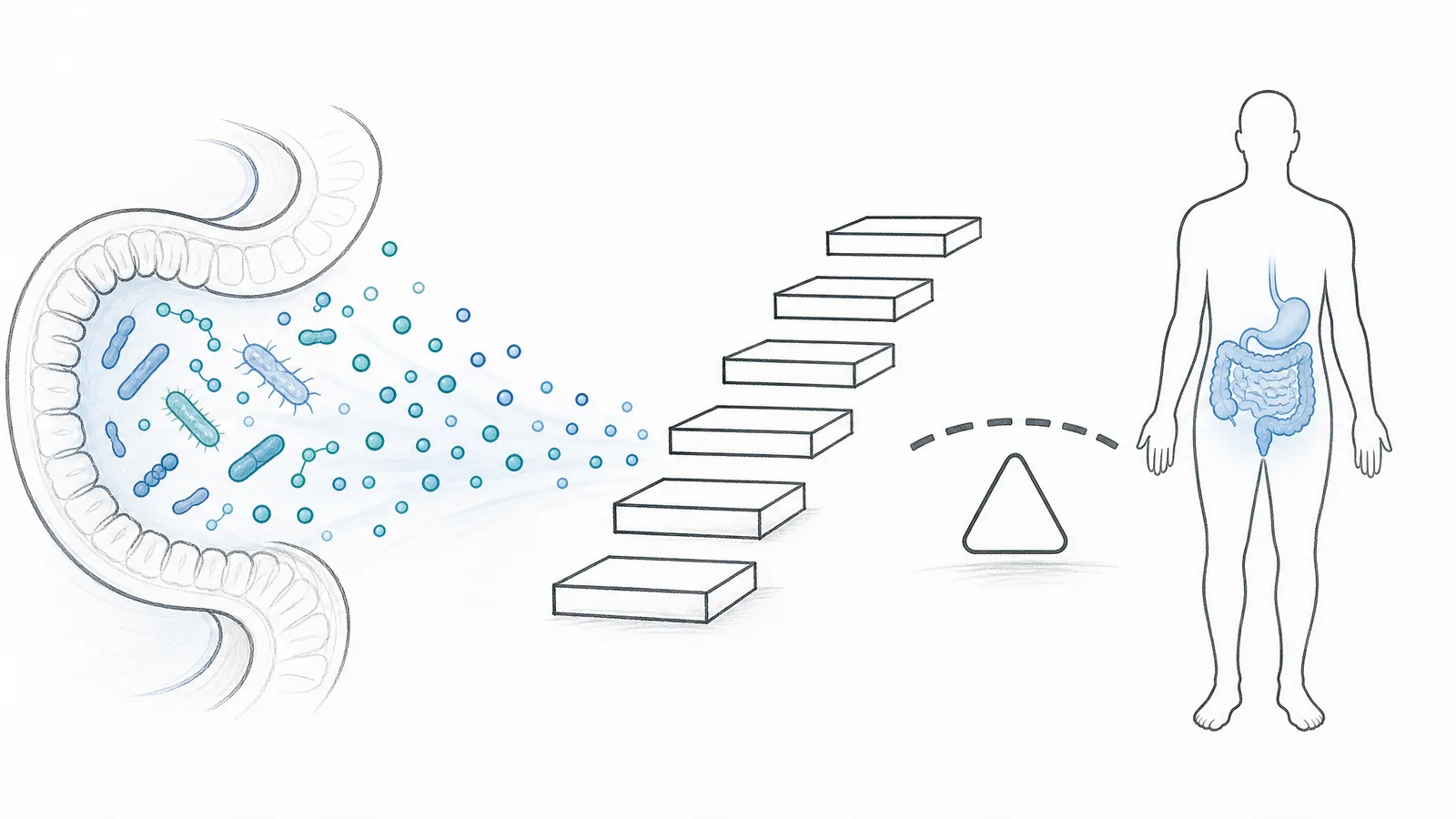
Microbial co-metabolism means that gut microbes and human cells jointly transform nutrients, bile acids, drugs, and host compounds into metabolites. Some of those metabolites, including short-chain fatty acids, indoles, bile acid derivatives, phenolic compounds, and amino acid products, can influence gut barrier function, immune signaling, metabolism, and inflammation.
An InnerBuddies article presents microbial co-metabolism and gut metabolite mapping as a path toward personalized gut health. The concept is scientifically strong. The marketing risk is different: turning a complex research field into the impression that one commercial report can unlock a personal metabolic blueprint and prescribe reliable interventions. Current evidence supports promise, not unrestricted clinical certainty.
Evidence summary
- Gut microbes produce and transform metabolites that can affect host physiology.
- Metabolomics and metagenomics can reveal diet, microbial function, and disease-associated patterns.
- Many metabolite associations are not yet validated as stand-alone clinical decision tools.
- Fecal metabolites do not always equal blood exposure, tissue exposure, symptoms, or disease causation.
- Personalized nutrition based on microbiome and metabolite data is promising, but it requires outcome validation.
What is microbial co-metabolism?
Microbial co-metabolism is the shared chemistry between the host and its microbes. Humans eat food, secrete bile acids, shed mucus, metabolize drugs, and provide substrates. Microbes ferment fibers, modify bile acids, transform polyphenols, process amino acids, and produce compounds that can signal locally in the gut or enter circulation.
This is not fringe wellness language. It is a serious area of microbiome science. Reviews in Nature journals describe gut microbial metabolites as intermediates between diet, microbes, immunity, epithelial biology, and systemic physiology. The problem is not the concept. The problem is when a broad concept is sold as a ready-made personalized medical tool.
Can gut metabolites tell you about health?
They can tell researchers and clinicians something about biological state, especially when measured carefully and interpreted with other data. Fecal and urine metabolomics studies show relationships between diet, microbial composition, and host metabolism. Studies also show that fecal metabolites can capture habitual diet interactions with the gut microbiome.
But the phrase tell you about health is too broad. A metabolite can be a marker of diet, microbial activity, transit time, host metabolism, inflammation, medication exposure, or sample handling. It may be protective in one context and harmful or irrelevant in another. That is why metabolite data are strongest when tied to a defined question, a defined population, and a measured outcome.
What are the best-supported parts of the claim?
The best-supported claim is that gut microbes participate in metabolite production and transformation. Short-chain fatty acids, especially acetate, propionate, and butyrate, are linked to fiber fermentation and intestinal biology. Bile acid transformation by microbes can influence signaling pathways involved in metabolism and gut function. Tryptophan, choline, polyphenol, and amino acid metabolism are active areas of research.
Another supported claim is individuality. People can respond differently to the same diet, partly because microbiome features, baseline diet, host physiology, medication use, and environment differ. Personalized nutrition research tries to model these differences. That does not mean every commercial output is clinically validated.
Which claims go beyond the evidence?
The overclaim is that a microbial co-metabolism test can unlock your unique gut metabolites and directly optimize digestion, immunity, mood, vitality, or disease risk. It may generate useful hypotheses. It may show patterns worth discussing. It does not automatically prove what intervention you need.
Another overclaim is implying that metabolite mapping detects imbalances early enough to prevent disease in a general wellness user. Preventive medicine requires proof that testing changes decisions and improves outcomes. Without that proof, early detection language can create anxiety and spending without clinical benefit.
Does metagenomics measure metabolites?
Not directly. Metagenomics measures microbial DNA and can infer functional potential, such as genes involved in fermentation or bile acid transformation. Metabolomics measures small molecules. Both are valuable, but they answer different questions. A gene that could produce a metabolite does not prove that the metabolite was produced at a clinically meaningful level. A fecal metabolite does not prove which organism produced it or how much reached host tissues.
Integrated multi-omics can reduce this uncertainty by combining microbial composition, functional genes, metabolites, diet, clinical data, and sometimes blood markers. That integration is powerful in research. It is also complex, expensive, and method-sensitive.
What about the PM2S study and similar projects?
The source article refers to a PM2S study as a landmark project. MedicalBrain searches found strong literature on microbiome-metabolome interplay, multi-view microbiome-metabolome methods, personalized SCFA modeling, and diet-associated fecal metabolites. I did not find enough detail in the source text itself to verify a specific PM2S claim from that article alone.
That matters because named studies should be cited precisely. A reader should be able to see the population, methods, endpoints, and limitations. If a commercial article uses a study name without enough detail, treat the conclusion as a prompt to look up the paper, not as proof of personal actionability.
What does marketing often get wrong?
Marketing often compresses a long chain into one step: microbes produce metabolites, metabolites affect health, therefore your test can optimize your health. The missing links are validation, causality, reproducibility, and clinical utility. Which sample was used? Which platform measured it? Which database interpreted it? Which intervention was tested? Did symptoms, inflammation, glucose control, medication response, or another meaningful outcome improve?
Marketing also prefers positive metabolite stories. But microbial metabolism can produce beneficial, neutral, or harmful compounds depending on substrate, dose, location, host state, and disease context. More microbial activity is not automatically better. More data are not automatically care.
How should you use gut metabolite information?
Use it as a conversation starter, not a verdict. If a report suggests low fiber fermentation potential, the practical step may be gradual dietary fiber improvement if tolerated. If it suggests bile acid or protein fermentation patterns, the next step should be clinical context, especially if symptoms are significant. If it recommends multiple supplements or strict elimination without a clear diagnosis, be cautious.
For most healthy adults, the highest-value actions do not require metabolomics: eat a diverse, tolerated plant-forward diet, avoid unnecessary antibiotics, manage cardiometabolic risk, sleep adequately, move regularly, and seek care for persistent symptoms. Microbial co-metabolism can explain why those basics matter, but it does not replace them.
When should you see a clinician?
Seek medical care for blood in stool, black stool, unexplained weight loss, fever, anemia, dehydration, severe or worsening abdominal pain, persistent diarrhea, nighttime symptoms, recurrent vomiting, malnutrition, symptoms after travel, immune suppression, pregnancy, or symptoms that disrupt daily life.
Also seek help if a metabolite report encourages drastic restriction, expensive long-term supplement plans, or stopping prescribed medication. Metabolite science should improve decision-making, not bypass it.
Bottom line
Microbial co-metabolism is one of the most important ideas in gut microbiome science. Gut metabolites connect diet, microbes, and host biology. The evidence supports serious research and future clinical tools. It does not support treating every consumer metabolite or inferred pathway report as a personalized medical roadmap.
The Simple Version
Your gut microbes help turn food and body chemicals into smaller molecules called metabolites. Some of those molecules can matter for the gut, immune system, and metabolism. Scientists can study them, and that research is exciting. But a test result is not magic. It cannot automatically tell you exactly what to eat, which supplement to buy, or what disease you will get. Good interpretation still needs context, symptoms, medical history, and studies showing that an action actually helps.
Evidence notes
- Gut microbial metabolites as multi-kingdom intermediates. Nature Reviews Microbiology. 10.1038/s41579-020-0438-4
- Diet-microbiota interactions and personalized nutrition. Nature Reviews Microbiology. 10.1038/s41579-019-0256-8
- Interplay between the human gut microbiome and host metabolism. Nature Communications. 10.1038/s41467-019-12476-z
- Microbial community-scale metabolic modelling predicts personalized short-chain fatty acid production profiles in the human gut. Nature Microbiology. 10.1038/s41564-024-01728-4
- An untargeted fecal and urine metabolomics analysis of the interplay between the gut microbiome, diet and human metabolism in Indian and Chinese adults. Scientific Reports. 10.1038/s41598-019-45640-y
- Faecal metabolites as a readout of habitual diet capture dietary interactions with the gut microbiome. Nature Communications. 10.1038/s41467-025-66046-7
- NMFGOT: a multi-view learning framework for the microbiome and metabolome integrative analysis with optimal transport plan. npj Biofilms and Microbiomes. 10.1038/s41522-024-00612-7
This article is educational and does not diagnose, treat, or replace care from a qualified clinician.