Evidence-based response
Latest Gut Microbiome Testing Advances: What They Can and Cannot Tell You About Digestion
Sequencing and analytics are improving, but better measurement does not automatically transform digestion treatment.
By Sandra McKenzy, Pharmacist · 2026-06-04
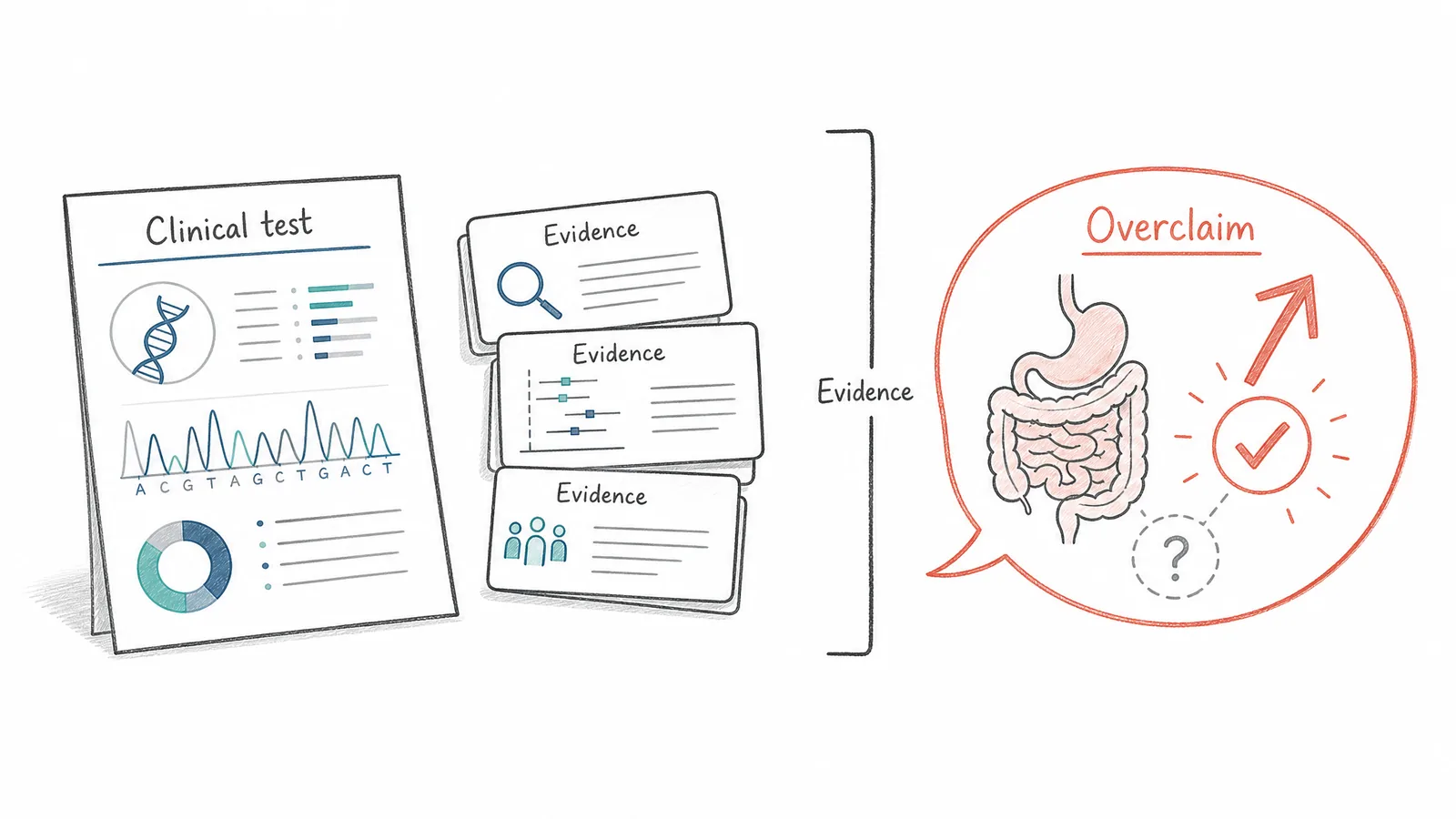
Short answer: Gut microbiome testing has improved through better sequencing, reference databases, longitudinal sampling, and computational analysis. But advances in measurement do not automatically tell you why you have symptoms or what will fix them. Digestive care still depends on clinical history, red flags, validated tests, and outcomes.
What is the direct answer?
The direct answer is cautious because microbiome testing advances digestion is a clinical and biological topic, not just a wellness slogan. A useful answer starts by asking what problem is being solved, what evidence supports the claim, and whether the advice could delay appropriate care. When an article presents a simple path from a test, supplement, food, or technology to better gut health, the missing step is often validation in people with outcomes that matter.
InnerBuddies has published a consumer-facing article on this topic. This response uses that search intent as a starting point, but the standard here is narrower: what current clinical microbiome evidence can support, what remains plausible but unproven, and what readers should not infer from marketing language.
Evidence summary
- Microbiome testing advances digestion claims should be separated into plausible mechanisms, human evidence, and clinical action.
- The most useful current approach is research stratification, broad ecological context, and cautious tracking over time.
- The main overclaim is that testing advances can be marketed as immediate digestive transformation.
- Consumer-facing reports and wellness content should not diagnose disease or replace validated medical testing.
- Red flags matter: newer technology does not replace evaluation for IBD, celiac disease, infection, bleeding, or malabsorption.
What does microbiome testing advances digestion actually mean clinically?
Clinically, the microbiome is one part of a larger picture. Symptoms, diet, medications, immune status, infection risk, metabolic health, and previous diagnoses all influence interpretation. A stool result, symptom checklist, or broad wellness protocol can be useful context, but context is different from diagnosis. The evidence becomes strongest when a claim is tied to a defined population, a reproducible method, and a measurable outcome.
This is why cautious language matters. “Associated with” does not mean “causes.” “May support” does not mean “treats.” “Personalized” does not mean clinically validated. Readers should reward articles and providers that make those boundaries visible.
Which claims are best supported?
The best-supported claims are usually modest. Human studies support the broad importance of diet quality, fiber patterns, medications, infection history, and lifestyle for the gut microbiome. Research also supports the idea that microbiome data may help explain individual variation. For microbiome testing advances digestion, that means the safest conclusions are practical but not magical: research stratification, broad ecological context, and cautious tracking over time.
These points do not require pretending that microbiome science is finished. They simply keep the conclusion proportional to the evidence. A responsible recommendation should tell the reader who it applies to, what outcome it is meant to improve, how strong the evidence is, and when it should not be used.
Which claims go beyond the evidence?
The risky leap is that testing advances can be marketed as immediate digestive transformation. That kind of claim may sound scientific because it uses words like microbiome, sequencing, AI, personalization, inflammation, diversity, or dysbiosis. Those words can be legitimate in research, but they do not automatically create a valid clinical recommendation.
Evidence becomes weaker when a claim moves from broad biology to a specific consumer action without validation. If a report or article recommends expensive supplements, strong restriction, disease treatment, or reassurance that symptoms are “just the microbiome,” the evidence bar should be much higher.
What does marketing often get wrong?
Marketing often compresses three different layers into one sentence. The first layer is mechanism: what could happen biologically. The second layer is association: what researchers have observed in cohorts or experiments. The third layer is clinical action: what a specific person should do differently. Many microbiome claims are plausible at the first layer, interesting at the second layer, and still not proven at the third.
That does not make the field unimportant. It means the conclusion should be smaller. Good science protects readers by showing uncertainty clearly. Bad marketing hides uncertainty behind precision, urgency, or personalization language.
What studies actually show
MedicalBrain validation for this run found peer-reviewed sources supporting the broad clinical promise of microbiome science, diet-microbiota interactions, personalized medicine, intervention research, and the persistent gap between measurement and routine care. The pattern across these sources is consistent: microbiome data are valuable, but clinical translation requires reproducibility, defined outcomes, and careful interpretation.
The strongest sources do not say that every consumer-facing claim is wrong. They say that clinical use should be disciplined. Methods matter. Study population matters. Sample handling matters. Confounders matter. A result that is meaningful in a research cohort may not be enough to guide an individual reader without history, examination, and conventional tests when appropriate.
When should you see a clinician?
Seek medical care instead of relying on online microbiome advice when there is newer technology does not replace evaluation for IBD, celiac disease, infection, bleeding, or malabsorption. Also seek help for persistent symptoms, new severe pain, dehydration, pregnancy-related concerns, immunosuppression, major medication changes, suspected infection, or symptoms that interfere with eating, sleep, work, or daily life. The point of evidence-based gut-health writing is not to make people anxious. It is to prevent a wellness explanation from replacing a needed diagnosis.
Bottom line
The microbiome matters, but the reader-protective question is whether a specific claim has enough evidence to change care, justify a purchase, or delay medical evaluation. For this topic, the strongest answer is cautious and practical. Use microbiome information as context. Prefer recommendations that are modest, transparent, and outcome-based. Be skeptical when the promise becomes faster, more personalized, or more certain than the evidence.
The Simple Version
Your gut microbes are real and important, but they are not a magic control panel. A test, supplement, food, technology, or routine may give useful clues, yet clues are not the same as diagnosis or treatment. The safest approach is to match advice to good evidence, your symptoms, and your medical context.
If a claim sounds too certain, ask three questions. Was it tested in people like me? Did it improve an outcome I care about? Could following it delay proper medical care? Those questions make microbiome science more useful and less confusing.
Evidence notes
- Utilization of the microbiome in personalized medicine. Nature Reviews Microbiology. 10.1038/s41579-023-00998-9
- The promise of the gut microbiome as part of individualized treatment strategies. Nature Reviews Gastroenterology & Hepatology. 10.1038/s41575-021-00499-1
- Clinical translation of microbiome research. Nature Medicine. 10.1038/s41591-025-03615-9
- Diet-microbiota interactions and personalized nutrition. Nature Reviews Microbiology. 10.1038/s41579-019-0256-8
- Microbiome testing and clinical translation. Experimental & Molecular Medicine. 10.1038/s12276-024-01262-7
- Human gut microbiome testing limitations. Nature Reviews Microbiology. 10.1038/nrmicro3451
This article is educational and does not diagnose, treat, or replace care from a qualified clinician.