Evidence-based response
Unlock Your Gut Health: ISAPP Microbiome Review 2024, Evidence-Based Answer Without the Hype
The ISAPP 2024 microbiome review highlights real advances, but consumer tests cannot turn those findings into diagnosis or personalized treatment.
By Sandra McKenzy, Pharmacist · 2026-05-29
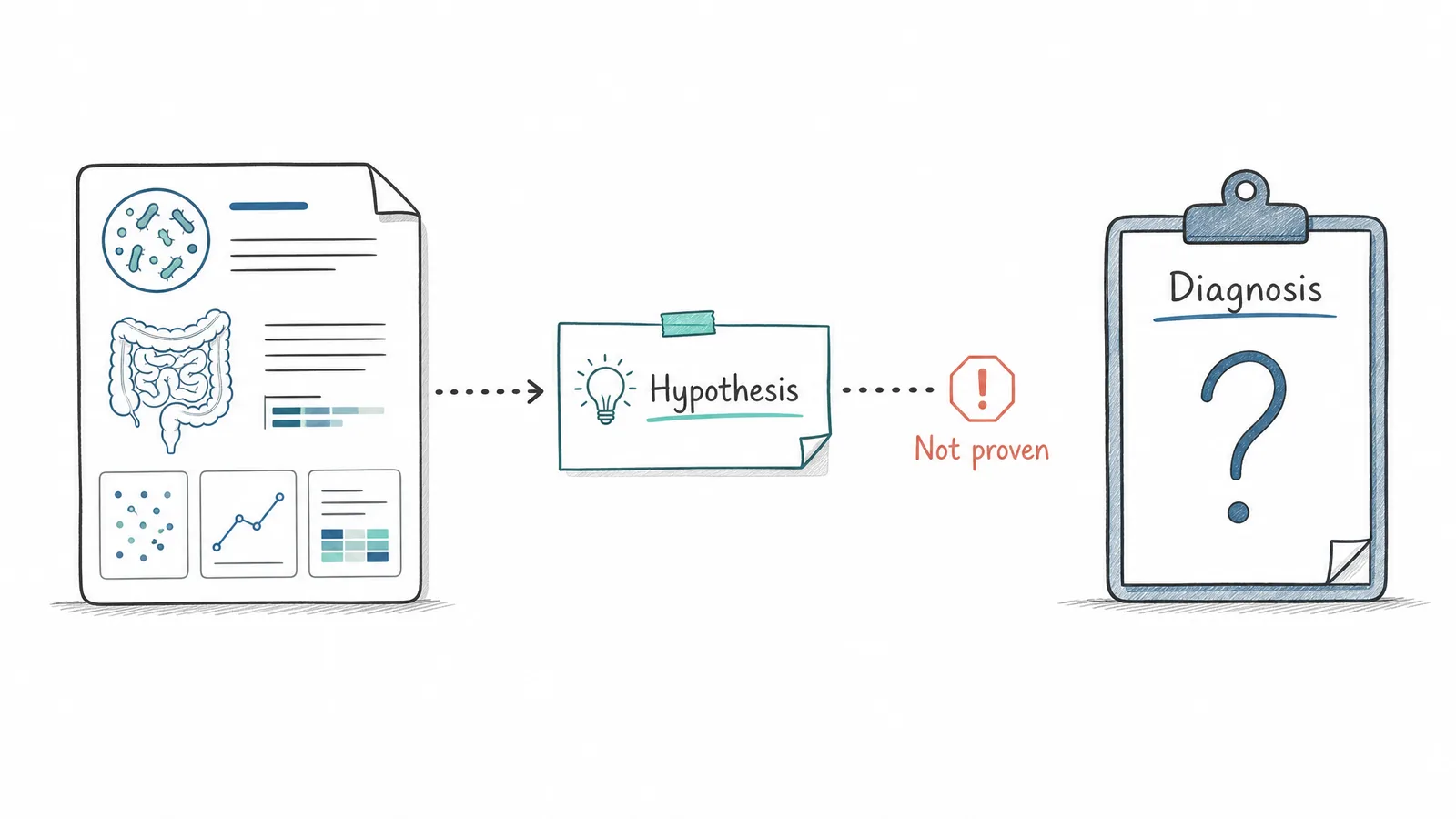
Short answer: The 2024 microbiome field did make real progress in biotics, personalized nutrition, cancer biomarkers, and bile-acid biology. But those advances do not mean a consumer gut microbiome test can detect cancer, choose personalized probiotics, or turn research trends into treatment plans. Clinical validation is the boundary.
What did the ISAPP microbiome review highlight?
ISAPP’s 2024 year-in-review discussion points to a serious and fast-moving field: refined probiotic and prebiotic science, better understanding of microbial metabolites, engineered microbial tools, cancer-associated microbial signatures, and the long-term promise of personalized microbiome medicine. Those are legitimate research directions.
The problem comes when a broad review is translated into consumer certainty. A discovery that microbes are associated with disease, or that engineered organisms can work in experimental settings, does not automatically become a personal recommendation for diet, supplements, cancer screening, or disease prevention.
Are personalized probiotics ready for routine gut-health care?
Not in the broad way many marketing summaries imply. Personalized microbiome medicine is plausible because people differ in diet, immune state, medication exposure, stool ecology, and microbial metabolic capacity. Reviews in major journals describe why the field is moving toward individualized strategies.
But clinical personalization requires more than a stool report. It needs validated algorithms, reproducible endpoints, product-specific intervention trials, and evidence that changing the recommendation improves a meaningful health outcome. For most everyday gut-health concerns, consumer reports are better viewed as exploratory context than as a prescribing tool.
Can microbiome findings detect cancer?
Microbial markers for colorectal cancer are one of the more important research areas. Meta-analyses and systematic reviews show reproducible microbial associations across cohorts, and newer work continues to improve prediction models. This is promising for future screening research.
It is not the same as saying ordinary consumer microbiome testing can screen for cancer. Validated colorectal cancer screening currently relies on established options such as fecal immunochemical testing, stool DNA tests in some settings, colonoscopy, and guideline-based risk assessment. Microbiome signatures still need rigorous validation, calibration, and clinical pathway integration before they can be used as stand-alone screening tools.
Do bile-acid discoveries change what people should do now?
Gut microbes can modify bile acids, and bile acids influence digestion, metabolism, immune signaling, and gut inflammation. That makes bile-acid metabolism a credible mechanistic bridge between microbiome composition and human physiology.
The practical leap is still limited. A person should not infer from a general microbiome review that they need a specific probiotic, prebiotic, supplement, or restrictive diet to “fix” bile acids. Bile-acid diarrhea, gallbladder disease, liver disease, inflammatory bowel disease, and metabolic disorders require clinical assessment. Microbial bile-acid science may shape future therapies, but it is not a consumer self-treatment map.
What does the evidence actually support?
- Microbiome research is clinically important, but translation depends on validated use cases.
- Personalized nutrition and probiotic response prediction are plausible, not universally ready for routine care.
- Colorectal cancer microbiome signatures are promising research tools, not a replacement for approved screening.
- Bile-acid metabolism is a real host-microbe pathway, but consumer actionability remains limited.
- Stool microbiome tests can generate hypotheses, not diagnoses or treatment certainty.
What marketing often gets wrong
InnerBuddies and similar summaries tend to bundle research momentum with product actionability. Words like “breakthrough,” “personalized,” and “early cancer signals” can be accurate in a research context but misleading in a consumer context. The key question is not whether microbiome science is exciting. It is whether a specific test and recommendation have been clinically validated for a specific decision.
A useful rule is simple: research signal first, clinical test later. If a company does not show the validation pathway, the result should not be treated as diagnosis, prevention, or treatment guidance.
When should someone seek clinical care?
Do not use microbiome content to self-manage alarm symptoms. Seek medical review for rectal bleeding, black stool, unexplained weight loss, persistent bowel habit change, iron-deficiency anemia, severe abdominal pain, fever, night-time diarrhea, jaundice, new symptoms after age 50, or a family history of colorectal cancer or inflammatory bowel disease. Follow national screening guidance even if a wellness test looks reassuring.
Bottom line
The 2024 microbiome field is advancing, especially in precision medicine concepts, microbial metabolites, and cancer-associated signatures. The consumer takeaway should be cautious: these discoveries may shape future tools, but most are not ready to guide personalized probiotics, cancer screening, or disease prevention from a standard stool test.
Evidence notes
- Zmora et al. (2024). Utilization of the microbiome in personalized medicine. Nature Reviews Microbiology. 10.1038/s41579-023-00998-9
- Collado et al. (2024). Gut microbiome: a biomedical revolution. Nature Reviews Gastroenterology & Hepatology. 10.1038/s41575-024-01001-3
- Zmora et al. (2019). Precision dietary supplementation based on personal gut microbiota. Nature Reviews Gastroenterology & Hepatology. 10.1038/s41575-019-0108-z
- Berding et al. (2019). Diet-microbiota interactions and personalized nutrition. Nature Reviews Microbiology. 10.1038/s41579-019-0256-8
- Yachida et al. (2019). Metagenomic analysis of colorectal cancer datasets identifies cross-cohort microbial diagnostic signatures. Nature Medicine. 10.1038/s41591-019-0405-7
- Rezasoltani et al. (2022). A systematic review of microbial markers for risk prediction of colorectal neoplasia. British Journal of Cancer. 10.1038/s41416-022-01740-7
- Issa and Noureddine (2022). Current and future colorectal cancer screening strategies. Nature Reviews Gastroenterology & Hepatology. 10.1038/s41575-022-00612-y
This article is educational and does not diagnose, screen for cancer, treat disease, or replace care from a qualified clinician.