Evidence-based response
Is Coffee Bad for Gut Health? What Science Actually Says About Gut Flora
Coffee is not generally bad for gut flora, but symptom response varies and microbiome tests cannot issue a clinical coffee verdict.
By Sandra McKenzy, Pharmacist · 2026-05-29
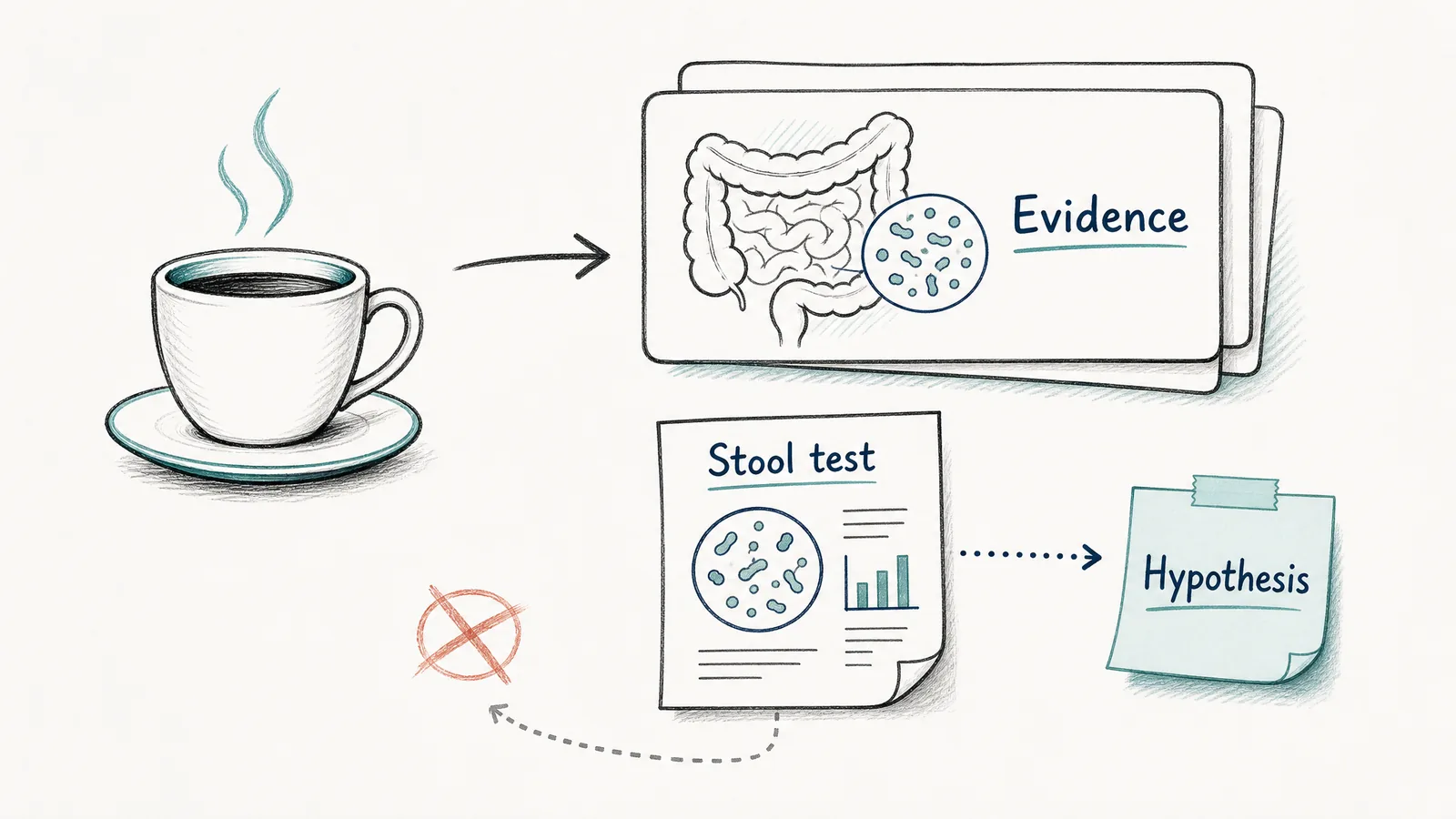
Short answer: Coffee is not generally “bad for gut flora.” Moderate coffee intake is associated with reproducible gut microbiome signatures, including higher abundance of Lawsonibacter asaccharolyticus in large cohort research. But coffee can worsen reflux, urgency, anxiety, or IBS-type symptoms in some people, and a stool microbiome test cannot prove whether coffee is personally good or bad for you.
Is coffee bad for gut flora?
For most adults, the evidence does not support calling coffee a microbiome-damaging drink. Coffee contains caffeine, chlorogenic acids, other polyphenols, soluble compounds, and roasted-bean metabolites. Those compounds can interact with digestion, liver metabolism, microbial metabolism, and bowel motility.
The source article is right that coffee has measurable links with the gut microbiome. The weaker claim is that microbiome testing can personalize coffee decisions with clinical precision. Current evidence is better at showing population-level associations than giving a definitive “coffee is good for your flora” or “coffee is bad for your flora” answer for one symptomatic person.
What do human microbiome studies show about coffee?
The clearest recent evidence comes from large multi-cohort metagenomic studies. A 2024 Nature Microbiology paper found that coffee consumption was strongly associated with the presence and abundance of Lawsonibacter asaccharolyticus across multiple cohorts. The study also reported that coffee could stimulate this organism in vitro, which makes the association biologically plausible.
That is important, but it is still not a treatment claim. A coffee-associated microbial signature does not prove that coffee repairs dysbiosis, prevents disease, or improves symptoms. It shows that coffee is one of the dietary exposures the microbiome can reflect.
Can coffee support gut bacteria?
- Moderate coffee intake is not generally shown to harm the adult gut microbiome.
- Large cohort studies link coffee with specific microbiome signatures, especially Lawsonibacter asaccharolyticus.
- Coffee polyphenols and metabolites may be processed partly through host-microbe pathways.
- Symptom response is individual, especially with reflux, urgency, anxiety, sleep disruption, or IBS.
- Stool microbiome testing cannot diagnose coffee intolerance or prescribe a validated coffee plan.
Coffee may support some microbial pathways because polyphenols and related compounds reach the gut and can be transformed by microbes. Habitual diet studies also show coffee among foods with strong microbiome associations. This does not mean more coffee is always better. Dose, timing, sleep, caffeine metabolism, stomach sensitivity, and added sugar or creamers all change the practical health effect.
Decaffeinated coffee may still matter because many coffee compounds are not caffeine. That is one reason it is too simple to blame or credit caffeine alone for every gut effect.
When can coffee worsen digestive symptoms?
Coffee can stimulate colonic motility, which is why some people need the bathroom soon after drinking it. For constipation, that may feel helpful. For diarrhea-predominant IBS, urgency, active inflammation, or anxiety-linked gut symptoms, it may feel like a trigger.
Coffee can also aggravate reflux or upper abdominal burning in susceptible people. That does not prove gut flora damage. It may reflect acid sensitivity, lower esophageal sphincter effects, caffeine sensitivity, meal timing, or other gastrointestinal factors. If symptoms are the issue, the relevant question is tolerance, not whether coffee is globally “good” or “bad” for bacteria.
Can a microbiome test personalize coffee intake?
A consumer stool test can report microbial composition, and in research settings coffee intake can leave detectable signatures. But a stool report cannot prove that coffee is causing your bloating, reflux, diarrhea, constipation, or fatigue. It also cannot validate a specific dose, brewing method, probiotic pairing, or caffeine schedule as medical treatment.
The safer use is hypothesis generation. If coffee seems linked with symptoms, track timing, amount, caffeine level, sleep, meals, bowel pattern, reflux, and stress. A brief structured trial, such as reducing coffee or switching to decaf for two weeks, may be more informative than interpreting a single stool snapshot as a prescription.
What about probiotics with coffee?
There is no strong clinical reason to assume probiotics are needed to “protect” gut flora from normal coffee intake. Some probiotic strains have evidence in specific conditions, but probiotics are strain-specific and outcome-specific. Pairing a generic probiotic with coffee because a microbiome test shows a low abundance number is not a validated treatment plan.
If you take a probiotic that genuinely helps a symptom, keep the focus on the studied strain and the clinical outcome. Coffee timing may matter for comfort, but it should not be sold as a microbiome synergy unless human data support that exact claim.
When should coffee-related symptoms be checked clinically?
Seek medical advice for vomiting blood, black stools, unexplained weight loss, anemia, trouble swallowing, persistent vomiting, severe abdominal pain, new bowel changes after age 50, blood in stool, night-time diarrhea, fever, or dehydration. Also check persistent reflux, chest pain, or symptoms that require frequent antacids. Do not use microbiome testing to delay evaluation.
Bottom line
Coffee is not generally bad for gut flora. It is a biologically active drink with reproducible microbiome associations and highly individual symptom effects. The evidence supports a balanced answer: moderate coffee can fit a gut-friendly diet for many people, but symptom-sensitive people may need dose and timing adjustments. A stool microbiome test can raise questions, not issue a clinical verdict.
Evidence notes
- Manghi et al. (2024). Coffee consumption is associated with intestinal Lawsonibacter asaccharolyticus abundance and prevalence across multiple cohorts. Nature Microbiology. 10.1038/s41564-024-01858-9
- Nature Microbiology Editors (2024). Coffee habits help shape gut communities. Nature Microbiology. 10.1038/s41564-024-01869-6
- Asnicar et al. (2021). Microbiome connections with host metabolism and habitual diet from 1,098 deeply phenotyped individuals. Nature Medicine. 10.1038/s41591-020-01183-8
- Bar et al. (2022). An online atlas of human plasma metabolite signatures of gut microbiome composition. Nature Communications. 10.1038/s41467-022-33050-0
- Collins (2014). A role for the gut microbiota in IBS. Nature Reviews Gastroenterology & Hepatology. 10.1038/nrgastro.2014.40
- Quigley (2017). Gut microbiome as a clinical tool in gastrointestinal disease management: are we there yet? Nature Reviews Gastroenterology & Hepatology. 10.1038/nrgastro.2017.29
This article is educational and does not diagnose, treat, or replace care from a qualified clinician.