Evidence-based response
How to Heal the Neurological Gut? What Science Actually Says
The gut-brain axis is real, but a stool microbiome test cannot diagnose or heal a neurological gut. Evidence supports broader clinical, diet, stress, and symptom-based care.
By Sandra McKenzy, Pharmacist · 2026-09-17
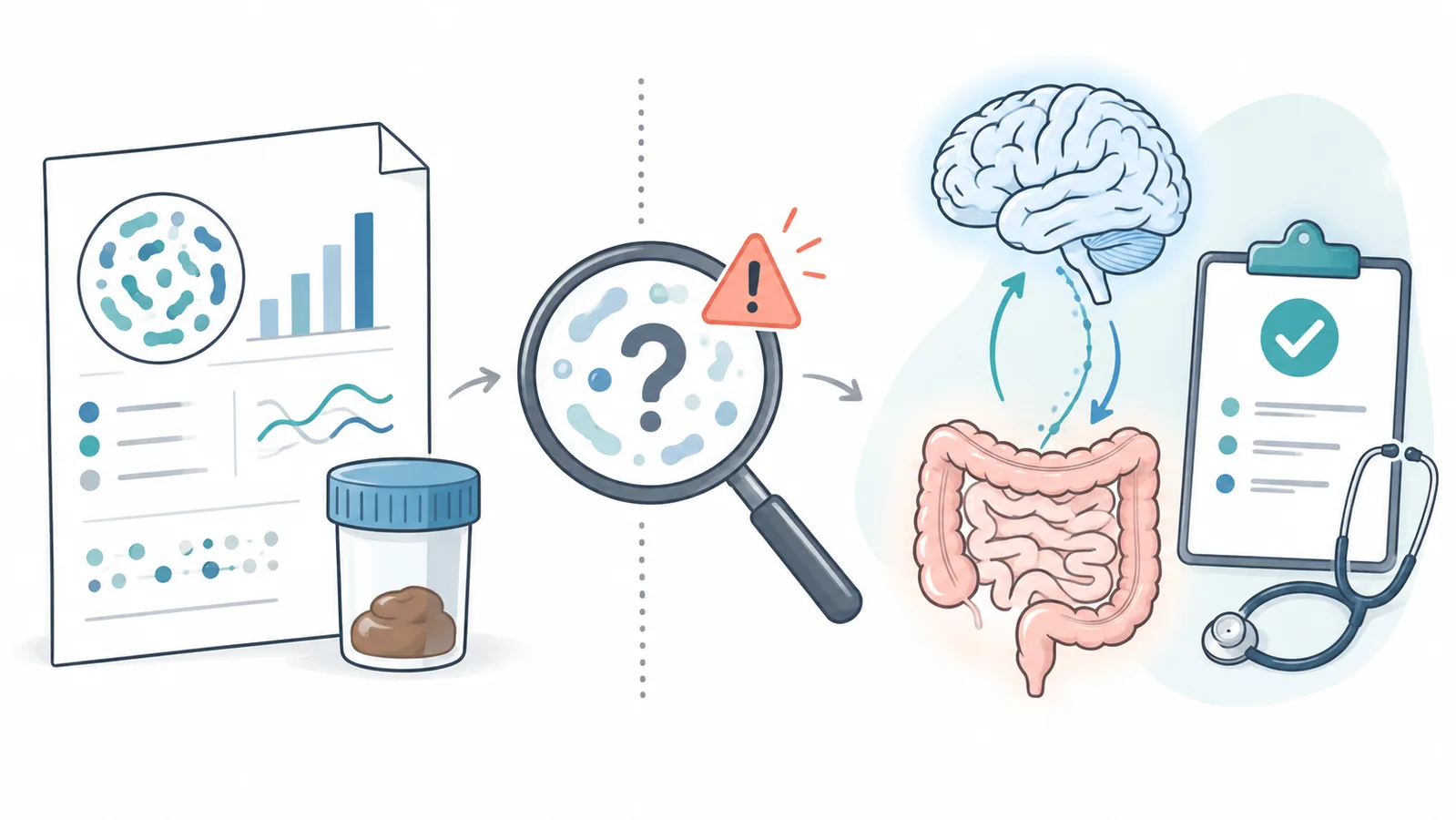
Short answer: You cannot reliably heal a neurological gut by reading a consumer stool microbiome test and following a personalized supplement plan. The gut-brain axis is real, and diet, sleep, stress care, IBS treatment, and selected probiotics may help some people. But brain fog, anxiety, fatigue, headaches, low mood, or digestive discomfort need clinical context, not a microbiome report alone.
The source article presents the neurological gut as a gut-brain problem that microbiome testing can uncover and guide. That is an attractive promise because many people feel their digestion and mental state move together. The safer evidence-based answer is more careful: gut-brain communication is well established, but the leap from stool-test patterns to a personal neurological diagnosis or a guaranteed healing plan is not clinically validated.
What does neurological gut mean?
Neurological gut is not a standard diagnosis. It usually refers to the gut-brain axis: the two-way communication between the gastrointestinal tract, enteric nervous system, central nervous system, vagus nerve, immune system, hormones, microbial metabolites, and intestinal barrier. This network helps explain why stress can worsen IBS, why pain and bowel habit can affect mood, and why microbes are studied in depression, anxiety, Parkinson disease, autism, and other nervous-system conditions.
That does not mean every mental or neurological symptom starts in the gut. The gut-brain axis is a biological network, not a shortcut diagnosis. A person can have brain fog from poor sleep, thyroid disease, anemia, depression, medication effects, long infection recovery, migraine, blood sugar swings, alcohol, inflammatory disease, or chronic stress. Digestive symptoms can overlap with these problems, but overlap is not proof of one root cause.
Can the gut-brain axis be healed?
It is better to avoid the word heal as if the gut-brain axis were one damaged object. Clinically, the more useful goal is to reduce modifiable drivers: untreated gut disease, IBS flares, constipation or diarrhea, poor sleep, high alcohol intake, low-fiber eating patterns, unmanaged stress, medication side effects, and nutritional deficiencies. In gut-brain disorders such as IBS, care can include diet therapy, soluble fiber, gut-directed cognitive behavioral therapy, hypnotherapy, selected medications, and sometimes targeted probiotics.
Reviews of gut-brain communication describe strong mechanistic pathways, including vagal signalling, immune mediators, stress hormones, microbial metabolites such as short-chain fatty acids, and enteroendocrine signalling. This supports the concept that the gut and nervous system influence each other. It does not prove that a commercial test can identify one personal bacterial imbalance and convert it into a reliable neurological treatment plan.
Can a microbiome test diagnose the neurological gut?
No. A stool microbiome test can report DNA, taxa, or predicted functions in one stool sample. It cannot see the nervous system directly. It cannot diagnose anxiety, depression, ADHD, Parkinson disease, migraine, leaky gut, neuroinflammation, dysautonomia, or the cause of brain fog. It also cannot prove that a particular bacterium is causing a symptom in an individual person.
This limitation matters because microbiome results vary with diet, stool consistency, recent infection, medications, antibiotics, sample handling, sequencing method, bioinformatics pipeline, geography, and reference database. Even when studies find group-level differences in depression, IBS, or neurodegenerative disease, those patterns usually do not translate into a clinically validated diagnostic report for one consumer. A report may generate hypotheses. It should not replace history, examination, basic blood work, stool inflammatory markers where appropriate, neurological assessment, or mental-health care.
What evidence supports diet and lifestyle for gut-brain health?
The strongest practical evidence is not exotic. Consistent sleep, regular meals, physical activity, alcohol reduction, adequate protein, and gradual fiber intake can support both gut and nervous-system resilience. Mediterranean-style eating patterns are often discussed because they combine fiber, polyphenols, unsaturated fats, legumes, vegetables, fruit, nuts, and fish. These are not neurological gut cures. They are broad health patterns that can improve cardiometabolic, inflammatory, and digestive context.
Stress is also biologically relevant. A 2024 study in Nature Microbiology described stress-related dysbiosis pathways in IBS, supporting the idea that stress can reshape gut ecology through host biology. But this does not mean the right probiotic can erase stress, or that a stool result proves stress is the cause. In practice, gut-directed psychological therapies, breathing work, exercise, sleep treatment, and symptom-specific medical care may be more evidence-aligned than chasing single bacteria.
Do probiotics help anxiety, depression, IBS, or brain fog?
Sometimes, but not as a universal answer. Human probiotic studies in gut-brain topics are mixed. Some randomized trials in depression or IBS-related depression report improvements in mood, symptoms, or microbiome measures. Other studies show small effects, uncertain clinical meaning, or benefits limited to particular strains, doses, populations, and durations. The newer mood literature is promising, especially for selected groups, but it is not a license to prescribe probiotics from a generic stool report.
If someone wants to try a probiotic, the evidence-based question is not whether the microbiome is low in a brand-friendly bacterium. It is whether a specific strain or blend has human trial evidence for that person's condition, whether risks are acceptable, and whether there is a plan to stop if it does not help. Immunocompromised people, people with central lines, severe illness, or complex medical conditions should be especially cautious and seek clinician guidance.
What does marketing often get wrong?
Marketing often compresses a real field into a simple story: your gut bacteria control your brain, a test finds the imbalance, and a personalized plan heals it. Each piece contains a partial truth. Microbes can influence host signalling. Tests can describe a sample. Lifestyle changes can help. The overclaim is the certainty.
The current evidence does not support telling people that stool testing can identify the root cause of neurological symptoms, reveal hidden neuroinflammation, diagnose leaky gut as the driver of mood, or prescribe exact supplements for cognitive performance. Those claims move faster than clinical validation. They can also delay proper care when symptoms are serious.
When should you see a clinician?
Seek medical help urgently for sudden weakness, facial droop, trouble speaking, new confusion, seizure, severe sudden headache, chest pain, fainting, suicidal thoughts, black or bloody stool, persistent vomiting, dehydration, high fever, unexplained weight loss, anemia, night sweats, new neurological symptoms, or new bowel changes after age 50. Also seek care when depression, anxiety, insomnia, fatigue, or brain fog interferes with work, relationships, safety, or daily functioning.
For non-urgent but persistent symptoms, a clinician can check common causes such as anemia, thyroid disease, B12 deficiency, inflammatory markers, celiac disease, diabetes, medication effects, infection, IBD warning signs, sleep disorders, and mental-health conditions. If IBS is likely, evidence-based gut-brain treatment can be considered without pretending a stool microbiome profile is a diagnosis.
Bottom line
The gut-brain axis is real and clinically important. Supporting it usually means boring but powerful basics: treat digestive disease when present, manage stress and sleep, build a fiber-tolerant diet, move regularly, avoid unnecessary antibiotics, reduce alcohol, and use condition-specific therapies when symptoms meet criteria. A microbiome test may be educational, but it cannot by itself diagnose, localize, or heal a neurological gut.
The best response to gut-brain symptoms is not to ignore the microbiome. It is to place the microbiome in the right clinical scale: one part of a larger nervous, immune, metabolic, psychological, and digestive system.
The Simple Version
Think of your gut and brain like two busy offices that send messages all day. Stress can affect digestion. Gut pain can affect mood. Food, sleep, movement, and illness can change the message traffic.
A stool microbiome test is like one snapshot of the mailroom. It may show some interesting clues, but it cannot tell the whole story or prove why someone has brain fog, anxiety, low mood, or stomach pain. Good care looks at the full person, not just one stool report.
Note
This article is for general scientific education and does not diagnose or treat neurological, psychiatric, gastrointestinal, metabolic, or inflammatory disease. Decisions about symptoms, microbiome tests, probiotics, supplements, medication, diet changes, or mental-health treatment should be made with qualified healthcare professionals.
Evidence notes and sources
- Morais et al. (2025). Microbiota-neuroepithelial signalling across the gut-brain axis. Nature Reviews Microbiology. https://doi.org/10.1038/s41579-024-01136-9
- Fan and Pedersen (2022). Gut microbiota in human metabolic health and disease. Signal Transduction and Targeted Therapy. https://doi.org/10.1038/s41392-022-00974-4
- Barberio et al. (2020). Antidepressants in inflammatory bowel disease. Nature Reviews Gastroenterology and Hepatology. https://doi.org/10.1038/s41575-019-0259-y
- Zhang et al. (2024). Stress triggers gut dysbiosis via CRH-CRHR1-mitochondria pathway. Nature Microbiology. https://doi.org/10.1038/s41522-024-00571-z
- Nikolova et al. (2023). Gut microbiota composition in depressive disorder: a systematic review, meta-analysis, and meta-regression. Translational Psychiatry. https://doi.org/10.1038/s41398-023-02670-5
- Reininghaus et al. (2022). Clinical, gut microbial and neural effects of a probiotic add-on therapy in depressed patients: a randomized controlled trial. Translational Psychiatry. https://doi.org/10.1038/s41398-022-01977-z
- de Vries et al. (2025). Probiotics reduce negative mood over time: the value of daily self-reports in detecting effects. npj Mental Health Research. https://doi.org/10.1038/s44184-025-00123-z