Evidence-based response
How to Fix Gut Inflammation Quickly? Evidence-Based Answer Without the Hype
Mild digestive irritation may settle quickly, but true gut inflammation needs the cause identified. Microbiome tests are not a rapid diagnostic shortcut.
By Sandra McKenzy, Pharmacist · 2026-05-29
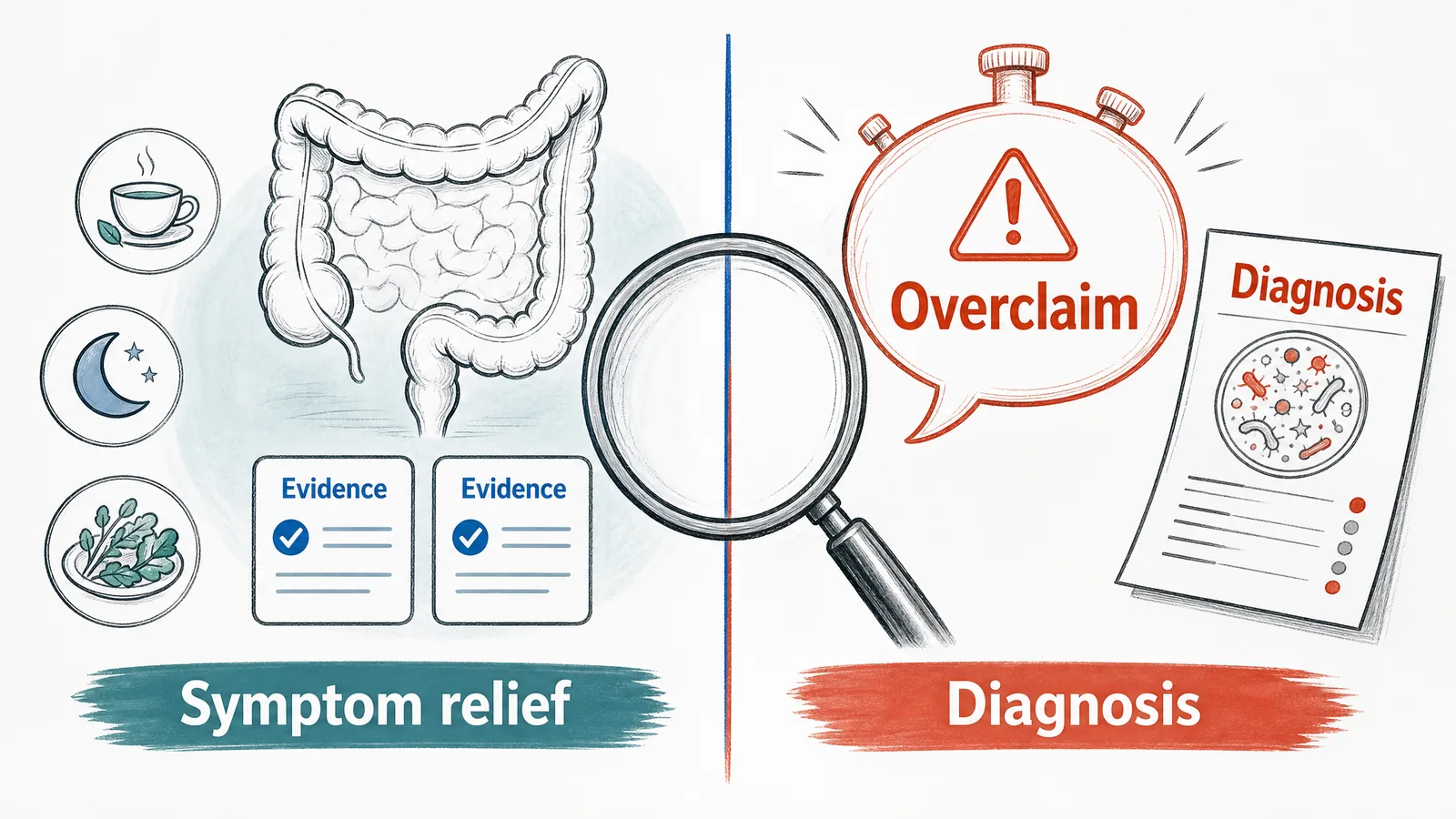
Short answer: You usually cannot “fix gut inflammation quickly” with a stool microbiome test or a generic supplement plan. Mild digestive irritation may improve within days when obvious triggers, alcohol, NSAIDs, sleep loss, or poorly tolerated foods are addressed. Persistent inflammation, blood, fever, weight loss, anemia, or night-time diarrhea needs clinical evaluation, not a rapid wellness protocol.
What does gut inflammation actually mean?
Gut inflammation is not one diagnosis. It can mean temporary irritation after infection, medication-related gastritis or enteritis, inflammatory bowel disease, celiac disease, diverticulitis, microscopic colitis, food-related symptom flares, or irritable bowel syndrome with pain but no visible tissue inflammation. That distinction matters because the right next step depends on the cause.
A marketing article may describe bloating, pain, fatigue, “leaky gut,” dysbiosis, and inflammation as if they are one problem. Clinically, they are not interchangeable. Bloating and irregular stools are common in functional bowel disorders. True inflammatory disease is usually assessed with history, examination, blood tests, stool markers such as fecal calprotectin, infection testing, imaging, or endoscopy when appropriate.
Can you reduce gut inflammation in a few days?
Sometimes symptoms can settle quickly. If the issue is alcohol, very high-fat meals, acute stress, sleep disruption, excessive caffeine, poorly tolerated fermentable carbohydrates, or NSAID use, removing the trigger may reduce discomfort within days. Hydration, simple meals, soluble fiber when tolerated, and rest can help recovery after a minor upset.
That is different from healing Crohn's disease, ulcerative colitis, celiac disease, infectious colitis, or a damaged intestinal barrier. Those conditions can require diagnosis, monitoring, prescription treatment, and follow-up. A claim that inflammation can be fixed in days is too broad unless the cause is mild, temporary, and already understood.
Can a microbiome test find the root cause?
A stool microbiome test can describe bacteria detected in one sample and may estimate functional patterns such as fiber fermentation potential. It can generate hypotheses about diet tolerance or ecological imbalance. It cannot prove that a symptom is caused by “bad bacteria,” diagnose intestinal inflammation, measure mucosal healing, or prescribe an anti-inflammatory protocol by itself.
Some stool panels include clinically used markers, but those should not be confused with consumer microbiome scoring. Fecal calprotectin, stool cultures, parasite testing, celiac serology, blood counts, CRP, colonoscopy, and imaging answer different medical questions. The microbiome is relevant to inflammation, but current consumer testing is not a fast diagnostic shortcut.
What is actually supported?
- Diet and microbial metabolism are linked to inflammatory bowel disease biology, but they do not create a one-size-fits-all quick cure.
- Dietary therapy can be useful in selected IBD contexts, especially under clinical supervision.
- IBS symptoms can mimic “inflammation,” yet IBS management is different from treating tissue inflammation.
- Intestinal permeability is a real research topic, but no single consumer test reliably diagnoses “leaky gut.”
- Consumer microbiome results should be treated as context, not as proof of disease or recovery.
What marketing often gets wrong
The risky leap is moving from plausible mechanisms to certainty. Short-chain fatty acids, barrier function, immune signaling, and microbial diversity all matter in research. But a low or high abundance of one bacterial group does not tell you whether your gut lining is inflamed today. It also does not prove that a particular probiotic, prebiotic, herb, or food will rapidly heal the digestive tract.
Another problem is mixing low-risk lifestyle advice with diagnostic claims. Eating fewer ultra-processed foods, moderating alcohol, improving sleep, and using fiber carefully are reasonable for many people. Telling someone that a microbiome test is the fastest way to identify the root cause of inflammation is a much stronger claim and is not clinically validated for most symptom scenarios.
What can you do safely while waiting for care?
For mild symptoms without red flags, start conservatively. Keep meals simple for a few days. Avoid alcohol, heavy meals, and NSAIDs unless a clinician told you to use them. Reintroduce fiber gradually rather than suddenly loading inulin, resistant starch, or multiple fermented foods. If IBS-type bloating is prominent, a short structured low-FODMAP trial may help some people, but it should not become a permanent restrictive diet without guidance.
If you already have IBD, do not stop or change medication because a stool test suggests dysbiosis. During a flare, dietary changes may support care, but they are not a substitute for disease activity assessment.
When should you see a clinician?
Seek medical advice promptly for blood in stool, black stools, persistent diarrhea, night-time diarrhea, fever, dehydration, severe or localized abdominal pain, repeated vomiting, unexplained weight loss, anemia, symptoms after age 50, recent antibiotics with diarrhea, pregnancy, immune suppression, or a family history of colorectal cancer or inflammatory bowel disease.
Bottom line
The fastest safe path is not to guess from a microbiome score. Mild irritation can improve quickly when obvious triggers are removed. True gut inflammation needs the cause identified. Use microbiome testing as optional background information, not as a stand-alone diagnosis or promise of rapid healing.
Evidence notes
- Lee and Chang (2022). The metabolic nature of inflammatory bowel diseases. Nature Reviews Gastroenterology & Hepatology. 10.1038/s41575-022-00658-y
- Khalili et al. (2018). The role of diet in the aetiopathogenesis of inflammatory bowel disease. Nature Reviews Gastroenterology & Hepatology. 10.1038/s41575-018-0022-9
- Lewis and Abreu (2022). Dietary management of adults with IBD: the emerging role of dietary therapy. Nature Reviews Gastroenterology & Hepatology. 10.1038/s41575-022-00619-5
- Camilleri et al. (2025). Common misconceptions and controversies in the management of irritable bowel syndrome. Nature Reviews Gastroenterology & Hepatology. 10.1038/s41575-025-01065-9
- Lewandowski et al. (2020). Spp24 is associated with endocytic signalling, lipid metabolism, and discrimination of tissue integrity for leaky-gut in inflammatory bowel disease. Scientific Reports. 10.1038/s41598-020-69746-w
- Roda et al. (2020). Crohn's disease. Nature Reviews Disease Primers. 10.1038/s41572-020-0156-2
- Quigley (2017). Gut microbiome as a clinical tool in gastrointestinal disease management: are we there yet? Nature Reviews Gastroenterology & Hepatology. 10.1038/nrgastro.2017.29
This article is educational and does not diagnose, treat, or replace care from a qualified clinician.