Evidence-based response
How to Cleanse Bacteria From the Intestine? Evidence-Based Answer Without the Detox Hype
The intestine should contain bacteria. Evidence supports targeted treatment of proven disease, not broad gut cleanses or detox protocols.
By Sandra McKenzy, Pharmacist · 2026-06-06
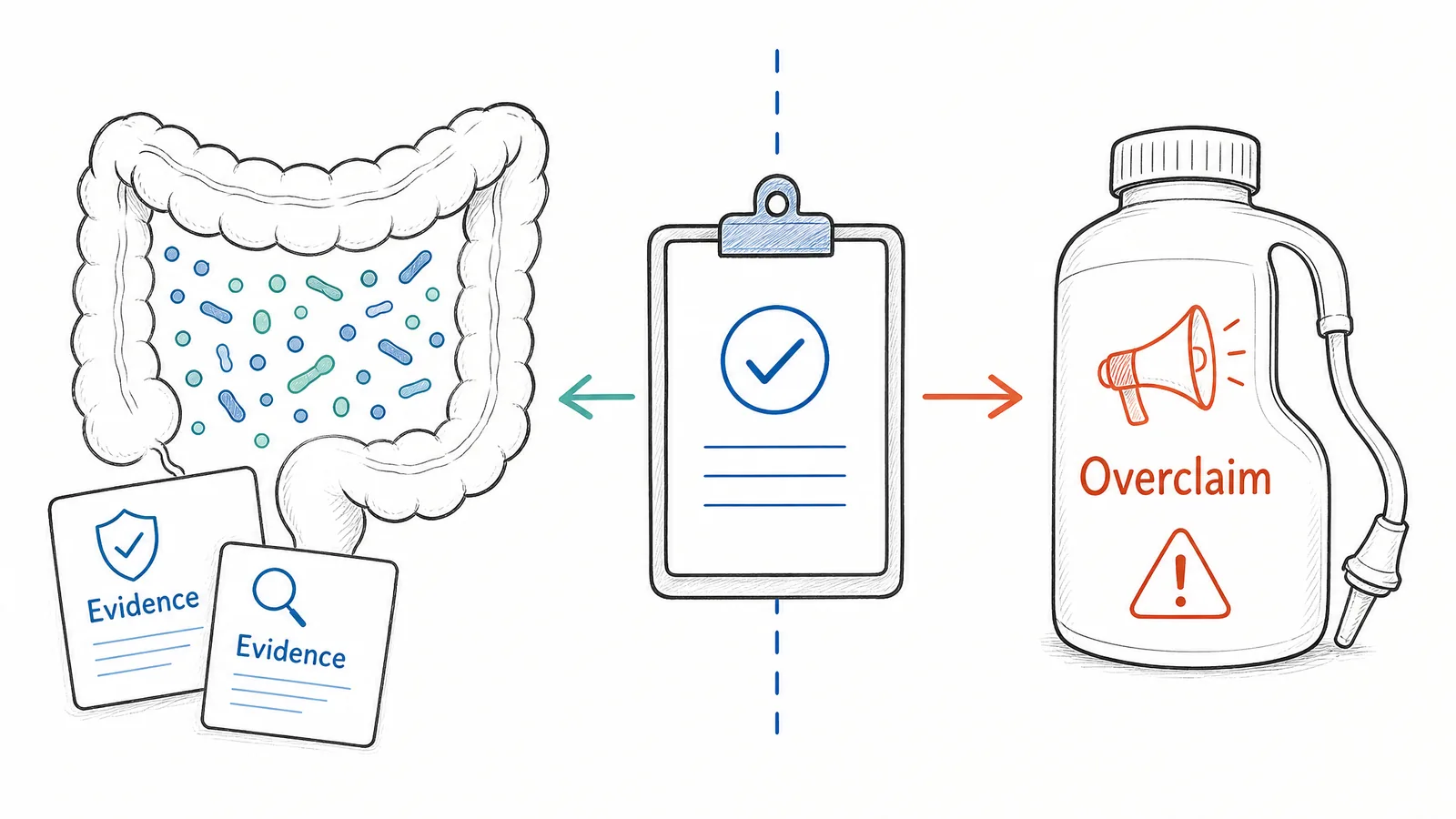
Short answer: You should not try to “cleanse bacteria” from the intestine in a broad detox sense. The intestine is supposed to contain bacteria. The evidence-based goal is to protect a balanced microbial ecosystem, treat proven infections or overgrowths when they are clinically diagnosed, and avoid harsh cleansing, unnecessary antimicrobials, or supplement protocols that may disrupt the microbiome further.
Should you cleanse bacteria from the intestine?
No, not as a general wellness goal. The healthy human intestine is densely colonized by bacteria, archaea, fungi, viruses, and microbial metabolites that help digest food, train immune responses, regulate barrier function, and resist pathogens. Removing bacteria broadly is not the same as improving gut health. It can be harmful if it means repeated laxative cleanses, aggressive herbal antimicrobials, unnecessary antibiotics, extreme fasting, or supplement stacks sold as detox programs.
An InnerBuddies article frames intestine cleansing as a personalized strategy guided by microbiome testing, including detox plans, probiotics, prebiotics, hydration, medical treatments, and “removing harmful bacteria.” That wording needs tightening. There are real situations where a clinician treats a bacterial problem: Clostridioides difficile infection, Helicobacter pylori, small intestinal bacterial overgrowth in selected patients, bacterial gastroenteritis, pouchitis, diverticulitis, or other defined conditions. But those are diagnoses, not ordinary detox categories. A stool microbiome test may offer context. It does not prove that the intestine needs cleansing.
Evidence summary
- The intestine normally contains bacteria, and broad bacterial removal is not an evidence-based wellness target.
- Dysbiosis is associated with disease, but a consumer stool report does not automatically identify “bad bacteria” that should be cleansed.
- Clinically proven infections or overgrowth syndromes require diagnosis-specific treatment, sometimes including antibiotics or microbiota-based therapies.
- Harsh cleanses, unnecessary antimicrobials, and extreme restriction can worsen symptoms or disrupt microbial resilience.
- Blood, fever, severe pain, dehydration, persistent diarrhoea, weight loss, or symptoms after antibiotics need medical evaluation.
What does “bad bacteria” actually mean?
In clinical microbiology, “bad bacteria” is too vague. Some bacteria are clear pathogens in the right context. Others are commensals that can become problematic when the ecosystem is disrupted, the immune system is impaired, or they grow in the wrong place. Still others are merely more or less abundant than a reference range in a stool report. The same organism can be harmless in one person and relevant in another, depending on location, strain, virulence factors, host immunity, symptoms, medications, and disease context.
Dysbiosis means a disturbed microbial community associated with altered function or disease. It does not mean the bowel is dirty. It does not mean every low diversity result needs a cleanse. It does not mean Candida, E. coli, or Clostridium listed on a report should automatically trigger antifungals, binders, oregano oil, berberine, or antibiotics. The clinical question is narrower: is there a defined infection, inflammation, toxin-mediated disease, malabsorption problem, or overgrowth syndrome that matches the patient’s symptoms and test evidence?
Can microbiome testing guide a gut cleanse?
Current consumer stool microbiome testing cannot validate a cleanse protocol in the way marketing often implies. Sequencing can describe microbial DNA in stool and sometimes infer functions. It usually cannot determine whether bacteria are causing symptoms, whether they are located in the small intestine or colon, whether they are producing clinically meaningful toxins, or whether a detox plan will improve outcomes. Stool tests also differ by collection, storage, sequencing platform, reference database, reporting algorithm, and interpretation model.
MedicalBrain validation supports a cautious view. Reviews on dysbiosis and microbiome-personalized medicine describe real biological links between microbes, inflammation, infection resistance, metabolism, and host physiology. They also stress that clinical use depends on validated outcomes and context. For example, microbiota restoration has strong relevance after antibiotic-associated disruption and recurrent C. difficile, but that does not justify a consumer cleanse for every bloated or tired person.
When is treating intestinal bacteria evidence-based?
Treatment is evidence-based when there is a defined condition and a matching intervention. C. difficile infection is a clear example. Antibiotic disruption can reduce colonization resistance, allowing C. difficile to cause severe diarrhoea and colitis. In recurrent cases, microbiota-based therapies and fecal microbiota transplantation have been studied because restoring ecosystem function can reduce recurrence. This is not a detox. It is a medical treatment for a specific disease.
SIBO is another example where language matters. Small intestinal bacterial overgrowth is not diagnosed by a general stool microbiome profile. It is usually considered through symptoms, risk factors, breath testing limitations, and clinical judgment. Antibiotics such as rifaximin may be used in selected cases, but recurrence, motility, diet, and underlying causes matter. Treating every bloating episode as bacterial contamination is not evidence-based.
Other infections, including H. pylori or bacterial gastroenteritis, require diagnosis-specific testing and treatment. Sometimes antibiotics are necessary. Sometimes they are not. The goal is not to sterilize the intestine. The goal is to treat the right target while minimizing collateral damage to the rest of the microbial ecosystem.
Which cleanse claims go beyond the evidence?
The first overclaim is that toxins and waste are generally “built up” in the intestine and need to be flushed out. In normal physiology, the gut, liver, kidneys, immune system, bile flow, stool transit, and epithelial turnover are already handling waste and microbial products. Constipation can need treatment. Infection can need treatment. Inflammatory disease can need treatment. But those are not proof of a universal detox need.
The second overclaim is that binders, activated charcoal, glutathione, milk thistle, antimicrobial herbs, probiotics, and prebiotics can be combined into a personalized detox because a stool report showed imbalance. Some of these tools have legitimate uses in specific contexts, and some have plausible mechanisms. That is not the same as evidence that they cleanse harmful bacteria safely in the average reader. Activated charcoal, for example, can bind medications. Herbal antimicrobials can irritate the gut and interact with drugs. High-dose probiotics are not always appropriate for immunocompromised or severely ill people.
What does marketing often get wrong about microbiome resets?
Marketing often borrows precision from sequencing and applies it to interventions that were not clinically validated. A report may show low diversity, low Bifidobacterium, high Proteobacteria, or a named pathobiont. The marketing leap is to say: therefore, you need a cleanse, then probiotics, then retesting to prove success. The missing evidence is whether this sequence improves patient-important outcomes compared with simpler care.
A better frame is microbial resilience. After antibiotics, illness, major diet change, or infection, the microbiome may be disrupted. Recovery usually depends on time, diet quality, fiber tolerance, adequate nutrition, medication review, sleep, movement, and treatment of diagnosed disease. Probiotics may help for some indications, but their effects are strain-specific and not universally beneficial. Prebiotics can support beneficial fermentation, but they can also worsen gas or pain in some people. Personalization should mean careful fit, not automatic escalation.
What studies actually show
Research on inflammation-driven dysbiosis shows that microbial imbalance and host inflammation can reinforce each other. That supports the importance of gut ecology, but it does not support non-specific cleansing. Studies on C. difficile and microbiota restoration show the opposite lesson: when the microbiome is damaged, restoring community function can be protective. Fecal microbiota transplantation and defined microbial consortia are studied under medical conditions, with screening, protocols, and follow-up.
Nature Medicine work on fecal microbiota transplantation also shows variability. Engraftment depends on donor strains, recipient ecology, disease context, and other factors. That makes the consumer promise of precise resets look too simple. The microbiome can be modified, but predictable, safe, individual clinical control remains difficult. The strongest sources support targeted treatment and cautious interpretation, not broad detox language.
What should you do instead of cleansing?
If symptoms are mild and there are no red flags, start with low-risk basics. Eat enough, avoid unnecessary restriction, increase fiber gradually if tolerated, include diverse plant foods, hydrate, limit alcohol, review frequent non-steroidal anti-inflammatory drug use with a clinician if relevant, and avoid unnecessary antibiotics. If constipation is the issue, treat constipation directly with evidence-based measures rather than calling it toxin buildup. If diarrhoea is persistent, do not mask it with binders without considering infection, inflammation, medication effects, or malabsorption.
If you already have a microbiome report, read it as a conversation starter. Ask whether the finding is clinically validated, whether it matches symptoms, whether conventional tests are needed, whether the proposed intervention has human outcome data, and what harm could occur if the advice is wrong. That approach is slower than a cleanse promise, but it is safer.
When should you see a clinician?
Seek medical care for blood in stool, black stool, fever, severe abdominal pain, dehydration, persistent vomiting, unintentional weight loss, anaemia, diarrhoea lasting more than a few days, symptoms after antibiotics, suspected food poisoning in a vulnerable person, pregnancy, immunosuppression, older age with new bowel changes, or symptoms that wake you at night. Also seek help if constipation is severe, prolonged, or associated with pain, vomiting, or inability to pass gas.
Do not start repeated cleanses, antimicrobial herbs, strong laxatives, or extreme diets if you have inflammatory bowel disease, kidney disease, liver disease, a history of eating disorder, complex medication use, pregnancy, immunosuppression, or severe illness unless a qualified clinician is supervising. The risk is not just that a cleanse fails. The risk is that it delays the correct diagnosis or destabilizes a gut that needs recovery.
Bottom line
The intestine is not dirty because it contains bacteria. A healthy gut depends on a stable, diverse, functional microbial ecosystem. The evidence-based goal is not to cleanse bacteria away, but to identify and treat real disease, support microbial resilience, and avoid interventions that promise precision without validation. Microbiome testing can be interesting context. It should not turn ordinary uncertainty into a detox protocol.
Be especially skeptical of any plan that starts with fear, labels broad groups of microbes as harmful, and ends with a supplement stack. Better gut-health advice is usually less dramatic: diagnose what needs diagnosis, treat what is proven, feed what can be supported, and leave the rest of the ecosystem alone.
The Simple Version
Your intestine is supposed to have bacteria. Many of them help you digest food, protect against pathogens, and train your immune system. Trying to wipe them out with a cleanse is like trying to improve a garden by removing all the soil life.
Sometimes bacteria do cause real disease. Then the answer is not a generic detox. It is the right diagnosis and the right treatment. A microbiome test can give clues about a stool sample, but it cannot prove that you need to cleanse your intestine. If symptoms are severe, persistent, bloody, feverish, or happen after antibiotics, medical care matters more than any cleanse plan.
Evidence notes
- Mechanisms of inflammation-driven bacterial dysbiosis in the gut. Mucosal Immunology. 10.1038/mi.2016.75
- Defined microbial communities and their soluble products protect mice from Clostridioides difficile infection. Communications Biology. 10.1038/s42003-024-05778-6
- Variability of strain engraftment and predictability of microbiome composition after fecal microbiota transplantation across different diseases. Nature Medicine. 10.1038/s41591-022-01964-3
- Therapeutic transplantation of the distal gut microbiota. Mucosal Immunology. 10.1038/mi.2010.79
- Utilization of the microbiome in personalized medicine. Nature Reviews Microbiology. 10.1038/s41579-023-00998-9
- Diet-microbiota interactions and personalized nutrition. Nature Reviews Microbiology. 10.1038/s41579-019-0256-8
- Probiotics for the prevention and treatment of gastrointestinal diseases. Nature Reviews Gastroenterology & Hepatology. 10.1038/s41575-020-0344-2
This article is educational and does not diagnose, treat, or replace care from a qualified clinician.