Evidence-based response
How to Balance Your Gut Microbiome with Diet and Lifestyle Changes: Evidence-Based Answer Without the Hype
Diet, fiber, fermented foods, exercise, and sleep can support microbiome health, but they are not a quick reset or guaranteed personalized cure.
By Sandra McKenzy, Pharmacist · 2026-05-31
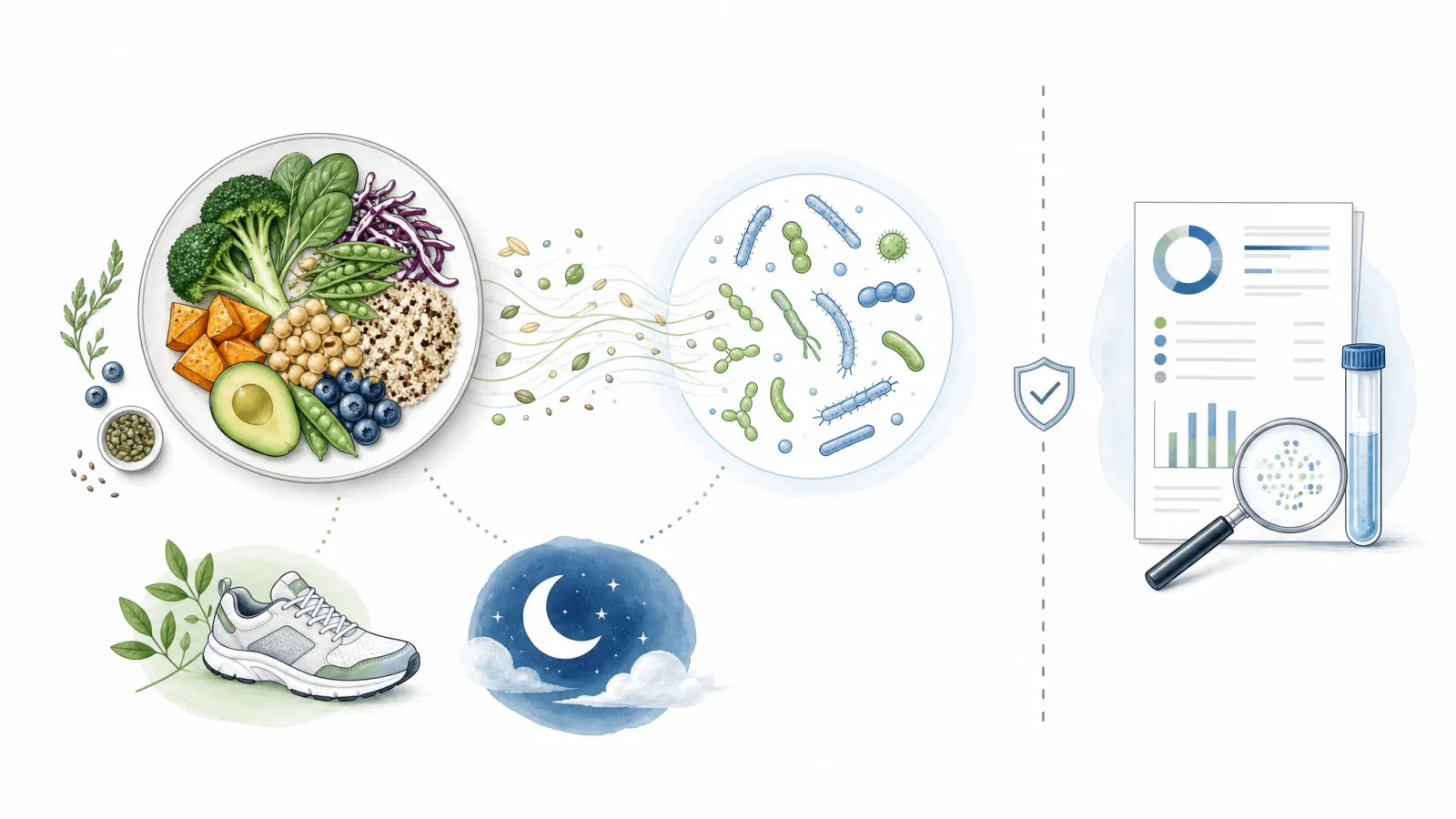
Short answer: The best-supported way to support the gut microbiome is not a quick reset. It is a consistent pattern: more diverse plant foods, enough dietary fiber, fermented foods if tolerated, regular physical activity, sleep regularity, and appropriate medical care when symptoms suggest disease. These habits can influence microbiome patterns, but they do not guarantee a personalized cure or make a consumer microbiome test necessary for everyone.
How do you balance your gut microbiome with diet and lifestyle?
For most adults, the safest starting point is a diet pattern rich in plants, whole grains, legumes, nuts, seeds, and minimally processed foods. These foods provide fermentable fibers and polyphenols that gut microbes can use. Research shows that diet can change microbial composition quickly, but stable health effects usually depend on longer habits, baseline microbiome, medications, and the condition being studied.
Fermented foods such as yogurt, kefir, sauerkraut, kimchi, or other live-culture foods may help some people increase microbial exposure and influence immune markers. They are not a universal treatment. People with histamine intolerance, severe immune compromise, active inflammatory bowel disease flares, or complex food reactions may need clinician guidance before experimenting aggressively.
What foods have the best evidence for microbiome support?
The strongest general pattern is dietary diversity from plants. Fiber supports microbial fermentation and production of short-chain fatty acids, which are involved in gut barrier function and immune signaling. Mediterranean-style eating patterns have been associated with beneficial microbiome and metabolite profiles, partly because they combine plants, legumes, whole grains, olive oil, nuts, and lower intake of ultra-processed foods.
High-fiber diets are not automatically comfortable for everyone. If someone has irritable bowel syndrome, strictures, severe bloating, small intestinal bacterial overgrowth concerns, or active intestinal inflammation, a sudden fiber increase can worsen symptoms. A slow increase, adequate fluids, and individualized tolerance matter more than a dramatic cleanse.
Evidence summary
- Diet can alter gut microbiome composition rapidly, but durable benefit depends on consistency and clinical context.
- Plant diversity, fiber, and Mediterranean-style patterns have stronger support than detoxes or quick microbiome resets.
- Fermented foods may increase microbiome diversity and affect immune markers in some controlled studies.
- Exercise and circadian rhythm are plausibly linked to microbiome patterns, but they should not be marketed as precise microbiome prescriptions.
- Personalized nutrition is promising, yet consumer test reports should not replace medical evaluation for persistent symptoms.
Do probiotics and prebiotics rebalance the microbiome?
Prebiotics are substrates, often fibers, that are used by host microorganisms and can confer a health benefit. Probiotics are live microorganisms that confer a health benefit when administered in adequate amounts. The key words are specific and adequate. A probiotic effect is usually strain-specific, dose-specific, and outcome-specific. One product cannot be assumed to fix bloating, immunity, mood, weight, and stool pattern at the same time.
Food-first approaches are often more defensible for general wellness than stacking supplements. A probiotic may be reasonable for certain indications, but it should match the clinical question. If the recommendation is based only on a dysbiosis score from one stool sample, the confidence should be modest.
Can lifestyle changes improve the microbiome?
Physical activity, sleep timing, stress physiology, alcohol intake, smoking, and medications can all interact with gut microbial ecology. Exercise studies often find associations between active lifestyles and different microbiome profiles. Circadian rhythm research suggests that disrupted daily rhythms can affect microbial oscillations and metabolic regulation.
That does not mean a person can precisely engineer their microbiome with a step count or sleep tracker. The practical advice is still broad: move regularly, protect sleep regularity, limit unnecessary antibiotics, avoid smoking, moderate alcohol, and manage stress in ways that are realistic. These habits support health even when the exact microbial mechanism is not known for one individual.
What marketing gets wrong about balancing the microbiome
The phrase balance your microbiome sounds simple, but biology is not that tidy. A balanced microbiome is not one fixed list of bacteria. Healthy people can have different microbial communities, and the same taxon can be helpful, neutral, or concerning depending on context. Claims that a test can identify the exact foods, supplements, or recipes needed to rebalance everyone should be treated carefully unless the claim is tied to validated outcomes.
Personalized nutrition is a serious research field. It has shown that people can respond differently to the same meals and that microbiome data can contribute to prediction models. But a commercial report is not automatically equivalent to a validated medical decision tool.
When should symptoms be evaluated instead of self-treated?
See a clinician for blood in stool, black stools, persistent diarrhea, fever, unexplained weight loss, anemia, severe abdominal pain, vomiting, dehydration, nighttime symptoms, new symptoms after age 50, pregnancy with significant gastrointestinal symptoms, immune suppression, or a family history of colorectal cancer or inflammatory bowel disease. Also seek care if a restrictive diet is causing weight loss, fear of eating, or nutritional gaps.
Bottom line
You can support the gut microbiome with diet and lifestyle, but the most evidence-based version is not dramatic. Eat a wide range of tolerated plants, increase fiber gradually, include fermented foods if they suit you, move regularly, protect sleep, and treat persistent symptoms as medical signals rather than proof of vague imbalance. Microbiome tests may add curiosity or hypotheses, but they should not turn general wellness advice into overconfident diagnosis.
Evidence notes
- David et al. (2014). Diet rapidly and reproducibly alters the human gut microbiome. Nature. 10.1038/nature12820
- De Filippis et al. (2016). High-level adherence to a Mediterranean diet beneficially impacts the gut microbiota and associated metabolome. Nature Communications. 10.1038/ncomms13457
- Wastyk et al. (2021). Gut-microbiota-targeted diets modulate human immune status. Cell. 10.1016/j.cell.2021.06.019
- Zeevi et al. (2015). Personalized nutrition by prediction of glycemic responses. Cell. 10.1016/j.cell.2015.11.001
- Bressa et al. (2017). Differences in gut microbiota profile between women with active lifestyle and sedentary women. PLOS ONE. 10.1371/journal.pone.0171352
- Thaiss et al. (2014). Transkingdom control of microbiota diurnal oscillations promotes metabolic homeostasis. Cell. 10.1016/j.cell.2014.09.048
- Wilkinson et al. (2022). Microbiome risk profiles as biomarkers for inflammatory and metabolic disorders. Nature Reviews Gastroenterology & Hepatology. 10.1038/s41575-022-00581-2
This article is educational and does not diagnose, treat, or replace care from a qualified clinician.