Evidence-based response
How Gut Microbiome Tests Can Help in Managing Diabetes: Evidence-Based Answer Without the Hype
Gut microbiome tests may explain research links between microbes, metabolism, and insulin resistance, but they cannot manage diabetes or replace validated clinical care.
By Sandra McKenzy, Pharmacist · 2026-05-31
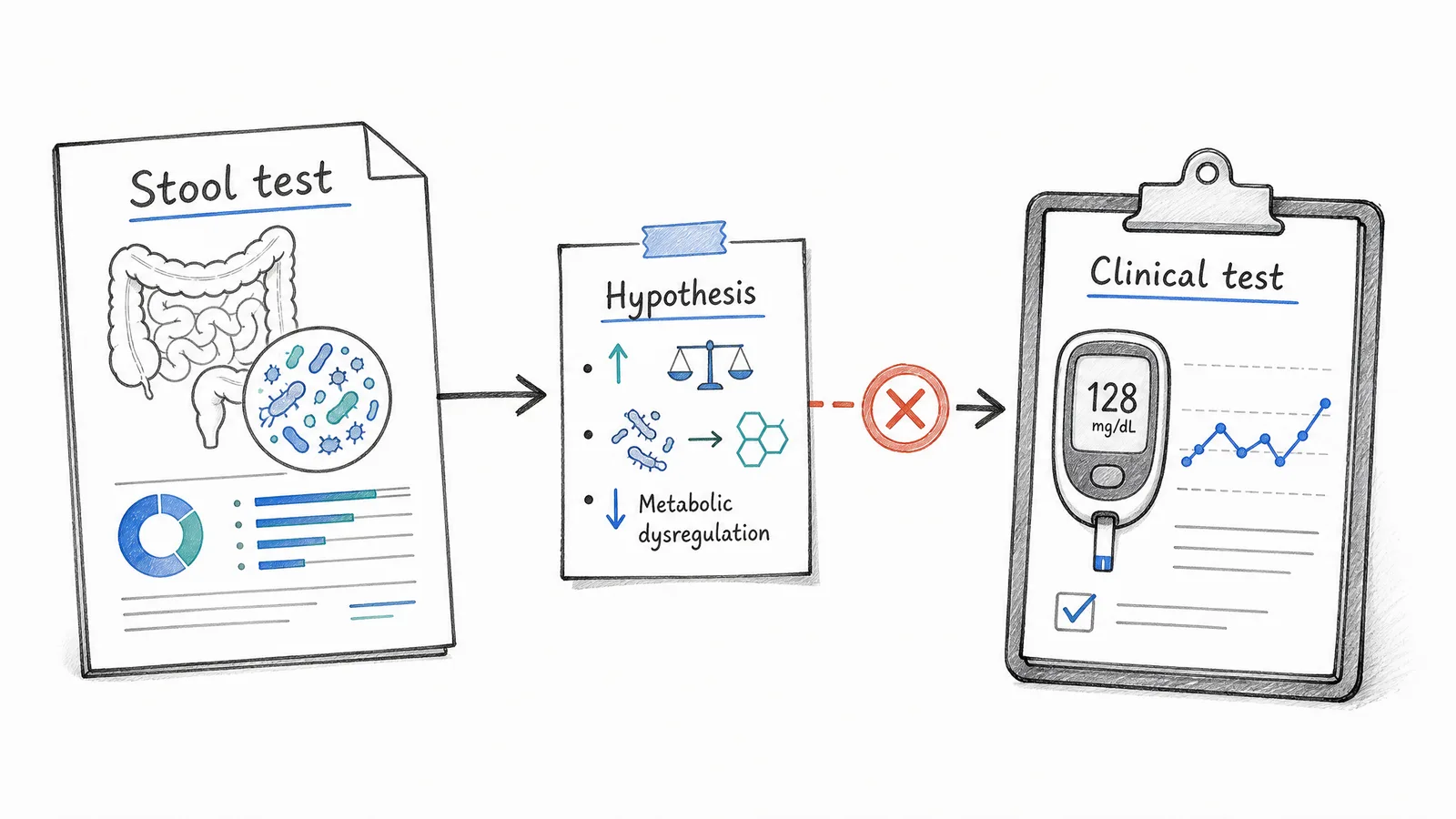
Short answer: Gut microbiome tests may help explain why the gut is relevant to type 2 diabetes research, but they do not manage diabetes by themselves. A stool report can describe microbial DNA patterns and generate hypotheses about diet, fiber, or metabolic risk. It cannot replace HbA1c, glucose monitoring, medication review, nutrition care, or clinician-guided diabetes treatment.
Can gut microbiome tests help in managing diabetes?
They can help only in a limited, indirect way. The strongest evidence says the gut microbiome is connected with metabolism, insulin resistance, inflammation, bile acids, and short-chain fatty acids. That makes the microbiome scientifically important. It does not mean that a consumer stool test can tell a person with diabetes exactly which foods, probiotics, or supplements will control blood glucose.
The source article frames microbiome testing as a personalized tool for improving insulin sensitivity and reducing inflammation. That is plausible as a research direction, but it is clinically overstated when presented as diabetes management. Diabetes care still depends on validated measures: HbA1c, fasting and post-meal glucose, medications, kidney and eye monitoring, blood pressure, lipids, weight history, diet quality, activity, sleep, and individual risk factors.
What does the microbiome have to do with diabetes?
Human studies have found differences in gut microbial genes and metabolites between people with type 2 diabetes, prediabetes, insulin resistance, and metabolically healthy controls. Some studies show microbial pathways related to carbohydrate metabolism, branched-chain amino acids, bile acids, and short-chain fatty acids. These pathways may influence energy harvest, inflammation, gut barrier signaling, and insulin sensitivity.
The key word is may. A microbiome association is not the same as a diagnosis, and it is not proof that changing one bacterial group will improve glucose control in a specific person. Diabetes is a complex metabolic disease shaped by genetics, adiposity, liver and muscle insulin sensitivity, pancreatic beta-cell function, medications, diet, movement, sleep, and social context. The microbiome is one layer, not the control panel.
Evidence summary
- Gut microbiome patterns are associated with type 2 diabetes and insulin resistance, but associations do not prove individual causation.
- Microbial metabolites such as short-chain fatty acids and amino-acid related pathways are biologically plausible links to metabolism.
- Consumer stool tests are not validated replacements for HbA1c, glucose monitoring, or clinician-guided diabetes care.
- Dietary fiber, plant diversity, movement, sleep, and medication adherence matter more clinically than chasing a single stool-test score.
- Probiotic and microbiome interventions remain promising but inconsistent, and they should not be used to delay standard diabetes treatment.
Can a stool test identify the cause of high blood sugar?
No. A stool microbiome profile cannot prove why blood sugar is high. It may report lower diversity, fewer butyrate-associated bacteria, more inflammatory signatures, or predicted metabolic pathways. Those signals can be interesting, but they do not identify the cause of hyperglycemia. A person may have high glucose because of insulin resistance, reduced insulin secretion, medication effects, infection, sleep loss, weight change, steroid use, pregnancy, autoimmune diabetes, or several factors together.
This matters because a confident stool report can feel more precise than it is. Sequencing can produce detailed taxonomic names and pathway predictions, but clinical precision requires validation against outcomes. For diabetes, the outcome is not whether a report looks balanced. The outcome is safer glucose control, fewer complications, and treatment decisions that stand up in clinical practice.
What claims are best supported?
Three claims are reasonable when stated carefully. First, diet can change the gut microbiome. Fiber, resistant starch, polyphenols, and overall dietary pattern influence microbial composition and metabolite production. Second, microbial metabolites can interact with host metabolism. Short-chain fatty acids, bile acid transformations, and amino-acid related metabolites are active research areas. Third, people differ in their metabolic responses to food, and microbiome data may eventually support more personalized nutrition.
Those points support curiosity and research. They do not support using a consumer stool test as a diabetes treatment algorithm. A better use is to treat the report as one context layer. If it motivates a person to eat more tolerated fiber, replace ultra-processed foods with whole foods, walk after meals, sleep more consistently, or ask better questions at a diabetes review, that can be useful. The benefit comes from the validated behavior and clinical follow-up, not from the test alone.
What does marketing get wrong about microbiome testing for diabetes?
Marketing often collapses a long chain of evidence into one simple promise. The chain looks like this: gut microbes influence metabolites; metabolites may influence insulin sensitivity; stool tests can measure microbes; therefore a stool test can guide diabetes management. The first parts are scientifically plausible. The final leap is not clinically proven for most consumer testing.
Another problem is the word personalized. A recommendation can feel personalized because it is generated from a sample, but that does not mean it is clinically validated. Advice such as eat more fiber, diversify plants, include fermented foods if tolerated, move daily, sleep consistently, and avoid unnecessary antibiotics is broadly sensible. Most people do not need an expensive stool report to hear it, and people with diabetes should not make medication or carbohydrate changes based only on a microbiome dashboard.
Are probiotics useful for people with diabetes?
Some randomized trials and meta-analyses suggest probiotics may modestly influence inflammation, gut barrier markers, or metabolic measures in some people with type 2 diabetes. That evidence is not the same as a universal recommendation. Effects vary by strain, dose, baseline microbiome, diet, medication, duration, and study quality. A probiotic that helps one outcome in one trial cannot be generalized to every product on a shop shelf.
For a person using insulin, sulfonylureas, GLP-1 medicines, metformin, SGLT2 inhibitors, or other diabetes therapies, probiotics are not a substitute for prescribed treatment. They should also be used cautiously in people who are immunocompromised or medically fragile. The safer question is not “which probiotic fixes diabetes?” It is “is there a specific, low-risk reason to try this product, and how will glucose and symptoms be monitored?”
When should diabetes care come before microbiome testing?
Seek clinical care promptly for very high glucose, ketones, vomiting, dehydration, confusion, rapid weight loss, chest pain, shortness of breath, infected wounds, new vision changes, pregnancy with diabetes, recurrent hypoglycemia, or medication side effects. Also ask a clinician before making major diet changes if you use insulin or medications that can cause low blood sugar.
Microbiome testing should never delay diagnosis of diabetes, treatment intensification, kidney monitoring, eye screening, foot care, or cardiovascular risk management. If a stool report conflicts with medical advice, the validated clinical data should take priority.
Bottom line
The gut microbiome is relevant to diabetes biology, and future microbiome-guided nutrition may become more useful. Today, a gut microbiome test is best understood as hypothesis-generating. It can support education and behavior change, but it cannot manage diabetes, diagnose the cause of insulin resistance, or replace standard care. Use it as an optional conversation starter, not as the treatment plan.
Evidence notes
- Quigley (2017). Gut microbiome as a clinical tool in gastrointestinal disease management: are we there yet?. Nature Reviews Gastroenterology & Hepatology. 10.1038/nrgastro.2017.29
- Qin et al. (2012). A metagenome-wide association study of gut microbiota in type 2 diabetes. Nature. 10.1038/nature11450
- Takeuchi et al. (2023). Gut microbial carbohydrate metabolism contributes to insulin resistance. Nature. 10.1038/s41586-023-06466-x
- Pedersen et al. (2016). Human gut microbes impact host serum metabolome and insulin sensitivity. Nature. 10.1038/nature18646
- Sanna et al. (2019). Causal relationships among the gut microbiome, short-chain fatty acids and metabolic diseases. Nature Genetics. 10.1038/s41588-019-0350-x
- Zmora et al. (2019). Diet-microbiota interactions and personalized nutrition. Nature Reviews Microbiology. 10.1038/s41579-019-0256-8
- Naito et al. (2017). Probiotic reduces bacterial translocation in type 2 diabetes mellitus: a randomised controlled study. Scientific Reports. 10.1038/s41598-017-12535-9
This article is educational and does not diagnose, treat, or replace care from a qualified clinician.