Evidence-based response
How Gut Health Impacts Mental Wellness: Exploring the Gut-Brain Connection, Evidence-Based Answer Without the Hype
The gut-brain connection is real, but current evidence does not show that a consumer microbiome test can diagnose anxiety, depression, or prescribe a mental wellness plan.
By Sandra McKenzy, Pharmacist · 2026-05-25
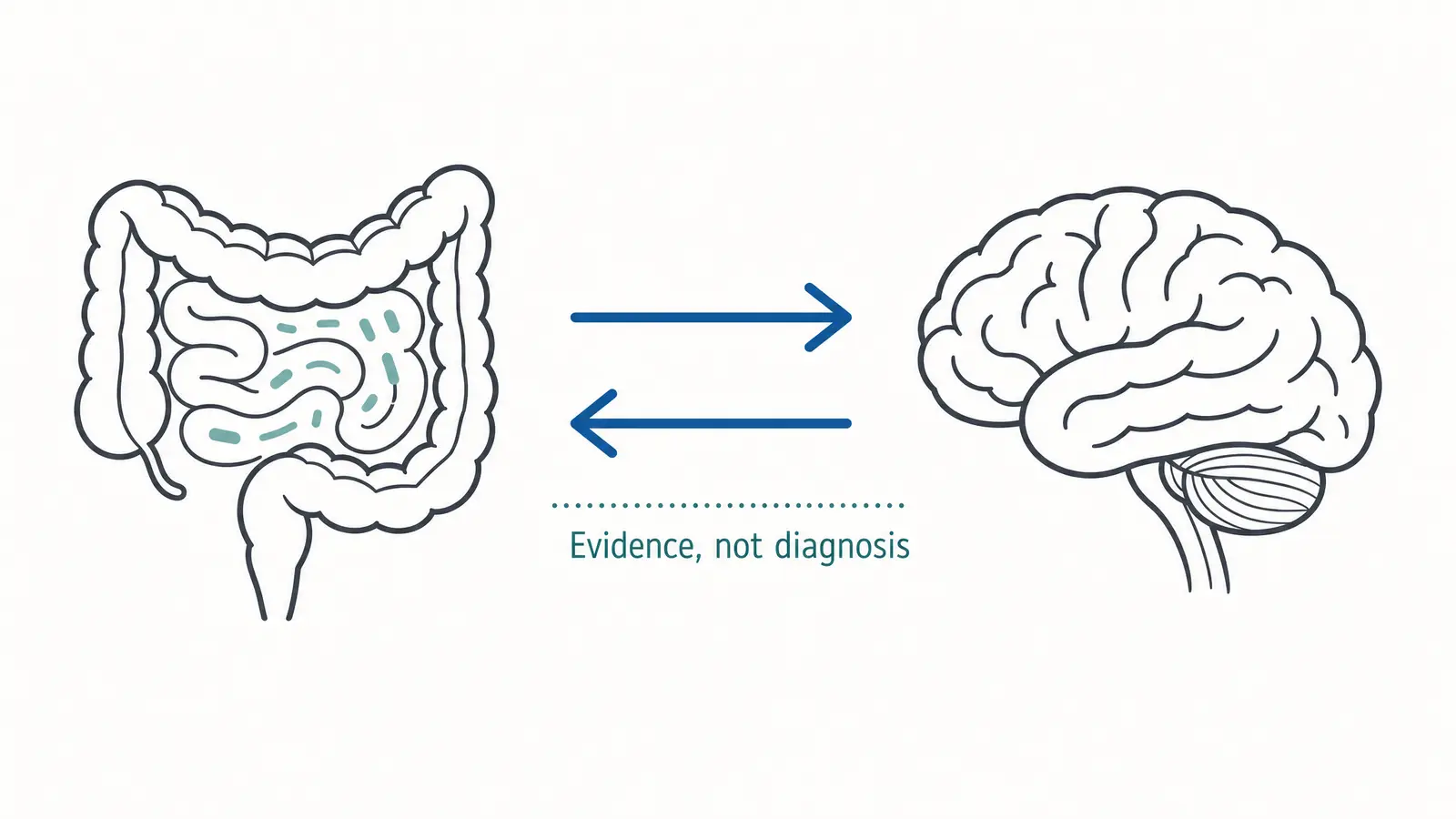
Short answer: Gut health can influence mental wellness through immune, neural, hormonal, and metabolic pathways, but the evidence is not strong enough to say that poor gut health is the main cause of anxiety, depression, or brain fog for most people. A healthy diet, sleep, movement, and stress care can support the gut-brain axis. A stool microbiome test, however, cannot diagnose a mental health condition or replace clinical care.
The gut-brain connection is a legitimate field of research. It is also easy to oversell. The source article correctly describes two-way communication between the digestive system and the brain, including the vagus nerve, immune signals, stress hormones, microbial metabolites, and serotonin biology. The problem is the jump from biology to personalized wellness promises. Mechanisms are not the same as validated diagnosis, and early microbiome findings do not automatically become consumer recommendations.
Evidence summary
- The gut and brain communicate through neural, immune, endocrine, and metabolic pathways.
- IBS commonly overlaps with anxiety and depression, which supports integrated gut and mental health care.
- Some probiotic trials in depression show promising signals, but effects are strain-specific and not a general cure.
- Most serotonin is produced in the gut, but gut serotonin does not simply equal brain serotonin or mood control.
- Consumer microbiome testing is not clinically validated to diagnose mental illness or prescribe mental health treatment.
What does the gut-brain connection actually mean?
The gut-brain axis is a two-way communication system between the central nervous system, the enteric nervous system, the immune system, gut hormones, and the microbiome. This is why stress can change appetite, bowel urgency, nausea, pain sensitivity, and motility. It is also why chronic digestive disorders can affect quality of life and mood.
Microbes may contribute through short-chain fatty acids, bile acid metabolism, tryptophan pathways, inflammatory signaling, and effects on the intestinal barrier. Reviews in microbiology and neurogastroenterology support this broad framework. But the same reviews also emphasize complexity. Human mood is not controlled by a single bacterium, one diversity score, or one neurotransmitter pathway.
Can poor gut health cause anxiety, depression, or brain fog?
Sometimes gut disease and mental symptoms interact strongly. IBS is the clearest everyday example. A Nature Reviews Gastroenterology and Hepatology review notes that IBS affects about 5 to 10 percent of the global population, and up to one-third of people with IBS also experience anxiety or depression. That does not mean IBS is purely psychological, and it does not mean anxiety is purely microbial. It means the symptom loop can run in both directions.
For depression and anxiety more broadly, microbiome differences have been reported across many studies. The hard question is causality. Are microbial changes driving mood symptoms, reflecting diet and medication changes, responding to inflammation and stress, or all of these at once? Current evidence supports association and plausible mechanisms. It does not support simple claims such as, “fix your microbiome and your mental health will improve.”
What about serotonin in the gut?
The common claim that “90 percent of serotonin is made in the gut” is broadly rooted in real biology, but it is often misused. Gut serotonin is mainly involved in intestinal motility, secretion, sensation, immune interactions, and local signaling. It does not freely act as the brain’s mood serotonin. Microbiota can influence intestinal serotonin biology, including work showing interactions between gut serotonin and bacterial colonization, but that is not the same as proving that a stool profile can explain someone’s depression.
Do probiotics or diet improve mental wellness?
Some clinical trials suggest that selected probiotics may improve depressive symptoms or negative mood in specific groups. For example, a 2024 randomized clinical trial reported depression-related changes alongside microbial, neural, and immune-inflammatory findings after probiotic supplementation. A 2025 study in healthy volunteers also found changes in negative mood over time. These findings are promising, but they are not a blank check for any probiotic, fermented food, or microbiome product.
The safest general advice remains boring but useful: a fiber-rich dietary pattern, adequate sleep, regular activity, limited alcohol, appropriate treatment for digestive disease, and evidence-based mental health care when symptoms are significant. Those steps can support both gut and brain health without pretending that the microbiome is a magic control panel.
Can a microbiome test guide mental wellness?
A microbiome test can describe some organisms and functions detected in a stool sample. It may be interesting for education or hypothesis generation. It cannot diagnose anxiety, depression, trauma, burnout, ADHD, IBS, IBD, or a serotonin problem. It also cannot prove that a recommended food or supplement will improve mood. Even cautious microbiome researchers have warned that gut microbiota science has not fully translated into routine clinical decision-making.
When should you see a clinician?
Seek medical or mental health care urgently for suicidal thoughts, self-harm risk, severe depression, panic that disrupts daily life, unexplained weight loss, blood in stool, persistent vomiting, fever, anemia, waking at night with diarrhea, new bowel changes after age 50, or severe abdominal pain. If gut symptoms and mood symptoms are both present, integrated care is often better than treating either system in isolation.
Bottom line
The gut-brain connection matters. Gut health can shape stress biology, immune signaling, gut comfort, and perhaps some aspects of mood. But the evidence is strongest for a careful, integrated view, not a consumer shortcut. Treat microbiome tests as limited data, not a mental health diagnosis, and treat mental wellness as serious clinical territory, not just a gut optimization project.
Educational disclaimer: This article is for general education only and does not diagnose, treat, or replace care from a qualified clinician or mental health professional.
Evidence notes and sources
- Cryan JF et al. (2019). The microbiota-gut-brain axis. Physiological Reviews. 10.1152/physrev.00018.2018
- Morais LH et al. (2021). The gut microbiota-brain axis in behaviour and brain disorders. Nature Reviews Microbiology. 10.1038/s41579-020-00460-0
- Fond G et al. (2023). Irritable bowel syndrome and mental health comorbidity. Nature Reviews Gastroenterology & Hepatology. 10.1038/s41575-023-00794-z
- Rudzki L et al. (2024). Examining immune-inflammatory mechanisms of probiotic supplementation in depression. Translational Psychiatry. 10.1038/s41398-024-03030-7
- Fung TC et al. (2019). Intestinal serotonin and fluoxetine exposure modulate bacterial colonization in the gut. Nature Microbiology. 10.1038/s41564-019-0540-4
- Quigley EMM. (2017). Gut microbiome as a clinical tool in gastrointestinal disease management: are we there yet? Nature Reviews Gastroenterology & Hepatology. 10.1038/nrgastro.2017.29