Evidence-based response
How Does the Brain Influence Our Gut? Evidence-Based Answer Without the Hype
The brain can influence gut motility, sensitivity, immune signaling, and symptoms through the gut-brain axis, but symptoms and stool tests cannot identify the cause on their own.
By Sandra McKenzy, Pharmacist · 2026-05-25
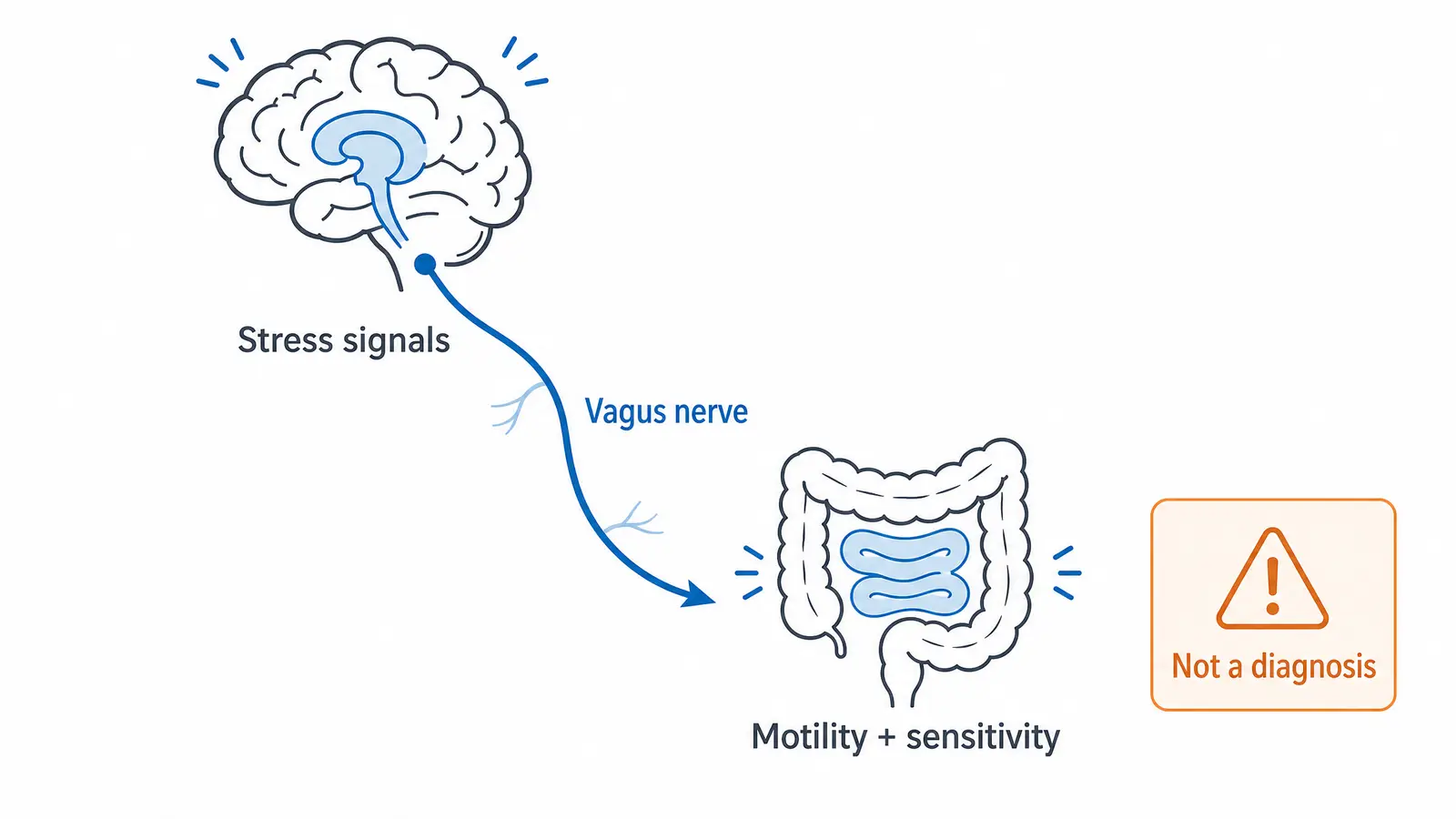
Short answer: The brain influences the gut through nerves, stress hormones, immune signaling, pain-processing circuits, and behavior. This can change motility, urgency, nausea, appetite, bloating, and pain sensitivity. The science is strongest for disorders of gut-brain interaction such as IBS. It is weaker when a wellness article implies that symptoms or a microbiome test can reveal the true root cause on their own.
The source article is right that the brain and gut communicate in both directions. Stress before an exam, grief-related appetite loss, or anxiety-related urgency are familiar examples. The overreach appears when this real physiology is used to promote broad microbiome testing as a route to mental clarity or personalized digestive recovery. Brain-gut biology is clinically important, but it is not a shortcut diagnosis.
Evidence summary
- The brain can alter gut motility, secretion, barrier function, immune tone, and visceral sensitivity.
- IBS is now understood as a disorder of gut-brain interaction, not as an imaginary condition.
- Stress can worsen symptoms, but stress is not the only possible cause of bloating, diarrhea, constipation, or pain.
- Microbiome changes may participate in brain-gut signaling, but routine stool tests do not diagnose brain-gut dysfunction.
- Red-flag symptoms require medical assessment rather than wellness testing.
What pathways let the brain affect the gut?
The brain affects the gut through the autonomic nervous system, the vagus nerve, spinal pain pathways, the hypothalamic-pituitary-adrenal stress axis, and immune signals. These systems can change how quickly food moves, how strongly the gut contracts, how sensitive the gut feels, and how the immune system responds. The enteric nervous system can coordinate digestion locally, but it remains connected to the brain through several feedback loops.
Modern reviews describe this as the brain-gut-microbiome axis. That wording matters. The microbiome is part of the system, not the whole explanation. Sleep, trauma, infection, medications, diet, inflammation, hormones, and previous gut disease can all influence the same symptoms.
Can stress really cause digestive symptoms?
Yes. Stress can speed or slow motility, increase urgency, heighten pain perception, worsen nausea, and change appetite. Experimental and clinical work supports a link between stress circuits and gastrointestinal function. A 2023 Nature Metabolism article, for example, discussed a central nervous system circuit that regulates gut motility and is differently affected by acute and chronic stress.
But “stress affects the gut” is not the same as “your symptoms are just stress.” Persistent bloating, diarrhea, constipation, abdominal pain, or fatigue can come from many causes, including IBS, inflammatory bowel disease, celiac disease, infections, medication effects, endocrine disease, and dietary triggers. Good care avoids both extremes: dismissing symptoms as emotional, or blaming every symptom on the microbiome.
What does IBS teach us about the brain-gut axis?
IBS is one of the best-studied disorders of gut-brain interaction. Research shows altered pain processing, motility, stress responsiveness, gut microbial patterns, and metabolite profiles in subsets of patients. IBS also commonly overlaps with anxiety and depression. A 2023 review reported that up to one-third of people with IBS also experience anxiety or depression.
This supports integrated care. Diet therapy, gut-directed behavioral therapies, sleep support, medication when appropriate, and mental health treatment can all be legitimate. It does not mean every person with IBS needs a commercial stool test, or that a low diversity score explains their symptoms.
Can a microbiome test show how your brain is affecting your gut?
No, not in a clinically validated way. Stool microbiome tests can measure selected microbial DNA or functions in a sample. They cannot measure vagus nerve tone, stress physiology, visceral hypersensitivity, trauma load, serotonin signaling, motility patterns, or the reason someone has brain fog. A cautious Nature Reviews Gastroenterology and Hepatology perspective warned that microbiome science has not fully translated into routine gastrointestinal disease management. That warning applies even more strongly to wellness claims about mental clarity.
What does marketing often get wrong?
Marketing often turns a two-way biological network into a one-way product story: symptoms suggest dysbiosis, dysbiosis requires testing, testing leads to personalized recommendations, and recommendations improve digestion and mental performance. Each step may sound plausible, but the full chain is not clinically proven for most people. Plausible is not the same as validated.
When should you see a clinician?
Get medical advice for blood in stool, unexplained weight loss, anemia, fever, persistent vomiting, waking at night with diarrhea, progressive trouble swallowing, new bowel changes after age 50, severe abdominal pain, or a family history of colorectal cancer, celiac disease, or inflammatory bowel disease. Seek urgent mental health support for suicidal thoughts, self-harm risk, severe panic, or depression that impairs daily life.
Bottom line
The brain can strongly influence the gut, and the gut can feed signals back to the brain. That is real, useful science. The safest interpretation is clinical and balanced: stress and brain circuits can worsen gut symptoms, microbiome patterns may be involved, and treatment often works best when both digestion and mental health are considered. A consumer stool test should not be treated as a diagnosis of brain-gut dysfunction.
Educational disclaimer: This article is for general education only and does not diagnose, treat, or replace care from a qualified clinician or mental health professional.
Evidence notes and sources
- Mayer EA et al. (2023). A CNS circuit that regulates gut motility. Nature Metabolism. 10.1038/s42255-023-00871-2
- Gupta A et al. (2020). Analysis of brain networks and fecal metabolites reveals brain-gut alterations in premenopausal females with irritable bowel syndrome. Translational Psychiatry. 10.1038/s41398-020-01071-2
- Fond G et al. (2023). Irritable bowel syndrome and mental health comorbidity. Nature Reviews Gastroenterology & Hepatology. 10.1038/s41575-023-00794-z
- Chu C et al. (2025). Beyond the gut: decoding the gut-immune-brain axis in health and disease. Cellular & Molecular Immunology. 10.1038/s41423-025-01333-3
- Quigley EMM. (2017). Gut microbiome as a clinical tool in gastrointestinal disease management: are we there yet? Nature Reviews Gastroenterology & Hepatology. 10.1038/nrgastro.2017.29
- ISAPP consensus panel. (2026). Consensus statement on the definition and scope of gut health. Nature Reviews Gastroenterology & Hepatology. 10.1038/s41575-026-01176-x