Evidence-based response
What Is the Healthiest Fruit for the Gut? Evidence-Based Answer Without the Hype
No single fruit is healthiest for every gut. Kiwifruit, apples, berries and other fruits have different evidence, benefits and tolerance limits.
By Sandra McKenzy, Pharmacist · 2026-07-29
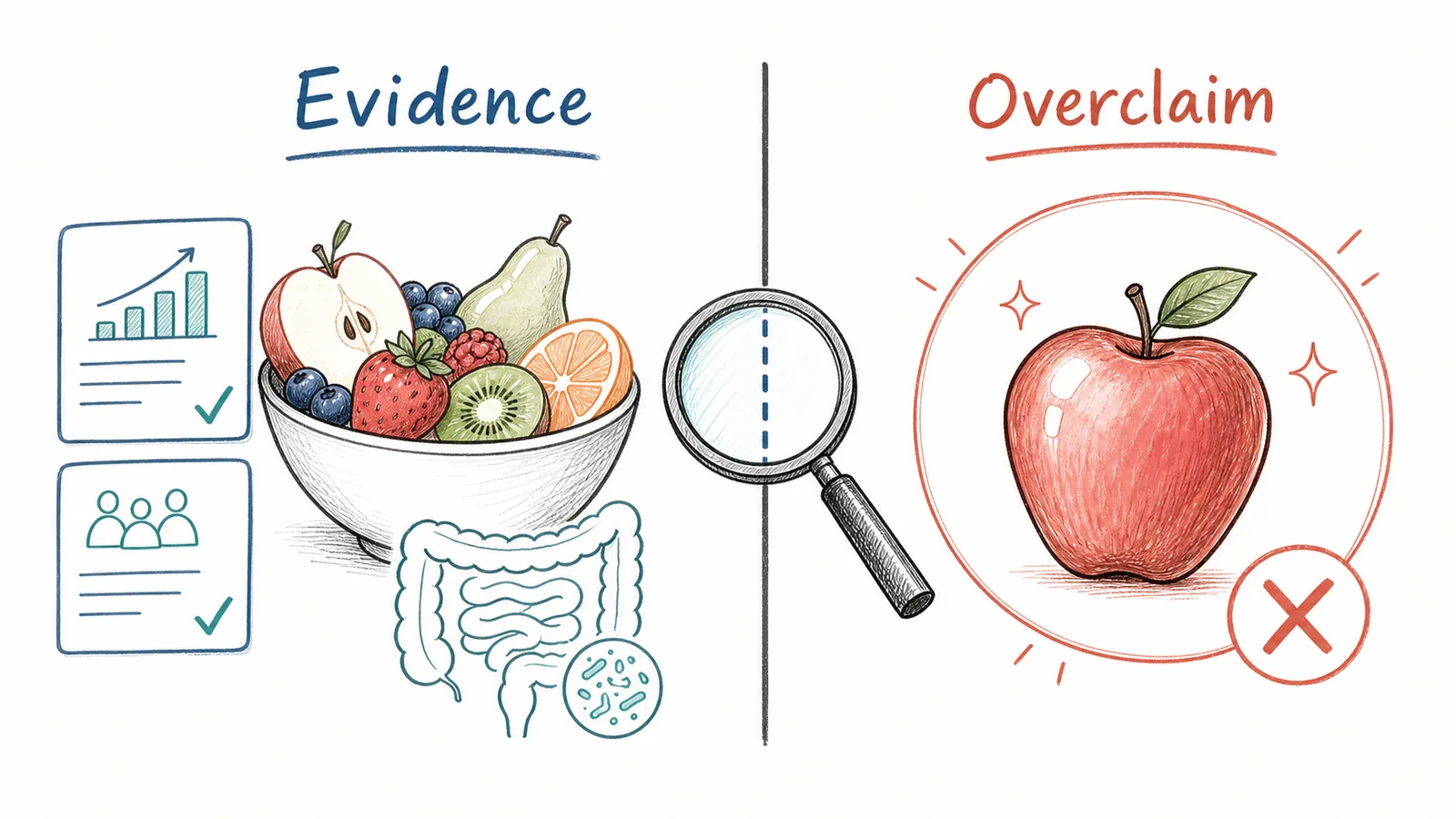
Short answer: There is no single healthiest fruit for the gut. For most people, the best gut-supporting choice is a rotating mix of tolerated fruits that provide fiber, water and polyphenols. Kiwifruit has unusually direct clinical evidence for constipation, apples and berries can help feed microbial metabolism, and low-FODMAP fruits may suit sensitive IBS-type symptoms. A microbiome test cannot reliably prescribe one best fruit.
A recent InnerBuddies article gives the reasonable advice that fruit choice depends on the person, then leans toward microbiome personalization. The safer evidence-based answer is more practical: choose fruit by the clinical goal, your tolerance and the whole diet pattern. Gut microbes respond to fiber and polyphenols, but the response is individual, gradual and not fully predictable from a consumer stool report.
What Is the Healthiest Fruit for the Gut?
If the question means “which fruit is best for every microbiome,” the answer is none. Human gut microbiomes are too variable for a universal winner. A person with constipation may do well with kiwifruit. A person with fructose malabsorption may tolerate berries or citrus better than apples or mango. A person trying to increase plant diversity may benefit from rotating many fruits rather than eating one champion every day.
That is not a weak answer. It is the answer that matches the evidence. Fruits differ in soluble fiber, insoluble fiber, resistant starch, sorbitol, fructose, acidity, water content and polyphenols. Those compounds interact with stool water, gut motility and microbial fermentation. The gut effect comes from the match between the fruit, the dose, the rest of the meal and the person eating it.
Evidence summary
Evidence summary
- No study identifies one fruit as the healthiest choice for every gut or every microbiome.
- Kiwifruit has randomized trial evidence for improving constipation and abdominal comfort in functional constipation and IBS-C.
- Apples, cranberries, berries and other polyphenol-rich fruits can change fecal microbiota or microbial metabolites, but effects vary between people.
- Fiber-rich plant foods support gut microbial metabolism, yet sudden fiber increases can worsen gas, bloating or pain in sensitive people.
- Consumer microbiome testing may generate dietary hypotheses, but it cannot prescribe a single best fruit or rule out medical causes of symptoms.
Which Fruit Has the Best Evidence for Constipation?
For constipation, green kiwifruit deserves special attention. In an international multicenter randomized crossover trial, two green kiwifruits daily improved complete spontaneous bowel movements and abdominal comfort in adults with functional constipation and IBS with constipation. That does not make kiwifruit a cure. It does mean it has better symptom-level human trial evidence than many broad “gut health” fruit claims.
Kiwifruit may help through water, fiber, actinidin and effects on stool consistency and transit. The important boundary is that this evidence is about constipation-type outcomes, not total microbiome health. If someone has diarrhea, severe pain, inflammatory bowel disease, unexplained weight loss or food-triggered reactions, the kiwifruit answer may be irrelevant or even uncomfortable.
Are Apples Good for the Gut Microbiome?
Apples are a reasonable gut-supporting fruit because they provide pectin, polyphenols and a familiar food matrix. Human work has shown that apple intake can alter fecal microbiota and metabolites. Mechanistically, pectin can be fermented by gut bacteria and polyphenols can be transformed into smaller compounds by microbial enzymes.
But apples are not universally easy. They can be relatively high in fermentable carbohydrates, especially fructose and sorbitol, so some people with IBS or fructose sensitivity may get more bloating from apples than from berries, citrus or kiwifruit. The correct conclusion is not “apples are bad” or “apples are the healthiest.” It is that apples are a useful option when tolerated.
Do Berries and Cranberries Support Gut Bacteria?
Berries and cranberries are often discussed because they contain polyphenols. These compounds are not just antioxidants floating through the bloodstream. Many reach the colon, where microbes transform them into metabolites. A short-term cranberry extract study found bifidogenic effects in humans, but also highlighted that microbiome interactions with polyphenols are heterogeneous.
This is exactly where marketing tends to get ahead of the data. Polyphenol-rich fruits can modulate the microbiome. They do not guarantee a better microbiome score, heal the gut lining on command or treat digestive disease by themselves. They are best understood as part of a varied plant-forward diet, not as a targeted microbiome drug.
Can a Microbiome Test Tell You Which Fruit to Eat?
A stool microbiome test can describe microbial DNA in a sample. Some tests infer functional capacity, such as the community’s potential to ferment fibers or process polyphenols. That can be educational. It is not the same as a clinically validated fruit prescription.
There are several reasons. Stool does not represent the entire gut. Microbiome reports vary by sequencing method and database. Baseline microbiota can influence response to fiber, but the field has not reached the point where a consumer report can reliably say, “you should eat this fruit and avoid that fruit” for most people. Trials on prebiotic and fiber responses support individuality, not certainty.
What Fruit Should You Choose for IBS-Type Sensitivity?
For IBS-type bloating, cramping or variable stool, tolerance matters more than online rankings. Some people do better with modest portions of low-FODMAP fruits such as strawberries, blueberries, oranges, grapes or firm kiwifruit. Others tolerate apples, pears, mango or dried fruit without trouble. Dose can matter as much as the fruit itself.
A careful approach is to change one thing at a time. Start with a small portion. Track symptoms for a few days. Increase gradually if tolerated. If many fruits trigger symptoms, that is not proof of a damaged microbiome. It may reflect IBS, fructose malabsorption, constipation, stress physiology, medication effects, celiac disease, inflammatory bowel disease or another issue that deserves proper assessment.
What Marketing Gets Wrong About the Healthiest Fruit
The first overclaim is that one food can optimize the gut microbiome. Microbes live in an ecosystem shaped by repeated diet patterns, sleep, stress, medication, infection history, transit time and host biology. One fruit can help a pattern. It cannot carry the whole system.
The second overclaim is that microbiome personalization is already precise enough for fruit selection. Research does show that people respond differently to fibers and prebiotics. That is not the same as a consumer app diagnosing the missing fruit in your diet.
The third overclaim is that more fiber is always better immediately. Fiber is important, and many adults eat too little. But rapid increases in fruit fiber can worsen gas, bloating or diarrhea in sensitive people. A safer gut plan increases variety and fiber gradually.
When Should You See a Clinician Instead of Testing Fruit Choices?
Seek medical care for blood in stool, black stools, persistent fever, unexplained weight loss, anemia, severe or worsening abdominal pain, persistent vomiting, dehydration, night-time diarrhea, new bowel changes after age 50, difficulty swallowing, symptoms during pregnancy or symptoms in someone immunocompromised. These are not fruit-selection problems.
Also get help when constipation, diarrhea, pain, bloating or food avoidance persists and disrupts daily life. A clinician may consider celiac testing, inflammatory markers, stool pathogen tests, medication review, breath testing in selected cases, colonoscopy or dietitian-supported dietary therapy. A microbiome report should not be used to rule out those possibilities.
Bottom Line
The healthiest fruit for the gut is not a single fruit. It is the fruit you tolerate, enjoy and can include consistently as part of a varied, fiber-rich diet. If constipation is the target, kiwifruit has unusually practical evidence. If microbial diversity is the goal, rotate fruits rather than crowning one winner. If symptoms are persistent, investigate the symptoms instead of outsourcing the answer to a microbiome score.
Educational disclaimer: This article is for general science education. It does not diagnose disease, interpret a personal microbiome test, prescribe treatment or replace care from a licensed clinician or dietitian.
Evidence Notes and Sources
- Consumption of 2 Green Kiwifruits Daily Improves Constipation and Abdominal Comfort (2023). American Journal of Gastroenterology. DOI: 10.14309/ajg.0000000000002124
- World Gastroenterology Organisation Global Guidelines: Diet and the Gut (2022). Journal of Clinical Gastroenterology. DOI: 10.1097/MCG.0000000000001588
- Effect of apple intake on fecal microbiota and metabolites in humans (2010). Anaerobe. DOI: 10.1016/j.anaerobe.2010.03.005
- Short term supplementation with cranberry extract modulates gut microbiota in human and displays a bifidogenic effect (2024). npj Biofilms and Microbiomes. DOI: 10.1038/s41522-024-00493-w
- Predictability and persistence of prebiotic dietary supplementation in a healthy human cohort (2018). Scientific Reports. DOI: 10.1038/s41598-018-30783-1
- Baseline intestinal microbiota composition influences response to a real-world dietary fiber intervention (2025). npj Biofilms and Microbiomes. DOI: 10.1038/s41522-025-00817-4
- A high-fiber whole-food dietary intervention alters the human gut microbiome composition in the short term (2021). mSystems. DOI: 10.1128/mSystems.00115-21