Evidence-based response
Gut Health vs. ADHD: Understanding the Link and How to Improve Focus, What Science Actually Says
Gut health may be associated with ADHD and focus through the gut-brain axis, but microbiome tests, diet changes, or probiotics are not proven stand-alone ADHD treatments.
By Sandra McKenzy, Pharmacist · 2026-09-13
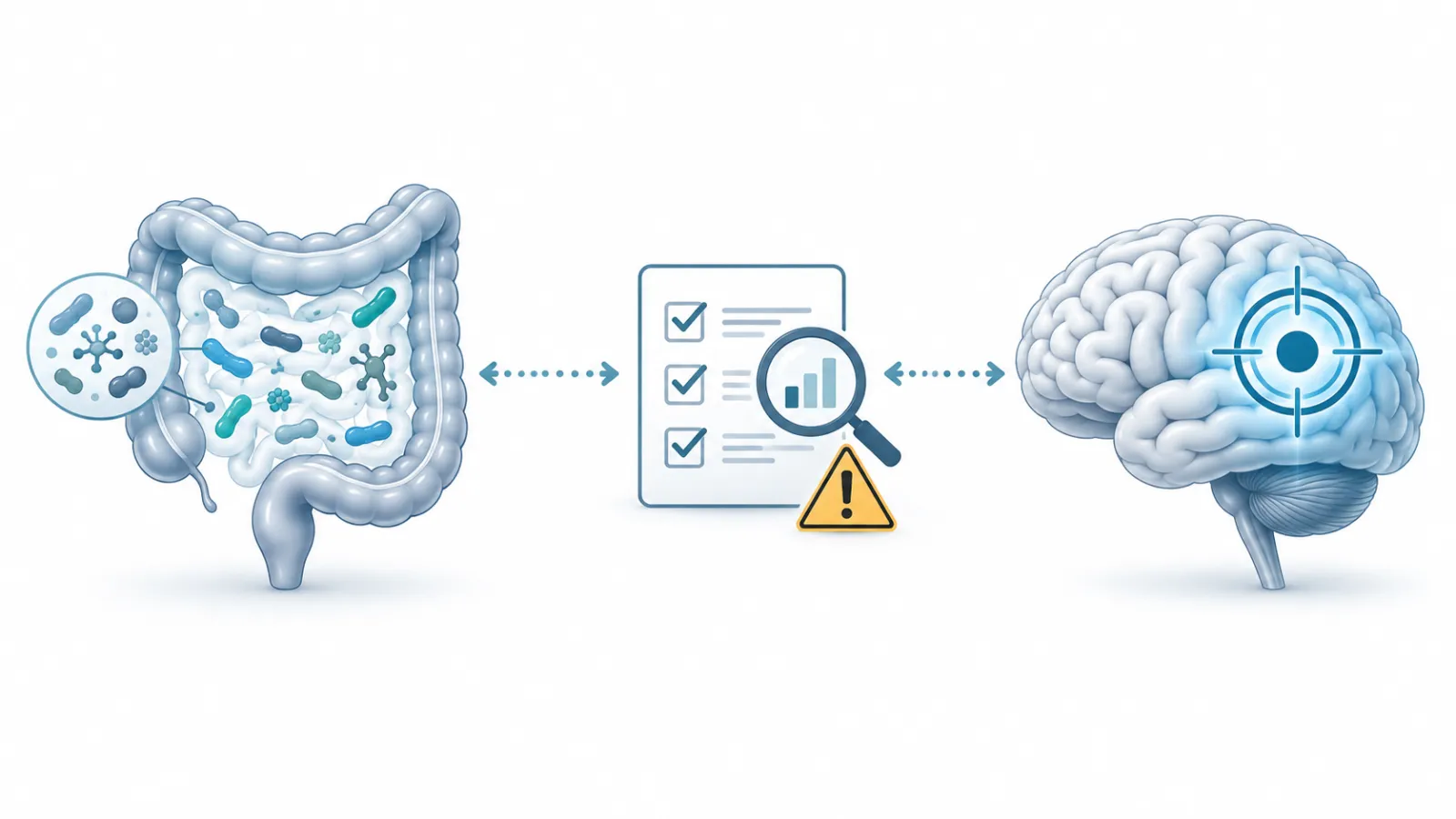
Short answer: Gut health may be linked with ADHD symptoms through the gut-brain axis, but the evidence is not strong enough to treat a microbiome test, diet plan, or probiotic as a stand-alone ADHD treatment. The practical focus should be safer: manage digestive symptoms, protect sleep and nutrition, and use standard ADHD care when ADHD is suspected or diagnosed.
The InnerBuddies article raises a fair question about gut health, ADHD, and focus. The important correction is confidence. Research does show associations between ADHD, gastrointestinal symptoms, microbial patterns, inflammation, metabolites, and medication effects. It does not yet show that improving gut health reliably improves ADHD on command, or that a stool report can explain a person’s attention problems.
Gut Health vs. ADHD: Is There a Real Link?
There is a real research link, but it is not a simple cause-and-cure story. ADHD is a neurodevelopmental condition involving attention, impulsivity, activity regulation, executive function, genetics, environment, sleep, learning context, and mental health. The gut microbiome may interact with some of those systems through immune signaling, microbial metabolites, stress physiology, and the nervous system. That makes the gut-brain axis scientifically plausible.
Plausible is not the same as clinically proven. MedicalBrain searches found a 2022 systematic review in Pediatric Research that included 11 studies on ADHD and the gut microbiome. The review reported associations, but findings for microbial diversity, phyla, orders, and families were inconclusive. That is exactly the boundary readers need: the field is active and worth studying, but there is no validated ADHD microbiome signature for routine diagnosis.
Evidence summary
Evidence summary
- ADHD and gut microbiome differences have been reported, but study findings are inconsistent and not diagnostic.
- Some people with ADHD report gastrointestinal symptoms, and a 2025 meta-analysis found a clearer association with IBS than with intestinal disorders overall.
- Probiotic trials are early. One adult randomized trial reported signals, but this does not make probiotics a replacement for ADHD care.
- Psychostimulant medication, appetite changes, sleep, stress, and diet can all influence digestion, so symptoms should not be blamed on microbes alone.
- Microbiome testing may be educational, but it cannot confirm ADHD, choose medication, or prove why someone struggles with focus.
Can Gut Problems Cause ADHD?
Current evidence does not show that gut problems cause ADHD in the ordinary clinical sense. Several studies show associations. Richarte and colleagues compared 100 medication-naive adults with ADHD with 100 healthy controls and reported differences in gut microbial taxa. Early-life cohort studies have also explored whether infant or neonatal microbial patterns associate with later ADHD risk. These studies are useful because they reduce some medication-related confusion, but they remain observational.
Association can point researchers toward mechanisms. It cannot prove that changing the microbiome would prevent ADHD, remove ADHD, or improve focus in a predictable way. People with ADHD also differ in sleep patterns, diet regularity, medication exposure, stress, physical activity, and co-occurring anxiety or depression. Each of those can affect both digestion and attention. A clean explanation would be appealing, but the biology is not clean yet.
Why Might Gut Health Affect Focus?
The main candidate is the gut-brain axis. The intestine and brain communicate through nerves, immune molecules, hormones, microbial metabolites, and behavior. Short-chain fatty acids, tryptophan metabolism, dopamine-related pathways, inflammation, sleep disruption, and stress physiology are all studied in this area. If a person has abdominal pain, constipation, diarrhea, reflux, or bloating, discomfort alone can also make school, work, and planning harder.
This is where a cautious article can still be helpful. Treating constipation may improve comfort. Eating regular meals may reduce energy crashes. Better sleep may help attention and digestion at the same time. Reducing ultra-processed snacks may support general health. These are sensible steps, but they are not proof that ADHD is a gut disease. They are supportive habits around a complex neurodevelopmental condition.
Do People With ADHD Have More Digestive Symptoms?
Some evidence suggests they may, especially for functional symptoms. A 2025 Scientific Reports systematic review and meta-analysis examined ADHD and intestinal disorders. It did not find a statistically significant association for all intestinal disorders combined, but it did report a significant association with irritable bowel syndrome. The authors also noted high heterogeneity, which means the underlying studies varied substantially.
That distinction matters. IBS-like symptoms, constipation, abdominal pain, gas, or irregular bowel habits deserve care. They still do not prove microbiome imbalance or explain ADHD by themselves. Digestive symptoms can come from diet, stress, medication side effects, food intolerance, celiac disease, inflammatory bowel disease, infection, thyroid disease, pelvic floor dysfunction, or many other causes. The right answer starts with the symptom pattern, not with a microbiome dashboard.
Can Probiotics Improve ADHD or Focus?
Probiotics are being studied, but the evidence is preliminary. MedicalBrain found a 2024 double-blind randomized controlled trial in Scientific Reports that tested a multi-strain probiotic in college students with ADHD for three months. The study reported improvements in some ADHD-related and academic outcomes. That is interesting, and randomized evidence is stronger than speculation.
It is still not enough to make a broad treatment claim. One probiotic product, one population, one duration, and selected outcomes cannot prove that probiotics treat ADHD generally. Effects may be strain-specific, age-specific, medication-specific, or absent in other groups. If someone wants to try a probiotic for digestive symptoms, it should be framed as a cautious add-on. It should not replace assessment, behavioral supports, medication discussions, school accommodations, therapy, sleep care, or clinician guidance.
Can a Gut Microbiome Test Tell You How to Improve Focus?
No, not in a validated clinical way. A stool microbiome test can describe detected organisms or genes in a sample. It cannot diagnose ADHD. It cannot determine whether focus problems come from ADHD, sleep deprivation, anxiety, depression, iron deficiency, thyroid disease, medication effects, substance use, trauma, learning differences, or ordinary overload. It also cannot choose the right stimulant, non-stimulant, supplement, or diet plan for a specific person.
Testing may be educational for people who understand its limits. It can start a conversation about fiber, stool consistency, diet variety, medication history, and digestive symptoms. The risk is overinterpretation. If a report says a bacterium is high or low, that does not automatically mean it is causing distractibility. Without validated reference ranges and outcome-tested interventions, the report is a hypothesis generator, not a focus prescription.
What Helps Focus Without Overclaiming Gut Science?
The strongest practical advice is not glamorous. Eat regular meals with protein, fiber-rich carbohydrates, and healthy fats if tolerated. Increase fiber gradually rather than suddenly. Treat constipation or diarrhea appropriately. Protect sleep. Review caffeine, alcohol, cannabis, supplements, and medications that may affect appetite or sleep. If ADHD medication suppresses appetite or changes bowel habits, discuss timing, dose, formulation, and nutrition with the prescribing clinician.
These steps can make daily functioning easier even when they do not treat ADHD directly. For children, avoid restrictive diets unless supervised, especially if appetite is already limited. For adults, be careful with expensive protocols that promise sharper focus from gut resetting. A calmer gut can support life quality. It does not erase the need for proper ADHD diagnosis and support.
What Marketing Often Gets Wrong
Marketing often starts with true science and ends with a stronger sales message. True: the gut and brain communicate. True: ADHD has been associated with microbial and gastrointestinal differences in some studies. Plausible: diet, sleep, stress, medications, and digestion can affect how focused a person feels. Overstated: a gut test or supplement plan can reveal the root cause of ADHD or reliably fix focus.
The missing step is clinical utility. Does the test identify a validated ADHD subtype? Does the intervention improve ADHD outcomes better than standard care? Has it been repeated in children and adults, with medication status considered, and with durable benefits? Until those questions are answered, gut-health advice should stay supportive and evidence-bounded.
When Should You See a Clinician?
Seek medical care for blood in stool, black stool, persistent vomiting, unexplained weight loss, severe or worsening abdominal pain, fever, dehydration, anemia, night-time diarrhea, new bowel changes after age 50, symptoms after antibiotics, or a family history of inflammatory bowel disease, celiac disease, or colorectal cancer. Children with poor growth, feeding restriction, severe constipation, persistent diarrhea, or school impairment need pediatric assessment.
For attention symptoms, seek ADHD evaluation when inattention, impulsivity, hyperactivity, disorganization, emotional dysregulation, or task initiation problems persist across settings and impair school, work, home, or relationships. Digestive support can happen alongside ADHD care. It should not delay it.
Bottom Line
Gut health and ADHD are connected enough to study seriously, but not enough to sell certainty. The best current answer is balanced: treat digestive symptoms, protect nutrition and sleep, consider gut-brain biology as one possible contributor, and keep ADHD diagnosis and treatment grounded in established clinical care.
A gut microbiome test may teach you something about a stool sample. It cannot tell you whether you have ADHD, why you lose focus, or which protocol will fix it. The safest path is not to ignore the gut. It is to stop asking the gut to explain everything.
The Simple Version
Think of attention like a control room. The brain is the main control panel, but the gut can send background signals. If your stomach hurts, you are constipated, you sleep badly, or you skip meals, the control room has more noise to handle.
That does not mean ADHD is caused by the gut. It means digestion can be one part of the bigger picture. Helping the gut may help comfort, energy, and routine. ADHD still needs proper assessment and support.
Educational disclaimer: This article is for general science education and does not diagnose, treat, or replace care from a licensed clinician. Decisions about ADHD symptoms, medication, diet, probiotics, supplements, microbiome testing, or digestive disease should be made with qualified healthcare professionals.
Evidence Notes and Sources
- Gut microbiome and attention deficit/hyperactivity disorder: a systematic review (2022). Pediatric Research. DOI: 10.1038/s41390-022-02027-6
- Gut microbiota signature in treatment-naïve attention-deficit/hyperactivity disorder (2021). Translational Psychiatry. DOI: 10.1038/s41398-021-01504-6
- Exploring the impact of probiotics on adult ADHD management through a double-blind RCT (2024). Scientific Reports. DOI: 10.1038/s41598-024-73874-y
- Association between attention-deficit/hyperactivity disorders and intestinal disorders: A systematic review and Meta-analysis (2025). Scientific Reports. DOI: 10.1038/s41598-025-04303-x
- Early-life gut microbiota and attention deficit hyperactivity disorder in preadolescents (2023). Pediatric Research. DOI: 10.1038/s41390-022-02051-6
- Impact of psychostimulants on microbiota and short-chain fatty acids alterations in children with attention-deficit/hyperactivity disorder (2025). Scientific Reports. DOI: 10.1038/s41598-025-87546-y
- Neonatal gut Bifidobacterium associates with indole-3-lactic acid levels in blood and risk of ADHD at age 10 (2026). Molecular Psychiatry. DOI: 10.1038/s41380-026-03480-z