Evidence-based response
What Diseases Show the Gut-Brain Connection? What Science Actually Says
The gut-brain axis is real and relevant to IBS, mood, Parkinson's disease, and other conditions, but stool microbiome tests cannot diagnose brain diseases.
By Sandra McKenzy, Pharmacist · 2026-05-27
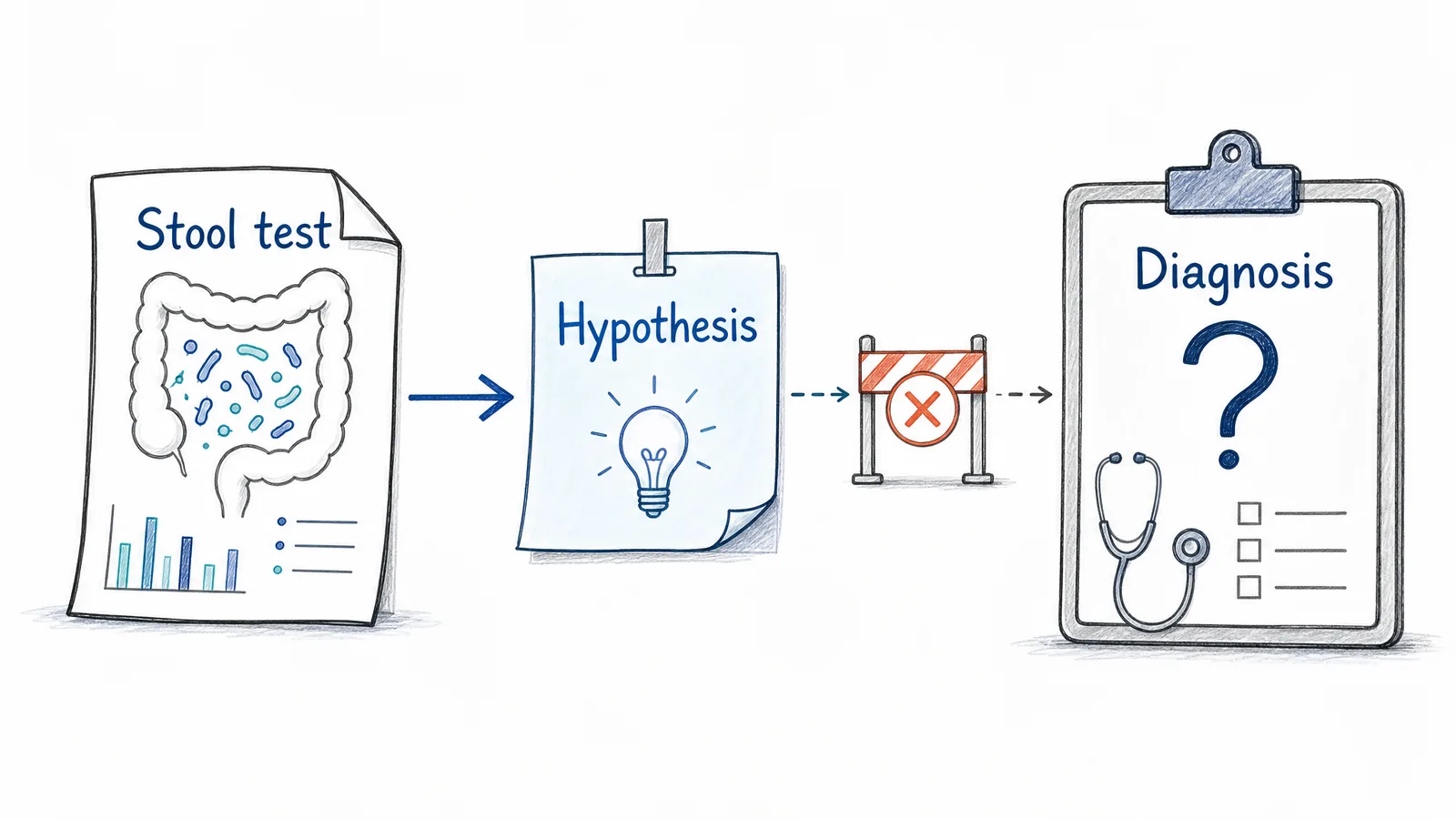
Short answer: The gut-brain connection is most clearly relevant in disorders of gut-brain interaction such as IBS, and it is being studied in Parkinson's disease, depression, anxiety, Alzheimer's disease, multiple sclerosis, and autism. But a consumer stool microbiome test cannot diagnose these diseases, predict them with certainty, or replace neurological, psychiatric, or gastrointestinal assessment.
What does the gut-brain connection mean clinically?
The gut-brain axis is the two-way communication system linking the intestine, enteric nerves, immune signaling, hormones, microbial metabolites, and the central nervous system. This is not fringe science. Gut microbes can influence short-chain fatty acids, bile acids, tryptophan metabolism, immune tone, and vagal signaling. The brain also changes gut motility, secretion, appetite, pain sensitivity, and stress responses.
The careful point is that a mechanism is not the same as a diagnosis. Gut-brain biology can help explain why digestive symptoms and mood, stress, pain, or neurological symptoms often overlap. It does not mean that a stool profile can identify the cause of Alzheimer's disease, Parkinson's disease, MS, depression, autism, or IBS in one person.
Which diseases have the strongest gut-brain evidence?
IBS has the clearest clinical fit because it is classified as a disorder of gut-brain interaction. Brain-gut signaling, visceral hypersensitivity, motility, stress, immune activation, diet, and the microbiome can all contribute. Some probiotics help some IBS symptoms, but effects are strain-specific and not diagnostic.
Parkinson's disease also has substantial microbiome research. Constipation can appear years before motor symptoms, and large studies report altered gut microbial patterns in people with Parkinson's. Still, Parkinson's is diagnosed clinically, not by a consumer microbiome panel. Recent machine-learning work suggests research promise, while also showing that models can be study-specific and not ready as general diagnostic tools.
Depression and anxiety are plausible gut-brain conditions too. Human trials of probiotics or prebiotics show mixed but sometimes encouraging effects, especially as add-ons. These findings do not make microbiome testing a mental-health test.
What claims go beyond the evidence?
Claims that dysbiosis causes neurodegeneration, proves leaky gut, or enables early detection through a stool test go too far. Alzheimer's disease, MS, autism, depression, and Parkinson's involve genetics, immunity, age, environment, medications, vascular health, diet, sleep, infection history, and many other factors. Microbial differences can be part of the picture without being the root cause.
Some InnerBuddies-style marketing language presents microbiome testing as a route to early detection or personalized treatment strategies for brain-related diseases. That is not clinically established. Stool sequencing can generate hypotheses about gut ecology. It cannot diagnose neuroinflammation, measure brain pathology, or choose neurological treatment.
What is actually supported?
- The gut-brain axis is a real bidirectional communication network involving nerves, immunity, hormones, and microbial metabolites.
- IBS is the best-established clinical gut-brain disorder, but diagnosis still depends on symptoms, red flags, and clinical criteria.
- Parkinson's disease and depression show reproducible microbiome associations, but causality and diagnostic use remain unsettled.
- Microbiome-directed interventions may help selected symptoms, but benefits are strain-specific, condition-specific, and not guaranteed.
- Consumer stool tests should be interpreted as exploratory ecology reports, not as brain-disease screening tools.
Can gut microbiome testing help at all?
It may help a motivated person discuss diet, fiber intake, antibiotic history, or broad microbial patterns with a knowledgeable clinician. It may also be useful in research. But for symptoms such as tremor, memory loss, severe depression, neurological weakness, persistent diarrhea, or disabling pain, the first step is clinical evaluation. The microbiome result is context, not the answer.
When should symptoms be checked clinically?
Seek medical care for new neurological weakness, tremor, seizures, suicidal thoughts, sudden confusion, progressive memory loss, blood in stool, unexplained weight loss, anemia, fever, night-time diarrhea, severe abdominal pain, or new digestive symptoms after age 50. Do not use a stool test to delay assessment.
Bottom line
The gut-brain connection is one of the most important areas in microbiome science. It helps explain why the intestine, immunity, stress, mood, and neurological disease research overlap. The mistake is turning that science into a diagnostic promise. Gut-brain evidence supports careful clinical context, not disease prediction from a stool report.
Evidence notes
- Morais et al. (2021). The gut microbiota-brain axis in behaviour and brain disorders. Nature Reviews Microbiology. 10.1038/s41579-020-00460-0
- Drossman (2016). Functional gastrointestinal disorders: history, pathophysiology, clinical features and Rome IV. Gastroenterology. 10.1053/j.gastro.2016.02.032
- Nishiwaki et al. (2025). Machine learning-based meta-analysis reveals gut microbiome alterations associated with Parkinson's disease. Nature Communications. 10.1038/s41467-025-56829-3
- Reininghaus et al. (2022). Clinical, gut microbial and neural effects of a probiotic add-on therapy in depressed patients. Translational Psychiatry. 10.1038/s41398-022-01977-z
- Kim et al. (2024). Current understanding of the Alzheimer's disease-associated microbiome and therapeutic strategies. Experimental & Molecular Medicine. 10.1038/s12276-023-01146-2
- Mizuno et al. (2017). Gut microbiome as a clinical tool in gastrointestinal disease management: are we there yet? Nature Reviews Gastroenterology & Hepatology. 10.1038/nrgastro.2017.29
This article is educational and does not diagnose, treat, or replace care from a qualified clinician.