Evidence-based response
Why Infant Microbiome Develops in Three Stages: What Science Actually Says
Infant microbiome development follows broad early-life patterns, but consumer stool testing cannot predict a child’s future health from one sample.
By Sandra McKenzy, Pharmacist · 2026-05-27
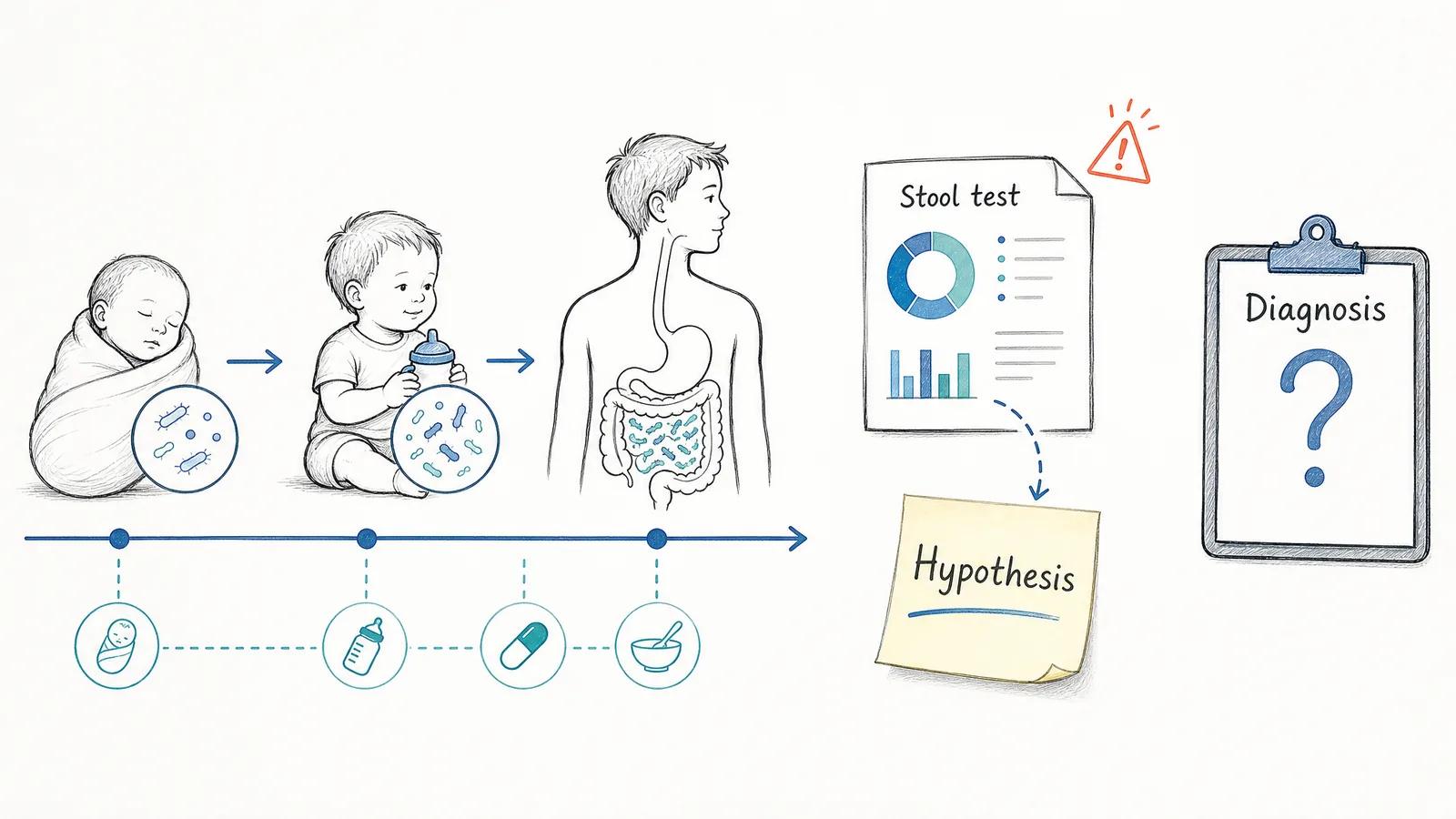
Short answer: The infant gut microbiome does develop in recognizable early-life phases, shaped by birth, feeding, antibiotics, environment, infections, and the move to solid foods. But those phases are broad population patterns. A single consumer stool test cannot predict a baby’s future health, diagnose risk, or prescribe a guaranteed microbiome plan.
Does the infant microbiome develop in stages?
Yes, but the stages should be understood carefully. Large longitudinal studies show that the gut microbiome changes rapidly in the first months and years of life. The TEDDY study described broad developmental, transitional, and more stable phases from infancy into early childhood. Other studies show strong individuality, with infants gradually converging toward a more adult-like community by around age three.
That does not mean every baby follows a neat three-step checklist. Microbial succession is messy. It is influenced by delivery mode, breastfeeding, formula, human milk oligosaccharides, solid foods, siblings, pets, geography, antibiotics, daycare, illness, and genetics. The useful concept is development over time, not a simple scorecard.
What shapes the first stage after birth?
Birth and early feeding matter because they influence which microbes arrive first. Vaginal birth and cesarean birth are associated with different early microbial patterns. Breast milk contains human milk oligosaccharides that selectively feed infant-adapted Bifidobacterium species, while formula feeding and mixed feeding can produce different maturation patterns.
These differences are biologically meaningful, but they should not be used to blame parents or overstate destiny. Many babies born by cesarean section or fed formula develop normally. The microbiome is dynamic, and early differences can narrow as diet and environment broaden.
What changes during childhood and adulthood?
As solid foods enter the diet, the gut ecosystem becomes more complex. Fiber, resistant starch, protein sources, fermented foods, medications, infections, and household environment all leave signals. By later childhood and adulthood, the microbiome is usually more stable than in infancy, but still responsive to diet, antibiotics, illness, travel, and major lifestyle changes.
That stability is relative. Adults do not have a fixed microbial fingerprint that can be optimized once and left alone. A stool test captures one moment in a changing ecosystem.
Can testing track a baby’s gut health?
Microbiome testing can be valuable in research, especially when samples are collected repeatedly with clinical data. Consumer testing is different. A single stool report may identify broad patterns, but it cannot diagnose immune development, allergy risk, obesity risk, autism, future diabetes, or whether a child needs a specific probiotic or diet.
Microbiome science is moving toward better risk models and interventions, but current clinical care still depends on the child’s symptoms, growth, feeding, stool pattern, medical history, and clinician assessment. The test is not the child.
What is actually supported?
- Infant gut microbiomes change rapidly and show broad developmental phases in the first years of life.
- Birth mode, breastfeeding, formula, antibiotics, solid foods, and environment can influence early microbial succession.
- Breast milk oligosaccharides support infant-adapted Bifidobacterium, but feeding choices do not determine destiny.
- Associations between early microbiome patterns and later disease risk are not the same as individual prediction.
- Consumer stool testing cannot diagnose future health risk or replace pediatric evaluation.
What does marketing get wrong?
The overclaim is certainty. It is reasonable to say that early-life microbiome development matters. It is not reasonable to promise that tracking a baby’s microbiome with InnerBuddies or any similar consumer test can forecast lifelong health or provide a scientifically validated plan for immune, allergy, weight, or developmental outcomes.
Parents need practical, low-pressure guidance: feed the child safely, follow pediatric advice, use antibiotics when medically needed, introduce appropriate foods at the right developmental stage, and seek help when growth, hydration, stools, or symptoms are concerning.
When should parents seek clinical care?
Call a clinician for poor weight gain, dehydration, persistent vomiting, blood in stool, prolonged diarrhea, fever in a young infant, severe abdominal distension, lethargy, feeding refusal, signs of allergy, or any symptom that worries you. A stool microbiome report should never delay pediatric care.
Bottom line
The microbiome does evolve from babyhood to adulthood, and early life is a real window of microbial development. The evidence supports cautious, child-centered care. It does not support using a consumer stool test as a crystal ball for a child’s future health.
Evidence notes
- Stewart et al. (2018). Temporal development of the gut microbiome in early childhood from the TEDDY study. Nature. 10.1038/s41586-018-0617-x
- Bäckhed et al. (2015). Dynamics and stabilization of the human gut microbiome during the first year of life. Cell Host & Microbe. 10.1016/j.chom.2015.04.004
- Olm et al. (2018). Robust variation in infant gut microbiome assembly across a spectrum of lifestyles. Science. 10.1126/science.abj2972
- Martínez et al. (2018). Individuality and convergence of the infant gut microbiota during the first year of life. Nature Communications. 10.1038/s41467-018-04641-7
- Sprockett et al. (2018). Role of priority effects in the early-life assembly of the gut microbiota. Nature Reviews Gastroenterology & Hepatology. 10.1038/nrgastro.2017.173
- Henrick et al. (2021). Bifidobacteria-mediated immune system imprinting early in life. Cell. 10.1016/j.cell.2021.05.030
This article is educational and does not diagnose, treat, or replace care from a qualified clinician.