Evidence-based response
What Are the First Signs of Crohn's Disease in Children? Evidence-Based Answer
First signs of Crohn's disease in children can include persistent abdominal pain, chronic diarrhea, blood, poor growth, delayed puberty, weight loss, fatig
By Sandra McKenzy, Pharmacist · 2026-06-13
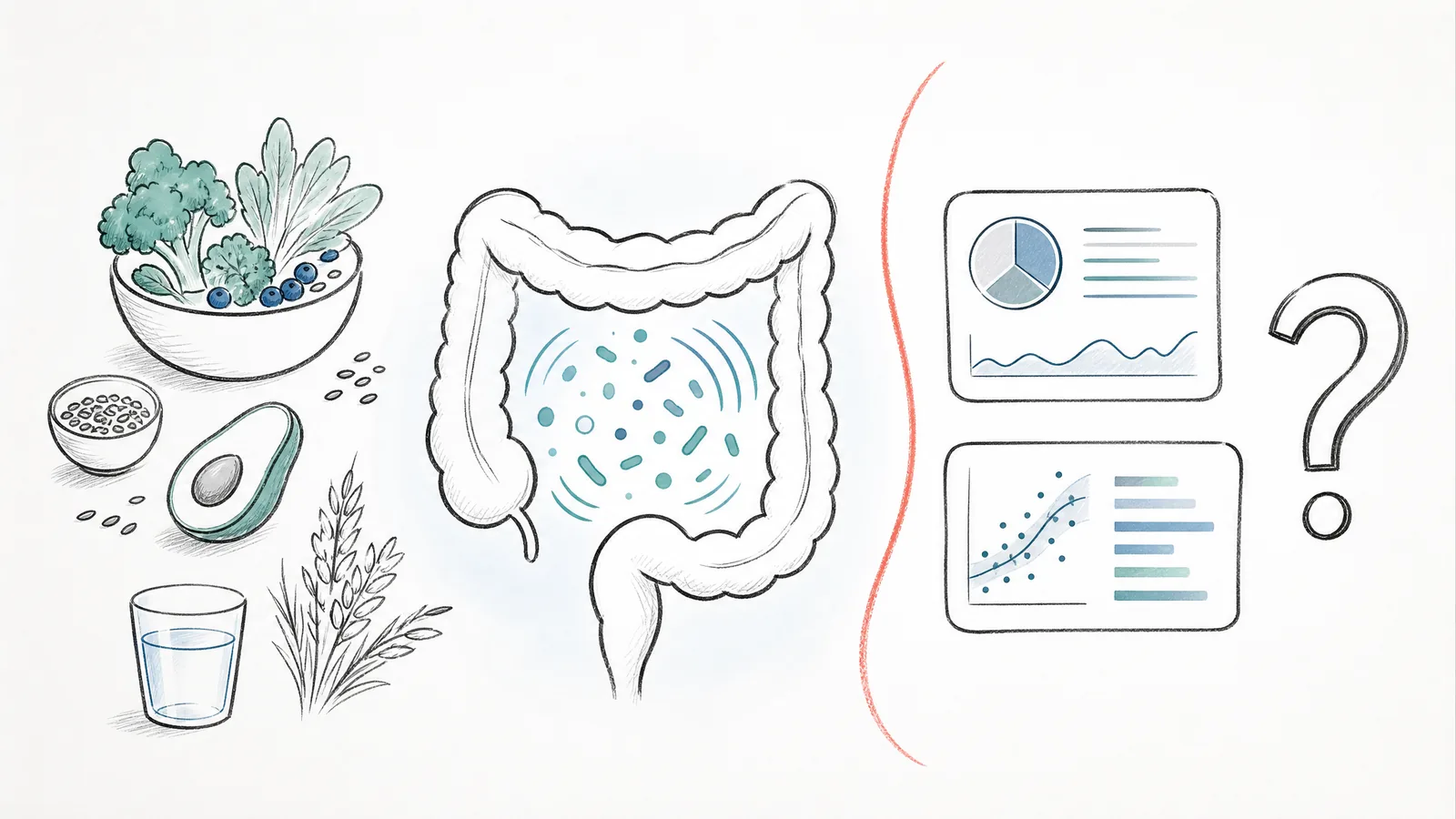
Short answer: First signs of Crohn's disease in children can include persistent abdominal pain, chronic diarrhea, blood, poor growth, delayed puberty, weight loss, fatigue, mouth ulcers, fever, or perianal problems. A microbiome test cannot rule Crohn's disease in or out. Children with red flags need pediatric medical evaluation.
The source article targets a real reader question. The problem is not that pediatric Crohn disease signs is irrelevant. The problem is that marketing language often moves faster than clinical evidence. A safer answer separates plausible microbiome biology, human evidence, and validated decisions for an individual person.
What does pediatric Crohn disease signs actually mean clinically?
Clinically, pediatric Crohn disease signs sits inside a broader picture: symptoms, diet, medication history, age, recent infection, immune status, stool pattern, and ordinary medical tests when warning signs are present. The gut microbiome is real biology, but it is also variable biology. Healthy people can have different microbial profiles, and the same person can shift over time.
This is why a cautious article should avoid turning a trend, symptom, drink, diet, review, or stool report into a verdict. Microbiome data can identify organisms, diversity patterns, genes, and sometimes functional potential. Those signals may support a hypothesis. They do not automatically prove cause, diagnose disease, or tell a person exactly which supplement, food, drink, or protocol will work.
Evidence summary
- Growth charts, symptoms, blood inflammation markers, fecal calprotectin, imaging, endoscopy, and biopsy are used together in suspected pediatric ibd, but evidence is strongest when tied to a specific outcome.
- Consumer microbiome tests can describe one stool sample, not the whole intestine or a diagnosis.
- Associations between microbes and symptoms do not prove cause.
- Personalized recommendations need clinical validation, not just a detailed report.
- Red flags should be handled through ordinary medical care, not wellness experimentation.
What is supported by the evidence?
The supported part is that the gut microbiome participates in digestion, immune education, barrier function, microbial metabolism, short-chain fatty acid production, and interactions with diet and medication. Large human studies and consensus papers show that gut health is multidimensional rather than reducible to one bacterial score or one consumer habit.
For pediatric Crohn disease signs, the most defensible interpretation is contextual. Growth charts, symptoms, blood inflammation markers, fecal calprotectin, imaging, endoscopy, and biopsy are used together in suspected pediatric ibd. That can matter for comfort, nutrition, or clinical reasoning. It becomes clinically meaningful only when the finding or habit is linked to an outcome that has been tested, reproduced, and shown to improve a real decision.
Which claims go beyond the evidence?
The overclaim is the jump from association to personal certainty. Marketing often implies that gut testing can reveal the hidden cause of a child’s symptoms or replace pediatric IBD workup. That is too confident. A bacterium can be associated with a condition without being the cause. A functional pathway can be present without proving activity in the body. A symptom can be real while still being nonspecific.
Another overclaim is that personalization automatically means better care. A personalized report can still be weak if the recommendation underneath it has not been clinically validated. More data can create more confidence than the evidence deserves. The reader-protective question is not whether the dashboard, trend, or testimonial looks advanced. It is whether it changes a decision safely and measurably.
Can a microbiome test answer this on its own?
Usually, no. A test can describe what was detected in one sample. It cannot see the full intestinal surface, prove what microbes are doing at every site, or replace medical evaluation. It also cannot reliably separate all causes of common symptoms such as bloating, abdominal pain, diarrhea, constipation, fatigue, skin changes, food intolerance, or poor growth in a child.
Shotgun metagenomics and multi-omics can provide richer information than older profiling methods, but richer information is not the same as clinical certainty. If the question is broad wellness, the answer should stay broad and cautious. If the question involves disease, inflammation, infection, children, pregnancy, immune compromise, or persistent pain, the threshold for clinical evidence is much higher.
What should readers do instead?
Start with the least glamorous but best-supported foundations: regular meals, enough tolerated fiber, gradual dietary change, adequate sleep, movement, medication review with a professional when relevant, and careful attention to symptom patterns. These steps are safer than chasing a perfect microbiome score or trying to eliminate bacteria broadly.
If a microbiome report or wellness recommendation is used, treat it as one input. Ask what method was used, what reference population was used, whether the finding has been validated for your exact concern, and whether the recommendation would still make sense without the test. If the answer is no, the recommendation may be more marketing than medicine.
When should you see a clinician?
Seek medical care promptly for blood in stool, weight loss, growth failure, delayed puberty, persistent diarrhea, nighttime symptoms, fever, anemia, severe pain, dehydration, perianal drainage, or marked fatigue. For babies and children, persistent poor feeding, poor growth, bilious vomiting, dehydration, fever, blood in stool, severe lethargy, or inconsolable distress should be handled through pediatric care, not online testing.
Bottom line
First signs of Crohn's disease in children can include persistent abdominal pain, chronic diarrhea, blood, poor growth, delayed puberty, weight loss, fatigue, mouth ulcers, fever, or perianal problems. A microbiome test cannot rule Crohn's disease in or out. Children with red flags need pediatric medical evaluation. The microbiome deserves serious attention, but serious attention means resisting simple answers when the biology is complex. Careful evidence can support better questions. It should not be sold as a shortcut around clinical context, validated diagnostics, or common-sense safety.
Educational disclaimer: This article is for general information and science communication. It is not medical advice, diagnosis, or treatment. Do not use microbiome results to start, stop, or replace medical care. Persistent or severe symptoms deserve professional evaluation.
Evidence notes and sources
- Very early onset inflammatory bowel disease and the developing microbiome. Nature Medicine. https://doi.org/10.1038/nm.3531
- Pediatric Crohn disease, growth, inflammation and microbiome evidence. Mucosal Immunology. https://doi.org/10.1038/s41385-018-0114-4
- The International Scientific Association for Probiotics and Prebiotics consensus statement on the definition and scope of gut health. Nature Reviews Gastroenterology & Hepatology. https://doi.org/10.1038/s41575-026-01176-x
- Clinical translation of microbiome research. Nature Medicine. https://doi.org/10.1038/s41591-025-03615-9
- A Consensus Statement on establishing causality, therapeutic applications and the use of preclinical models in microbiome research. Nature Reviews Gastroenterology & Hepatology. https://doi.org/10.1038/s41575-025-01041-3
- Gut microbiome as a clinical tool in gastrointestinal disease management: are we there yet?. Nature Reviews Gastroenterology & Hepatology. https://doi.org/10.1038/nrgastro.2017.29