Evidence-based response
Fermented Foods and InnerBuddies: Evidence-Based Benefits Without the Hype
Fermented foods can support gut microbial diversity for some people, but consumer microbiome tests cannot prescribe exact fermented foods or guarantee benefits.
By Sandra McKenzy, Pharmacist · 2026-05-27
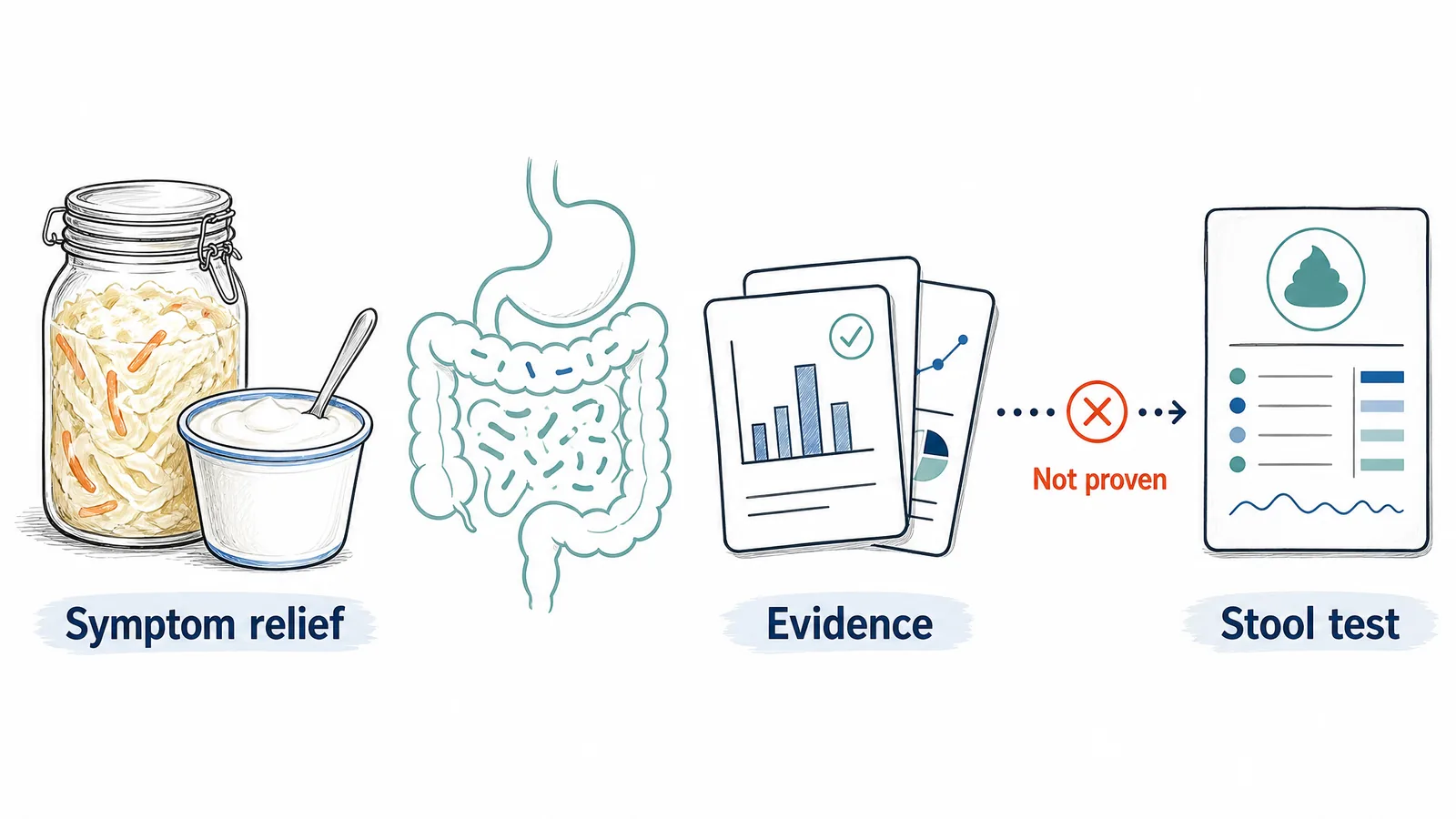
Short answer: Fermented foods can be a reasonable way to support gut microbial diversity, especially when they replace ultra-processed foods in a varied diet. But they are not a guaranteed treatment, and a consumer microbiome test cannot yet prove which fermented foods your gut personally needs or predict health benefits from a single stool sample.
What are fermented foods, clinically?
Fermented foods are foods made through controlled microbial growth and enzymatic changes in food ingredients. Yogurt, kefir, kimchi, sauerkraut, miso, tempeh, kombucha, and some traditional pickles are common examples. Some contain live microbes when eaten. Others are pasteurized or cooked, which means they may still contain fermentation products but not living cultures.
That distinction matters. The word fermented does not automatically mean probiotic, and probiotic has a stricter scientific meaning: a live microorganism that confers a health benefit when given in adequate amounts. Many fermented foods are promising, but their effects depend on the food, microbes, dose, background diet, and person eating them.
Do fermented foods improve gut health?
The best answer is cautiously positive. A well-known human diet intervention found that a fermented-food-rich diet increased gut microbiome diversity and reduced several inflammatory markers in healthy adults. Reviews also describe plausible mechanisms: live microbes, microbial metabolites, improved food matrix, and immune signaling in the gut.
That does not mean fermented foods cure dysbiosis, repair every digestive problem, or reliably improve mood, immunity, weight, and inflammation for everyone. Many claims are extrapolated from broad microbiome biology rather than condition-specific clinical trials. Someone with IBS, histamine intolerance, small intestinal bacterial overgrowth symptoms, immune suppression, or active inflammatory bowel disease may react differently.
Can a microbiome test personalize fermented foods?
This is where the marketing often outruns the evidence. A stool microbiome test can describe organisms detected in one sample. It may generate useful hypotheses, such as low diversity or a pattern associated with low fiber intake. It cannot validate a personalized fermented-food prescription by itself.
Personalized nutrition is a serious research field, and randomized trials increasingly test data-driven diet programs. But that is not the same as saying a consumer report can choose the exact fermented food that will improve digestion, immunity, inflammation, or mental well-being for an individual. The clinical bridge between stool taxonomy and reliable fermented-food recommendations is still incomplete.
What is actually supported?
- Fermented foods can affect gut microbes and immune markers, but effects vary by food and person.
- Some fermented foods contain live cultures; others do not after pasteurization or cooking.
- Higher microbiome diversity can be a useful ecological signal, but it is not a diagnosis or treatment target by itself.
- Consumer stool testing can generate hypotheses, not clinically validated fermented-food prescriptions.
- Fermented foods should complement, not replace, medical evaluation for persistent digestive symptoms.
What does marketing get wrong?
The weak claim is not that fermented foods are useless. The weak claim is certainty. It is too strong to say fermented foods replenish the microbiome in a predictable way, strengthen immunity broadly, reduce inflammation clinically, and improve mood for every reader. It is also too strong to imply that InnerBuddies or any similar consumer test can remove the guesswork from fermented food selection.
A safer practical approach is simpler: if tolerated, include fermented foods as part of a diverse diet rich in plants, legumes, whole grains, nuts, seeds, and resistant starch. Start small. Watch symptoms. Choose products with live cultures when that is the goal, and avoid treating kombucha, kimchi, yogurt, or kefir as medical therapy.
When should you see a clinician?
Do not use fermented foods or a microbiome report to explain away red flags. Blood in stool, persistent diarrhea, black stools, unexplained weight loss, fever, anemia, night-time symptoms, severe abdominal pain, dehydration, or new digestive symptoms after age 50 need medical assessment. Immunocompromised people should ask a clinician before adding unpasteurized fermented foods.
Bottom line
Fermented foods are biologically plausible and supported by some human evidence, especially as part of a broader high-quality diet. The evidence does not support turning a consumer microbiome test into a precise fermented-food prescription or promising broad gut-health benefits from fermented foods alone.
Evidence notes
- Wastyk et al. (2021). Gut-microbiota-targeted diets modulate human immune status. Cell. 10.1016/j.cell.2021.06.019
- Marco et al. (2021). The International Scientific Association for Probiotics and Prebiotics consensus statement on fermented foods. Nature Reviews Gastroenterology & Hepatology. 10.1038/s41575-020-00390-5
- Leeuwendaal et al. (2024). Fermented foods and gastrointestinal health: underlying mechanisms. Nature Reviews Gastroenterology & Hepatology. 10.1038/s41575-023-00869-x
- Mizuno et al. (2017). Gut microbiome as a clinical tool in gastrointestinal disease management: are we there yet? Nature Reviews Gastroenterology & Hepatology. 10.1038/nrgastro.2017.29
- Berding et al. (2024). Effects of a personalized nutrition program on cardiometabolic health: a randomized controlled trial. Nature Medicine. 10.1038/s41591-024-02951-6
- Sonnenburg et al. (2016). Diet-induced extinctions in the gut microbiota compound over generations. Nature. 10.1038/nature16504
This article is educational and does not diagnose, treat, or replace care from a qualified clinician.