Evidence-based response
What is extremely healthy for the gut? Evidence-Based Answer Without the Hype
The most evidence-based gut support is not one miracle food, but a sustainable pattern of fiber, plant diversity, fermented foods when tolerated, and clinical caution.
By Sandra McKenzy, Pharmacist · 2026-08-16
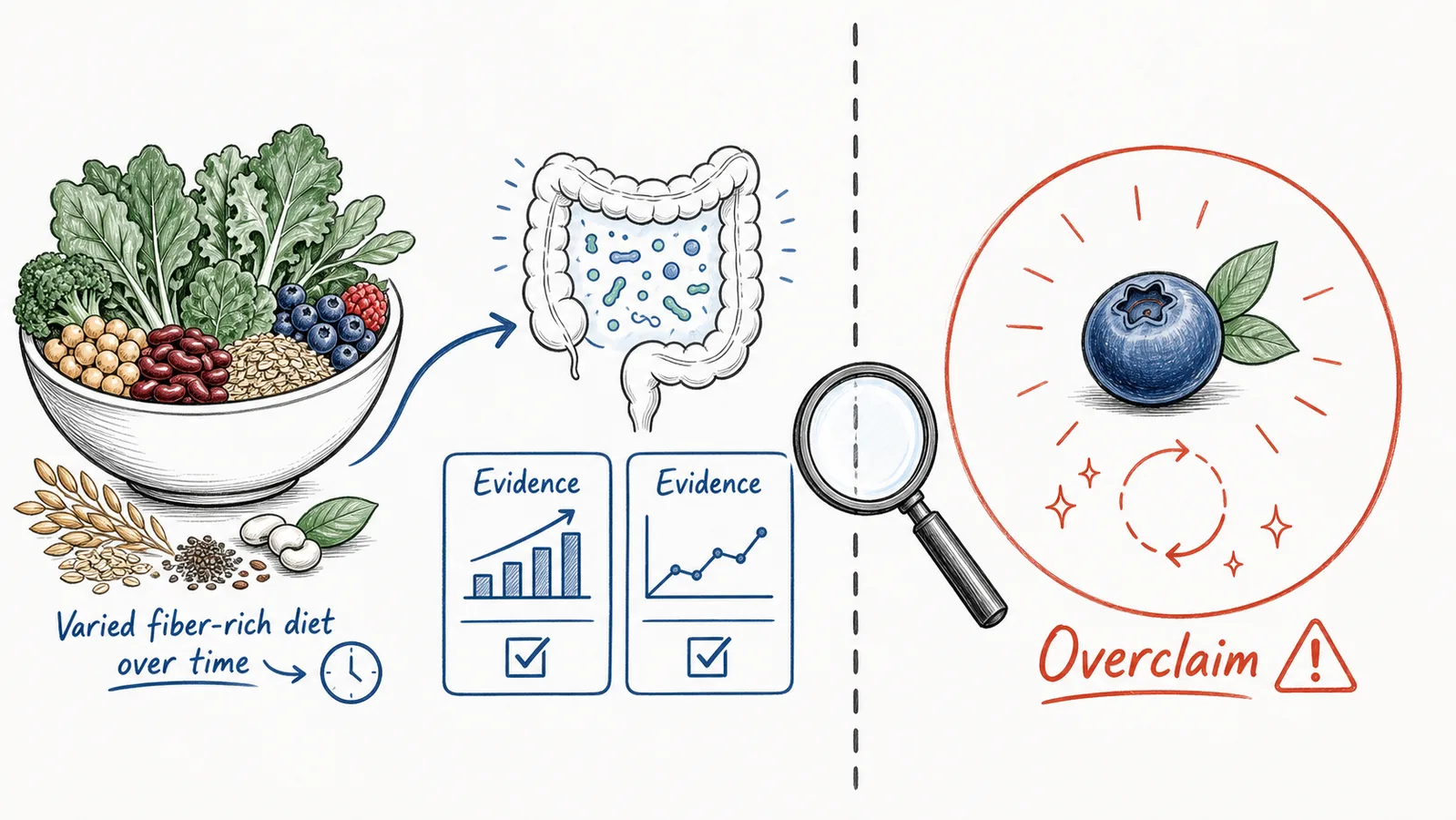
Short answer: What is extremely healthy for the gut is not one miracle food. The best-supported answer is a consistent pattern: enough dietary fiber, a wide variety of plant foods, fermented foods when tolerated, regular meals, sleep, movement, and clinical care when symptoms are persistent or alarming. Those choices can support microbial diversity and short-chain fatty acid production, but they do not guarantee perfect gut health or replace diagnosis.
The source article this response addresses lists foods and habits that may support the microbiome. Much of the broad direction is reasonable: legumes, oats, berries, fermented dairy, vegetables, resistant starch, hydration, sleep and stress management are all more defensible than cleanse culture. The problem is the word extremely. Gut health is not a purity contest, and a short list can easily make ordinary digestive biology sound more certain than it is.
A better evidence-based answer is less dramatic and more useful. Gut-supportive eating is usually built through repeatable patterns, not a seven-day reset or a single test result. Food can change microbial activity quickly, but durable gut health also depends on baseline microbiome, medications, illness, age, immune status, bowel motility, socioeconomic access, and whether symptoms point to a condition that needs proper clinical workup.
Evidence summary
- Diet is one of the strongest modifiable influences on the gut microbiome, but there is no single universally healthy gut food.
- Fiber-rich plant foods support microbial fermentation and short-chain fatty acid production, yet tolerance varies, especially in IBS or active gut disease.
- Fermented foods can be useful dietary components, but not every fermented food is a proven probiotic treatment.
- Short resets and cleanses are weaker than sustainable habits, gradual fiber increases, sleep, movement and symptom-aware eating.
- Consumer microbiome tests may provide educational context, but they cannot diagnose the cause of symptoms or prove which food is best for an individual.
What Does Extremely Healthy for the Gut Actually Mean?
Gut health is broader than having many bacteria or eating fashionable foods. A recent International Scientific Association for Probiotics and Prebiotics consensus statement describes gut health as a multidimensional concept that includes digestive function, absence of major gastrointestinal symptoms, barrier and immune functions, balanced host-microbe interactions, and subjective wellbeing. In plain language, a healthy gut is not only a diverse microbiome. It is a digestive system that works, tolerates food, protects the body, and does not keep sending warning signals.
That matters because food lists can flatten the topic. A person with constipation may benefit from soluble fiber, fluids and movement. A person with celiac disease needs gluten avoidance. A person with inflammatory bowel disease may need medication, monitoring and individualized nutrition. A person recovering from antibiotics may need time, adequate diet and sometimes targeted clinical advice. Calling one diet pattern extremely healthy for everyone ignores that context.
Which Foods Have the Best Evidence for Gut Support?
The strongest general category is fiber-rich plant food. Legumes, oats, vegetables, fruit, nuts, seeds and whole grains provide fermentable substrates for gut microbes. Bacterial fermentation can produce short-chain fatty acids such as acetate, propionate and butyrate, which are involved in colonocyte energy metabolism, immune signalling and gut barrier biology. This is one reason dietary fiber is central in reviews of gastrointestinal health.
Variety also matters. Large microbiome and nutrition studies connect habitual diet patterns with microbial signatures and cardiometabolic markers. Vegan, vegetarian and omnivore patterns show distinguishable microbiome profiles across large cohorts, and plant-derived polysaccharides and polyphenols are plausible reasons why more diverse plant intake often tracks with more favorable microbial functions. That does not mean everyone must become vegan. It means that a monotonous, ultra-processed diet is unlikely to be the strongest foundation for microbial resilience.
Fermented foods are another reasonable category, but the claim needs precision. Yogurt, kefir, kimchi, sauerkraut, miso and other fermented foods can contain live microbes and fermentation products, depending on how they are made and whether they are pasteurized after fermentation. A controlled diet study found that a high-fermented-food diet increased microbiota diversity and reduced several inflammatory markers in healthy adults. That is promising. It does not make every kombucha, pickle or probiotic snack a treatment for disease.
Is Fiber Always Good for the Gut?
Fiber is one of the best-supported gut-health tools, but always is too strong. Many people benefit from increasing fiber gradually, especially when intake is low. Oats, psyllium, legumes, berries, vegetables and seeds can support stool regularity and microbial fermentation. Resistant starch from cooked and cooled potatoes, rice or legumes can also feed colonic microbes.
Some people need caution. Rapid fiber increases can worsen bloating, gas or pain. During flares of inflammatory bowel disease, strictures, severe gastroparesis, bowel obstruction risk, or after some surgeries, fiber advice should be individualized. In IBS, fermentable carbohydrates can trigger symptoms in some people even when the same foods are nutritionally valuable. The evidence-based message is not eat maximum fiber at any cost. It is build tolerance gradually and match the strategy to the person.
Do Fermented Foods Populate the Gut With Good Bacteria?
Sometimes they can add live microbes temporarily, and sometimes they influence the gut environment without permanently colonizing it. Fermented foods are not automatically probiotics. The technical term probiotic requires live microorganisms that, when administered in adequate amounts, confer a health benefit on the host. Many fermented foods are healthy foods, but they are not all tested strain-specific probiotic interventions.
This distinction protects readers from overclaiming. Plain yogurt with live cultures may be a practical food. Kefir may be well tolerated by some people and not by others. Sauerkraut and kimchi can add flavor, fiber and fermentation products, but they can also be high in salt or trigger symptoms in sensitive people. Fermented foods belong in the toolkit. They should not be sold as proof that the microbiome has been healed.
Can a 7-Day Gut Reset Make the Gut Healthy?
A gentle week of better habits can help someone notice patterns, eat more plants, drink more water and reduce ultra-processed snacks. That can be useful as a reset of attention. It should not be framed as resetting the microbiome in a clinical sense.
Human diet studies show that the gut microbiome can shift quickly when diets change. David and colleagues showed rapid and reproducible microbiome changes during plant-based and animal-based dietary interventions. Quick change, however, is not the same as durable health. The microbiome is dynamic. A week can start a habit, but long-term dietary pattern, medication exposure, illness, stress, sleep and baseline microbial ecology all shape what persists.
What Does Marketing Get Wrong About Gut-Healthy Foods?
The first mistake is turning useful categories into guarantees. Legumes, oats, berries, greens and fermented foods can be excellent choices. They do not guarantee symptom relief, cure leaky gut, remove toxins, balance hormones, heal mood problems or make a consumer test normal.
The second mistake is treating symptoms as proof of dysbiosis. Bloating, irregular stools, fatigue, reflux, skin symptoms and food intolerance can overlap with microbiome changes, but they can also come from many non-microbiome causes. A list of signs is not a diagnosis.
The third mistake is using microbiome testing as the next step for almost every unresolved symptom. Stool sequencing can be educational. It may show microbial patterns, diversity estimates and possible functional features. It cannot diagnose celiac disease, inflammatory bowel disease, infection, cancer, endometriosis, malabsorption, SIBO, or the exact reason a person feels unwell.
When Should Gut Symptoms Be Checked Clinically?
Seek medical care for blood in stool, black stool, unexplained weight loss, anemia, fever, persistent vomiting, dehydration, severe or worsening abdominal pain, night-time diarrhea, difficulty swallowing, symptoms during pregnancy, symptoms in infants or older adults, or digestive symptoms in anyone who is immunocompromised. New bowel changes after age 50 also deserve clinical evaluation.
Also get help when symptoms persist despite basic diet changes, wake you from sleep, limit normal life, or require increasingly restrictive eating. A microbiome-friendly diet should not become a reason to delay diagnosis.
So What Is the Most Evidence-Based Gut-Healthy Pattern?
For most generally healthy adults, the best answer is boring in the best way: eat enough total fiber, diversify plant foods, include fermented foods if tolerated, limit ultra-processed foods, hydrate, move regularly, sleep enough, manage stress realistically and avoid unnecessary antibiotics. Introduce changes gradually and pay attention to symptoms.
If a food makes you feel worse, do not force it because it appeared on a gut-health list. If a test report makes a dramatic claim, ask whether the recommendation would still make sense without the test. If symptoms are persistent or alarming, start with clinical evaluation, not a wellness score.
Bottom Line
What is extremely healthy for the gut is not a single superfood or a short reset. The strongest evidence supports a sustainable pattern built around fiber-rich, minimally processed, diverse plant foods, with fermented foods as an optional and often useful addition. The scientific boundary is just as important: these habits support gut function and microbial ecology, but they do not diagnose symptoms, cure disease, or make microbiome testing a substitute for medical care.
Educational disclaimer: This article is for general science education. It does not diagnose disease, interpret a personal microbiome test, prescribe diet or supplements, or replace care from a licensed clinician.
The Simple Version
Your gut usually does best with steady care, not a miracle food. Think of gut microbes like a garden. They need regular feeding from different kinds of plant fibers, enough water, and a stable routine.
Fermented foods can be helpful for some people, but they are not magic. A seven-day reset can help you start better habits, but it does not prove your microbiome is fixed.
If you feel well, focus on variety and consistency. If you have ongoing or worrying symptoms, do not guess from a food list or stool test. Get proper medical advice.
Evidence Notes and Sources
- Hill et al. (2026). The International Scientific Association for Probiotics and Prebiotics consensus statement on the definition and scope of gut health. Nature Reviews Gastroenterology & Hepatology. DOI: 10.1038/s41575-026-01176-x
- Gill et al. (2021). Dietary fibre in gastrointestinal health and disease. Nature Reviews Gastroenterology & Hepatology. DOI: 10.1038/s41575-020-00375-4
- Marco et al. (2021). The International Scientific Association for Probiotics and Prebiotics consensus statement on fermented foods. Nature Reviews Gastroenterology & Hepatology. DOI: 10.1038/s41575-020-00390-5
- Wastyk et al. (2021). Gut-microbiota-targeted diets modulate human immune status. Cell. DOI: 10.1016/j.cell.2021.06.019
- David et al. (2014). Diet rapidly and reproducibly alters the human gut microbiome. Nature. DOI: 10.1038/nature12820
- Fackelmann et al. (2025). Gut microbiome signatures of vegan, vegetarian and omnivore diets and associated health outcomes across 21,561 individuals. Nature Microbiology. DOI: 10.1038/s41564-024-01870-z
- Gupta et al. (2020). A predictive index for health status using species-level gut microbiome profiling. Nature Communications. DOI: 10.1038/s41467-020-18476-8