Evidence-based response
7 Warning Signs of Poor Gut Health in Toddlers: Evidence-Based Answer Without the Test Hype
Toddler gut warning signs are clues, not proof of dysbiosis. Here is when food, fluids, routines, probiotics, or pediatric care matter most.
By Sandra McKenzy, Pharmacist · 2026-07-23
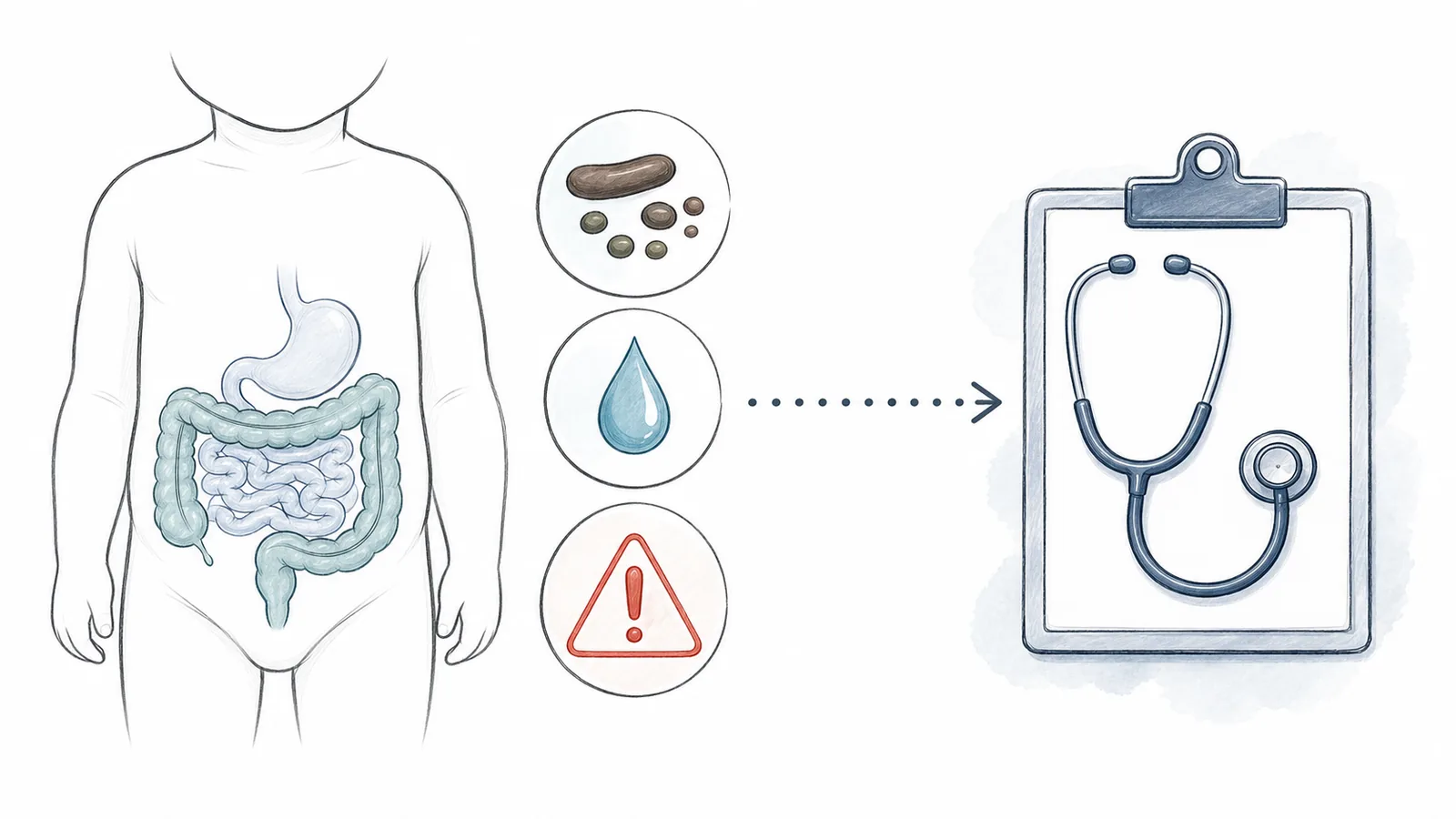
Short answer: The warning signs that matter most in toddlers are persistent diarrhea, painful constipation, blood in stool, repeated vomiting, dehydration, poor growth, severe belly pain, or a sudden change that does not fit the child’s usual pattern. These signs do not prove poor gut health or dysbiosis. They are reasons to look at hydration, diet, infection, constipation, allergy, medications, and, when symptoms persist or look severe, pediatric assessment.
A recent InnerBuddies article lists common signs of poor gut health in toddlers and children, then connects those signs to the developing microbiome, food choices, probiotics, and future microbiome testing. Much of the practical advice is reasonable at a basic level: stool patterns, fluids, fiber, sleep, and red flags matter. The evidence boundary is narrower than the marketing frame can imply. A toddler’s stool, appetite, skin, sleep, and behavior can change for many ordinary reasons. A consumer microbiome profile is not a validated shortcut to diagnosing the cause.
- Early childhood is a real window of microbiome development, but normal variation is wide and changes do not automatically mean disease.
- Constipation, diarrhea, bloating, appetite shifts, eczema, fatigue, and irritability are nonspecific symptoms, not proof of dysbiosis.
- Diet quality, age-appropriate fiber, fluids, routine, and careful antibiotic use are more actionable than trying to optimize a toddler stool microbiome score.
- Probiotics can be useful in selected pediatric situations, but benefits are strain-specific, condition-specific, and not guaranteed for every child.
- Blood in stool, dehydration, persistent vomiting, severe pain, fever, poor growth, weight loss, or ongoing diarrhea should prompt medical advice.
What Counts as a Warning Sign of Poor Gut Health in Toddlers?
Parents usually notice toddler gut problems through daily patterns: the diaper, the toilet, the appetite, the belly, and the child’s energy. Hard stools, stool withholding, painful bowel movements, several days of watery stool, frequent belly pain, visible bloating, vomiting, refusal to eat, or poor sleep can all be clues that digestion needs attention. The key word is clue. These signs can point toward constipation, viral gastroenteritis, diet transition, lactose intolerance, food allergy, celiac disease, inflammatory bowel disease, medication effects, dehydration, stress, or ordinary developmental changes.
That is why a list of warning signs should not be treated as a microbiome diagnosis. The gut microbiome is part of digestion and immune development, but symptoms in a toddler are not specific enough to identify which microbes are helping or harming. Even stool frequency is contextual. Some children stool several times a day, while others stool less often and remain comfortable. A painful, hard, withholding pattern matters more than a single number.
Are Constipation and Diarrhea Signs of Dysbiosis?
They can be associated with microbiome changes, but they are not diagnostic of dysbiosis. Functional constipation is common in children and often starts after painful stooling, toilet training pressure, diet change, low fluid intake, or routine disruption. A 2024 study of children with functional constipation found oral and intestinal microbiome differences, which supports a biological connection. It does not mean a home microbiome test can replace a pediatric constipation evaluation or predict the right treatment for one toddler.
Diarrhea has the same problem in the other direction. A short episode after a virus, travel, a new food, or antibiotics is common. Persistent watery stool, blood, fever, dehydration, weight loss, or diarrhea that wakes a child at night is different. Those patterns deserve clinical attention because infection, inflammation, malabsorption, or other conditions may be involved. The practical first step is hydration and careful observation, not trying to rebalance bacteria on command.
Can Skin, Mood, Sleep, or Frequent Colds Prove Poor Gut Health?
No. Eczema, irritability, poor sleep, fatigue, or frequent infections may overlap with gut health, but they are broad pediatric symptoms. A tired toddler may be recovering from an infection, sleeping poorly, eating little iron, reacting to stress, or dealing with constipation discomfort. Eczema may involve skin barrier biology, allergy risk, environment, and immune pathways. The microbiome can be part of these systems, but it is rarely the only explanation a parent should assume.
The safer approach is pattern tracking. Note when symptoms began, stool consistency, fever, vomiting, pain location, hydration, new foods, antibiotics, daycare illness, travel, and growth. This kind of timeline is often more useful to a pediatrician than a broad claim that the child has bad gut bacteria.
What Does the Evidence Say About the Toddler Microbiome?
MedicalBrain retrieval for this article supported a clear theme: the toddler microbiome is real, dynamic, and clinically interesting, but still difficult to translate into simple consumer instructions. The TEDDY study in Nature mapped early microbiome development and showed that birth factors, breastfeeding, diet, illness, geography, and other exposures shape microbial succession. A Scientific Reports study following children from one to two years of age found that dietary intake influenced microbiota development during a period when food patterns are changing rapidly.
Antibiotics are another important example. A Nature Communications study associated neonatal antibiotic exposure with altered microbial colonization and growth patterns across early childhood. That does not mean antibiotics should be avoided when a child truly needs them. It means unnecessary antibiotic use should be avoided, and antibiotic decisions should stay medical. For parents, the evidence supports modest basics: diverse age-appropriate foods, enough fluids, safe outdoor play, sleep routines, and avoiding unnecessary medical disruption. It does not support treating every symptom as a sequencing problem.
Does Microbiome Testing Help Parents Know What to Do?
For most toddlers with everyday symptoms, not enough to guide care by itself. A stool microbiome test can describe organisms and predicted functions in a sample. It cannot diagnose constipation, infection, celiac disease, inflammatory bowel disease, food allergy, dehydration, or a specific cause of belly pain. It also cannot reliably tell a parent which probiotic, prebiotic powder, diet restriction, or supplement a toddler needs.
This is especially important in young children because normal development is moving fast. The International Scientific Association for Probiotics and Prebiotics consensus statement on gut health emphasizes that gut health is broader than one microbial score. It includes symptoms, barrier function, immune interaction, metabolism, resilience, and the absence of disease. A test result can become misleading when it is presented as a direct map from microbes to medical decisions.
What Actually Supports Gut Health in Toddlers?
Age-appropriate food variety
Most families do not need a complex gut protocol. They need repeatable meals a toddler can tolerate: fruit, vegetables, oats, potatoes, beans or lentils when tolerated, yogurt or kefir if appropriate, whole grains, protein foods, and enough fat for growth. Fiber can support stool regularity, but it should be introduced gently. Too much fermentable fiber at once can worsen gas or discomfort.
Fluids and stool comfort
Hydration is not glamorous, but it matters. Constipation often becomes a cycle: a hard stool hurts, the child withholds, stool becomes harder, and the next bowel movement hurts more. Pediatric constipation guidance focuses on history, stool pattern, alarm signs, and practical treatment rather than microbiome optimization. Parents should discuss persistent constipation, painful stooling, or withholding with a clinician instead of waiting for a microbiome plan.
Careful use of probiotics
Probiotics are not automatically wrong, but they are not generic toddler gut insurance. Pediatric evidence is strongest for selected uses, such as some antibiotic-associated diarrhea contexts, and even there results depend on strain, dose, timing, and the child’s health status. Children who are immunocompromised, seriously ill, have central lines, or have complex medical problems need medical advice before taking live microbial products.
What Marketing Gets Wrong About Poor Gut Health in Toddlers
- It treats nonspecific symptoms as microbiome proof. Belly pain, constipation, diarrhea, eczema, sleep changes, and irritability can have many causes.
- It makes testing sound more precise than it is. Consumer stool profiles are not validated pediatric diagnostic tools for most toddler symptoms.
- It skips the growth and hydration question. A child’s energy, wet diapers or urination, fever, weight, and growth trend matter more than a bacteria list.
- It turns plausible support into treatment certainty. Food variety and probiotics may help in some contexts, but they do not replace assessment for persistent or severe symptoms.
When Should Parents Seek Medical Advice?
Seek prompt care for blood in stool, black stool, persistent vomiting, green or bilious vomiting, signs of dehydration, high fever with digestive symptoms, severe or worsening belly pain, a swollen painful abdomen, ongoing diarrhea, weight loss, poor growth, unusual sleepiness, or a major drop in drinking or urination. For infants and very young toddlers, be especially cautious with dehydration and repeated vomiting.
For constipation, medical advice is important when stools are very painful, withholding becomes frequent, there is soiling after toilet training, symptoms began very early in infancy, the abdomen is markedly distended, growth is poor, or there are neurologic or anal abnormalities. These are not situations where parents should rely on a gut-health score.
Bottom Line
The best evidence-based answer is practical and protective. Toddler gut health is real, and the microbiome is still developing, but symptoms are clues, not diagnoses. Watch stool patterns, hydration, pain, fever, appetite, energy, growth, new foods, antibiotics, and illness context. Support the basics with age-appropriate food variety, fluids, sleep, outdoor play, and careful use of medications. If warning signs persist or look severe, use pediatric care first. Microbiome testing may become more useful in the future, but it is not the safest first-line answer for a sick or struggling toddler today.
Evidence Notes and Sources
- Stewart et al. mapped early-life microbiome development and showed that infant and toddler microbial patterns are shaped by many exposures, not a single gut-health score. See Nature, 10.1038/s41586-018-0617-x.
- Lauzon-Joset et al. found that diet influenced gut microbiota development from age one to two years, supporting food pattern relevance without making diet a diagnostic tool. See Scientific Reports, 10.1038/s41598-019-48658-4.
- Uzan-Yulzari et al. linked neonatal antibiotic exposure with altered colonization and early growth patterns, reinforcing careful antibiotic stewardship. See Nature Communications, 10.1038/s41467-020-20495-4.
- Tabbers et al. provide pediatric constipation evaluation recommendations and alarm signs that should prompt clinical review. See Journal of Pediatric Gastroenterology and Nutrition, 10.1097/MPG.0000000000000266.
- Hutkins et al. summarize gut health as a broader clinical concept than one microbiome measurement. See Nature Reviews Gastroenterology & Hepatology, 10.1038/s41575-026-01176-x.
- Patel et al. review pediatric probiotic evidence and show why use should be condition-specific rather than routine for every child. See Pediatric Research, 10.1038/s41390-020-01298-1.
- Siemińska et al. reported microbiome differences in children with functional constipation, illustrating association rather than stand-alone diagnosis. See Scientific Reports, 10.1038/s41598-024-58642-2.
Educational Disclaimer
This article is for education only and does not diagnose, treat, or replace care from a pediatrician or qualified clinician. If a child has severe, persistent, or unexplained symptoms, use microbiome information as background context, not as a substitute for medical evaluation.