Evidence-based response
Can You Be Hospitalized for IBS? Evidence-Based Answer Without the Hype
IBS itself rarely requires hospitalization, but dehydration, vomiting, severe pain, bleeding, fever or weight loss need clinical assessment.
By Sandra McKenzy, Pharmacist · 2026-08-26
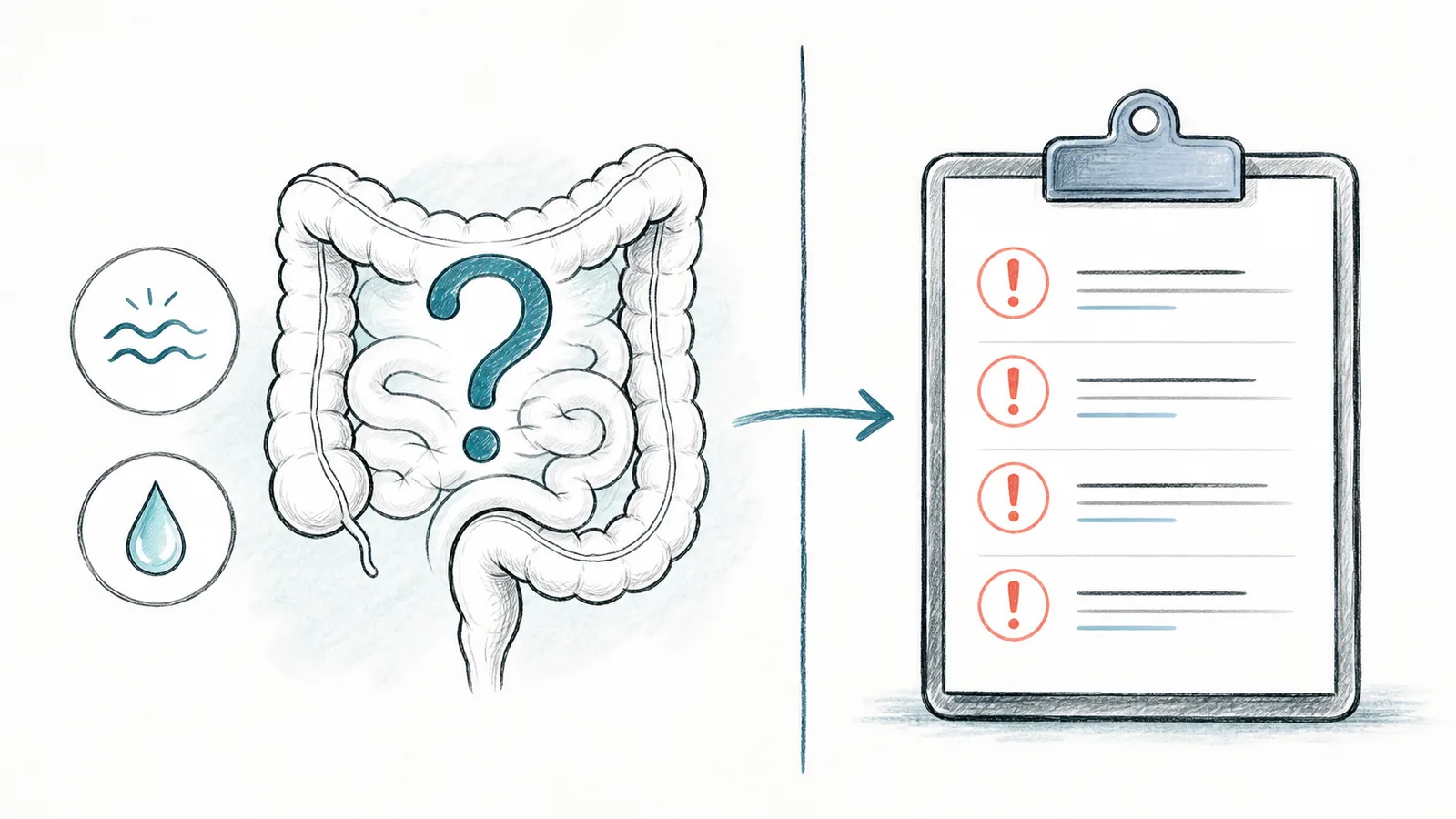
Short answer: IBS itself rarely requires hospitalization because it is a disorder of gut-brain interaction, not a condition that usually damages the bowel or becomes life threatening. Hospital care may be needed when symptoms are severe enough to cause dehydration, uncontrolled vomiting, fainting, or extreme pain, or when red flags suggest something other than IBS, such as infection, inflammatory bowel disease, obstruction, bleeding, or another acute abdominal problem.
Can you be hospitalized for IBS?
Yes, a person with an IBS diagnosis can end up in the emergency department or hospital, but the reason is usually not that IBS has suddenly become a dangerous bowel disease. Hospital teams admit people when symptoms need urgent assessment, fluids, pain control, anti-nausea treatment, observation, or testing for another condition that can look like an IBS flare.
An InnerBuddies article on this topic correctly says that hospitalization for IBS is uncommon and that severe pain, vomiting, or dehydration can require emergency care. The caution is in the broader marketing message that microbiome testing can identify bacterial imbalances that might prevent hospitalization-level complications. Current IBS care is more careful than that. The microbiome is relevant to IBS research, but consumer stool profiles are not validated as a way to predict, prevent, or triage hospital-level IBS events.
The safer answer is practical. If symptoms feel like your usual IBS pattern, are tolerable, and you can drink fluids, outpatient management with a clinician-guided plan is usually appropriate. If symptoms are new, severe, rapidly worsening, or accompanied by warning signs, treat it as a medical problem first. Do not try to decide from a microbiome report.
When does an IBS flare need emergency care?
Emergency care is reasonable when abdominal symptoms create immediate risk or when the diagnosis is uncertain. Severe watery diarrhea can cause dehydration, especially in older adults, children, pregnant people, immunocompromised patients, and anyone who cannot keep fluids down. Persistent vomiting, dizziness, fainting, confusion, very low urine output, or signs of dehydration are not routine IBS self-care situations.
Severe or localized abdominal pain also deserves caution. IBS pain can be intense, but appendicitis, bowel obstruction, gallbladder disease, kidney stones, ischemia, infection, inflammatory bowel disease, and gynecologic emergencies can also cause abdominal pain. A hospital visit may be needed to separate a familiar functional bowel flare from a condition that needs urgent treatment.
Hospitalization can also happen because symptoms are disabling even if tests do not show a dangerous disease. A patient may need intravenous fluids, electrolyte correction, antiemetics, short-term pain control, or observation. That is still different from saying IBS itself usually causes hospital complications. The hospital is responding to severity, uncertainty, or safety needs.
What red flags mean this may not be IBS?
IBS is usually defined by recurrent abdominal pain related to bowel habits, with symptoms present over time. It should not explain every new gut symptom automatically. Red flags include blood in the stool, black stool, fever, unexplained weight loss, anemia, persistent vomiting, dehydration, symptoms waking you at night, new bowel changes after age 50, a family history of colorectal cancer or inflammatory bowel disease, severe localized pain, jaundice, or a new mass or swelling.
These features do not prove a dangerous diagnosis, but they change the level of caution. They should prompt clinical assessment rather than reassurance from a wellness test, diet score, or supplement plan. Guidelines for IBS emphasize making a positive diagnosis when symptoms fit and when appropriate limited testing has excluded important alternatives. They do not support ignoring alarm features.
One common mistake is assuming that a previous IBS label protects against future disease. It does not. A person can have IBS and later develop gastroenteritis, gallstones, inflammatory bowel disease, cancer, medication side effects, celiac disease, or another condition. New symptoms still deserve new judgment.
Can IBS cause dehydration or obstruction?
IBS with diarrhea can contribute to dehydration if fluid losses are high and intake is poor, but severe dehydration should trigger medical care because infection, inflammatory disease, medication effects, endocrine problems, and other causes may be involved. IBS with constipation can be very uncomfortable, but true bowel obstruction is not a typical IBS complication. Obstruction needs urgent evaluation because it suggests a mechanical or inflammatory problem, not ordinary IBS physiology.
This distinction matters because the word “IBS” can make serious symptoms sound less urgent. If someone cannot pass stool or gas with progressive abdominal distension, persistent vomiting, severe pain, fever, or dehydration, that is not a home microbiome-testing question. It is a clinical evaluation question.
Does the gut microbiome explain IBS hospital visits?
The gut microbiome is part of the IBS research picture. Studies have reported altered microbial patterns in some patients, and mechanisms involving fermentation, bile acids, immune signaling, visceral sensitivity, gut barrier function, and gut-brain communication are biologically plausible. Some IBS treatments, such as diet changes, rifaximin in selected IBS-D patients, and certain probiotics, may interact with microbial ecology.
That does not mean a consumer microbiome test can tell who will be hospitalized. IBS is heterogeneous. Symptoms reflect motility, visceral sensitivity, brain-gut signaling, stress biology, diet, sleep, infection history, medications, pelvic floor function, and coexisting anxiety or depression, not just bacteria. Stool profiles also vary with sampling, diet, stool consistency, sequencing method, databases, and analysis pipelines.
A microbiome report may generate hypotheses for discussion. It cannot replace the clinical questions that matter during a severe flare: Can the person hydrate? Are electrolytes abnormal? Is there blood, fever, weight loss, severe localized pain, pregnancy, immune suppression, or surgical history? Is this truly the same pattern as before? Those questions decide urgency more reliably than bacterial relative abundance.
Evidence summary
- IBS is usually managed outside the hospital, but severe symptoms may require emergency assessment, fluids, observation, or tests for other diagnoses.
- Hospital care is most relevant when symptoms cause dehydration, uncontrolled vomiting, fainting, severe localized pain, or inability to maintain nutrition and fluids.
- Blood in stool, fever, unexplained weight loss, anemia, night symptoms, new symptoms after age 50, or persistent vomiting are not routine IBS features.
- Microbiome differences are studied in IBS, but consumer stool tests are not validated to predict or prevent hospitalization.
- A previous IBS diagnosis does not rule out infection, inflammatory bowel disease, obstruction, medication effects, cancer, or another acute condition.
What does evidence-based IBS care actually involve?
Evidence-based IBS care starts with a careful symptom pattern, medication history, diet history, psychosocial context, and targeted testing when indicated. Rome IV criteria define IBS around recurrent abdominal pain associated with defecation or a change in stool frequency or form. Guidelines then tailor treatment by subtype and dominant symptom, such as constipation, diarrhea, bloating, pain, urgency, or mixed bowel habits.
Common outpatient tools include soluble fiber for some patients, a structured low-FODMAP diet trial with reintroduction, antispasmodics in selected cases, constipation or diarrhea medications, gut-directed psychological therapies, and specific prescription treatments depending on subtype. These options are not emergency treatments, and they are not chosen from a stool report alone.
Good IBS management also includes a safety plan. Patients should know what is typical for them, what medications or diet steps are appropriate during a flare, when to call their clinician, and when to seek urgent care. That plan is more protective than treating every flare as a microbiome imbalance.
What marketing gets wrong
The first overclaim is that gut microbiome testing can identify the imbalances that lead to hospitalization-level IBS complications. The evidence does not support that level of prediction. Microbiome science can help explain mechanisms and may guide future therapies, but consumer tests do not function as hospital-risk tools.
The second overclaim is that “personalized” interventions from a microbiome report can reliably prevent emergency visits. A personalized plan can be useful when it includes symptoms, medications, diet, red flags, clinical history, and professional judgment. A plan based mainly on bacterial abundance is too narrow for urgent-care decisions.
The third overclaim is subtle: framing hospitalization as something a wellness product can help you avoid. Some hospital visits are avoidable with better outpatient IBS care, hydration planning, constipation management, and symptom education. Others are necessary because the symptoms might not be IBS. A good article should make that distinction clear.
When should you contact a clinician instead of self-managing?
Seek urgent medical care for blood in stool, black stool, severe or worsening localized abdominal pain, fever, repeated vomiting, dehydration, fainting, confusion, severe weakness, chest pain, pregnancy with significant abdominal pain, immune suppression with diarrhea or fever, or symptoms after recent surgery. Do the same if you cannot keep fluids down or if diarrhea is profuse and persistent.
Book non-urgent medical review for symptoms that are changing, symptoms that last more than a few weeks without a clear explanation, unintended weight loss, anemia, recurrent nighttime symptoms, new bowel changes after age 50, or a family history of colorectal cancer, celiac disease, or inflammatory bowel disease. If your usual IBS plan is failing repeatedly, that is also worth review.
Bottom line
You can be hospitalized while having IBS, but the hospital usually treats severity, dehydration, diagnostic uncertainty, or another possible condition rather than IBS as a dangerous bowel disease. The key is not panic. The key is triage.
Use outpatient IBS care for familiar, manageable patterns. Use urgent medical care for red flags, dehydration, uncontrolled vomiting, fainting, severe localized pain, or symptoms that feel different from your usual pattern. A microbiome test can be educational, but it cannot decide whether abdominal symptoms are safe.
Educational note: This article is for general information and does not replace medical advice. If symptoms are severe, new, persistent, worsening, or accompanied by red flags, seek qualified medical care.
Evidence notes and sources
- Enck et al. Irritable bowel syndrome. Nature Reviews Disease Primers. 10.1038/nrdp.2016.14
- Mearin et al. Bowel Disorders. Gastroenterology. 10.1053/j.gastro.2016.02.014
- Lacy et al. ACG Clinical Guideline: Management of Irritable Bowel Syndrome. American Journal of Gastroenterology. 10.14309/ajg.0000000000001036
- Vasant et al. British Society of Gastroenterology guidelines on the management of irritable bowel syndrome. Gut. 10.1136/gutjnl-2021-324598
- Black and Ford. Common misconceptions and controversies in the management of irritable bowel syndrome. Nature Reviews Gastroenterology and Hepatology. 10.1038/s41575-025-01065-9
- Mayer et al. The neurobiology of irritable bowel syndrome. Molecular Psychiatry. 10.1038/s41380-023-01972-w
- Shanahan and Quigley. Manipulation of the microbiota for treatment of IBS and IBD: challenges and controversies. Gastroenterology. 10.1053/j.gastro.2014.01.050