Evidence-based response
What is the best food for the gut? Evidence-Based Answer Without the Hype
No single food is best for every gut. The strongest evidence supports varied, tolerated fiber-rich plant foods, with fermented foods as optional support.
By Sandra McKenzy, Pharmacist · 2026-07-13
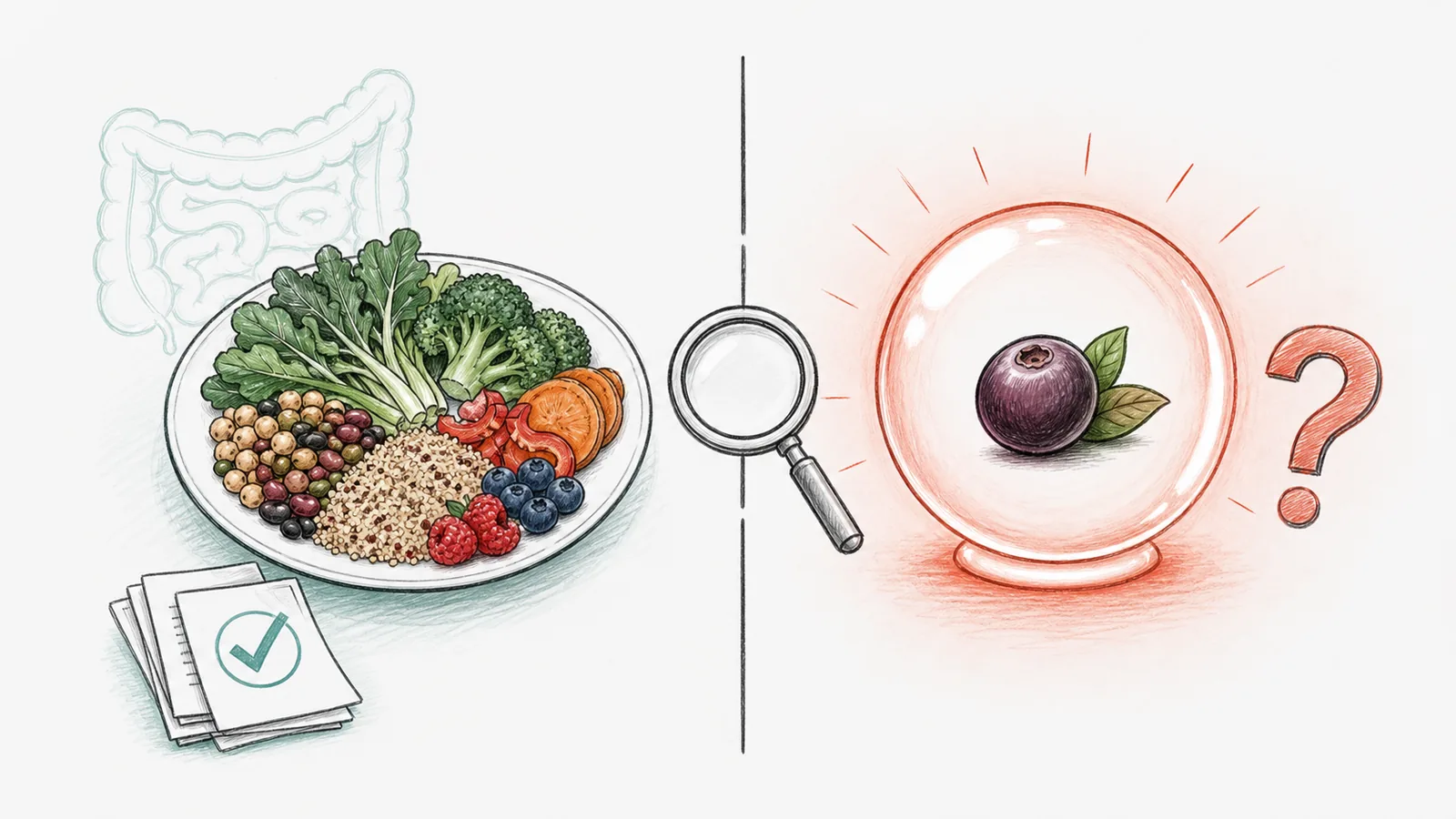
Short answer: There is no single best food for the gut. The best-supported answer is a repeatable dietary pattern: varied fiber-rich plants, legumes, whole grains, nuts, seeds, fruit, vegetables and, if tolerated, fermented foods. Microbiome tests can add context, but they cannot prove that one food is medically best for every person.
Searches for the best gut food usually lead to confident lists: yogurt, kimchi, oats, berries, bone broth, olive oil, or one branded reset plan. Those foods can fit a gut-supportive diet, but the evidence does not crown one winner. Gut health is shaped by the whole pattern of eating, baseline symptoms, medicines, immune status, bowel habits, sleep, stress, and the microbes already present.
What Is the Best Food for the Gut?
The most defensible answer is not a food, but a category: tolerated, fiber-rich plant foods eaten consistently and in variety. Beans, lentils, oats, barley, whole grains, vegetables, fruit, nuts and seeds provide fermentable substrates that gut microbes can convert into short-chain fatty acids such as acetate, propionate and butyrate. These metabolites are involved in barrier function, immune signalling and metabolic regulation.
This does not mean everyone should suddenly eat a very high-fiber diet tomorrow. People with irritable bowel syndrome, inflammatory bowel disease flares, strictures, recent gut surgery, active diarrhea or severe bloating may need individualized pacing and professional advice. The evidence supports fiber as a major lever for many people. It does not support using fiber as a universal cure.
Evidence summary
Evidence summary
- No single food has been clinically validated as the best food for every gut microbiome.
- Diverse fiber-rich plant foods have stronger evidence than miracle-food claims because they feed microbial metabolism across many taxa.
- Fermented foods can increase microbial diversity and immune-related markers in some human studies, but products and tolerance vary.
- Mediterranean-style and minimally processed dietary patterns are associated with healthier cardiometabolic and microbiome profiles.
- Consumer microbiome tests can describe stool patterns, but they cannot diagnose symptoms or prescribe one perfect food.
Are Fiber-Rich Foods Better Than Probiotics?
For everyday gut health, fiber-rich foods are usually the first foundation because they feed resident microbes again and again. Probiotic supplements can be useful in specific contexts, but their effects are strain-specific and indication-specific. A capsule labelled probiotic is not automatically better than lentils, oats or vegetables, and a supplement cannot compensate for a chronically low-fiber, ultra-processed diet.
Dietary fibers are not all the same. Inulin, resistant starch, beta-glucans, pectins and other fibers differ in fermentability, water-holding capacity and symptom effects. That is why the practical advice is gradual variety, not a heroic dose of one powdered ingredient. If a food increases pain, diarrhea or disabling bloating, it is not the best food for that person at that moment.
Do Fermented Foods Heal the Gut?
Fermented foods deserve interest, but not magical language. Yogurt with live cultures, kefir, sauerkraut, kimchi, miso and some fermented vegetables can introduce live microbes and microbial metabolites. A well-known human intervention found that a high-fermented-food diet increased microbiome diversity and changed inflammatory markers, while a high-fiber arm showed more individualized responses. That is promising, not a guarantee.
The details matter. Pasteurized products may not contain live organisms. Sweetened fermented drinks can add sugar. Histamine-rich ferments can bother some people. People who are immunocompromised, pregnant, very elderly, or medically fragile should be cautious with unpasteurized products. Fermented foods can be part of a gut-supportive pattern, but they are not a treatment for unexplained symptoms.
Can a Microbiome Test Tell You the Best Food for Your Gut?
A stool microbiome test can sometimes show low diversity, dominant groups, potential functional pathways or patterns that relate to diet. That information may be educational. It can also motivate basic changes such as more plant variety or careful fiber pacing. The problem is the jump from a stool report to a precise personal prescription.
Most consumer tests have not been validated to say that one person needs one specific food, probiotic or supplement because of one microbial pattern. Microbiome science supports personalization as a research direction. It does not yet support treating a report as a medical nutrition command. Symptoms, diagnosis, medications, allergies, eating history, blood tests and clinical context still matter.
What About a 7-Day Gut Reset?
A short reset can help someone build habits if it means hydration, regular meals, more whole foods, less alcohol and a gradual return of fiber. It becomes misleading when it promises to repair the microbiome, detox the gut, heal a leaky gut, or identify the best food for someone in one week. Microbial communities can shift quickly with diet, but a quick shift is not the same as a durable clinical outcome.
The safer version is simple: choose two or three tolerated plant foods, increase them slowly, add one fermented food only if it suits you, and track symptoms without panic. If symptoms worsen, the answer is not to push harder. It may be to slow down, assess FODMAP tolerance, review medication effects, or seek clinical evaluation.
Which Foods Have the Best Evidence?
Legumes are a strong candidate for many people because they combine fermentable carbohydrate, protein, minerals and satiety. Oats and barley provide beta-glucans. Whole grains add fiber variety. Nuts and seeds contribute fiber, polyphenols and unsaturated fats. Berries, leafy greens, onions, garlic, asparagus and other plants add different fibers and polyphenols. Extra-virgin olive oil and Mediterranean-style meals fit a broader evidence base for cardiometabolic health.
The important word is pattern. A bowl of berries will not undo a low-quality diet. Yogurt will not diagnose fatigue. Kimchi will not replace care for bleeding, anemia or chronic diarrhea. The microbiome responds to repeated exposures, and host health responds to more than microbes alone.
What Marketing Often Gets Wrong
Marketing often turns plausible mechanisms into personal certainty. It may say that fiber feeds good bacteria, fermented foods add probiotics, polyphenols nourish microbes, and microbiome testing can guide choices. Each statement contains a kernel of truth. The overreach is claiming that these ideas identify the best food for your gut with clinical precision.
Another problem is symptom mapping. Bloating, fatigue, skin changes, mood shifts and irregular stools can occur with gut disorders, but they are nonspecific. They can also reflect thyroid disease, anemia, celiac disease, infection, medication effects, sleep deprivation, stress, eating disorders or inflammatory disease. A food list should not distract from proper assessment.
When Should You See a Clinician?
Seek medical care for blood in stool, black stools, persistent fever, severe or worsening abdominal pain, unexplained weight loss, anemia, night-time diarrhea, persistent vomiting, dehydration, difficulty swallowing, new bowel changes after age 50, symptoms during pregnancy, symptoms in infants or older adults, or symptoms in anyone immunocompromised.
Also get help when bloating, constipation, diarrhea, reflux, food reactions or pain persist despite reasonable dietary changes. The best food question is useful for prevention and daily support. It is not enough for diagnosis.
Bottom Line
The best food for the gut is not a miracle ingredient. For most people, the strongest foundation is a diverse, mostly minimally processed plant-rich pattern with enough tolerated fiber and, optionally, fermented foods. The exact mix should be adjusted to symptoms, culture, medical conditions and tolerance.
If you use a microbiome test, treat it as context. Use it to ask better questions, not to hand control of your diet to an algorithm. A healthy gut diet is usually built through repeated, boring, evidence-aligned meals, not through a single perfect food.
Educational disclaimer: This article is for general science education. It does not diagnose disease, prescribe a diet or supplement, interpret a personal microbiome test, or replace care from a licensed clinician.
Evidence Notes and Sources
- Dietary fibre in gastrointestinal health and disease (2021). Nature Reviews Gastroenterology and Hepatology. DOI: 10.1038/s41575-020-00375-4
- The gut microbiome and dietary fibres: implications in obesity, cardiometabolic diseases and cancer (2025). Nature Reviews Microbiology. DOI: 10.1038/s41579-024-01108-z
- Gut-microbiota-targeted diets modulate human immune status (2021). Cell. DOI: 10.1016/j.cell.2021.06.019
- Fermented foods and gastrointestinal health: underlying mechanisms (2024). Nature Reviews Gastroenterology and Hepatology. DOI: 10.1038/s41575-023-00869-x
- Diet rapidly and reproducibly alters the human gut microbiome (2014). Nature. DOI: 10.1038/nature12820
- Linking long-term dietary patterns with gut microbial enterotypes (2011). Science. DOI: 10.1126/science.1208344
- The gut microbiome modulates the protective association between a Mediterranean diet and cardiometabolic disease risk (2021). Nature Medicine. DOI: 10.1038/s41591-020-01223-3