Evidence-based response
Are Eggs Good for the Intestines? Evidence-Based Answer Without the Hype
Eggs can fit a gut-friendly diet when tolerated, but they do not repair the microbiome or replace clinical evaluation for symptoms.
By Sandra McKenzy, Pharmacist · 2026-06-08
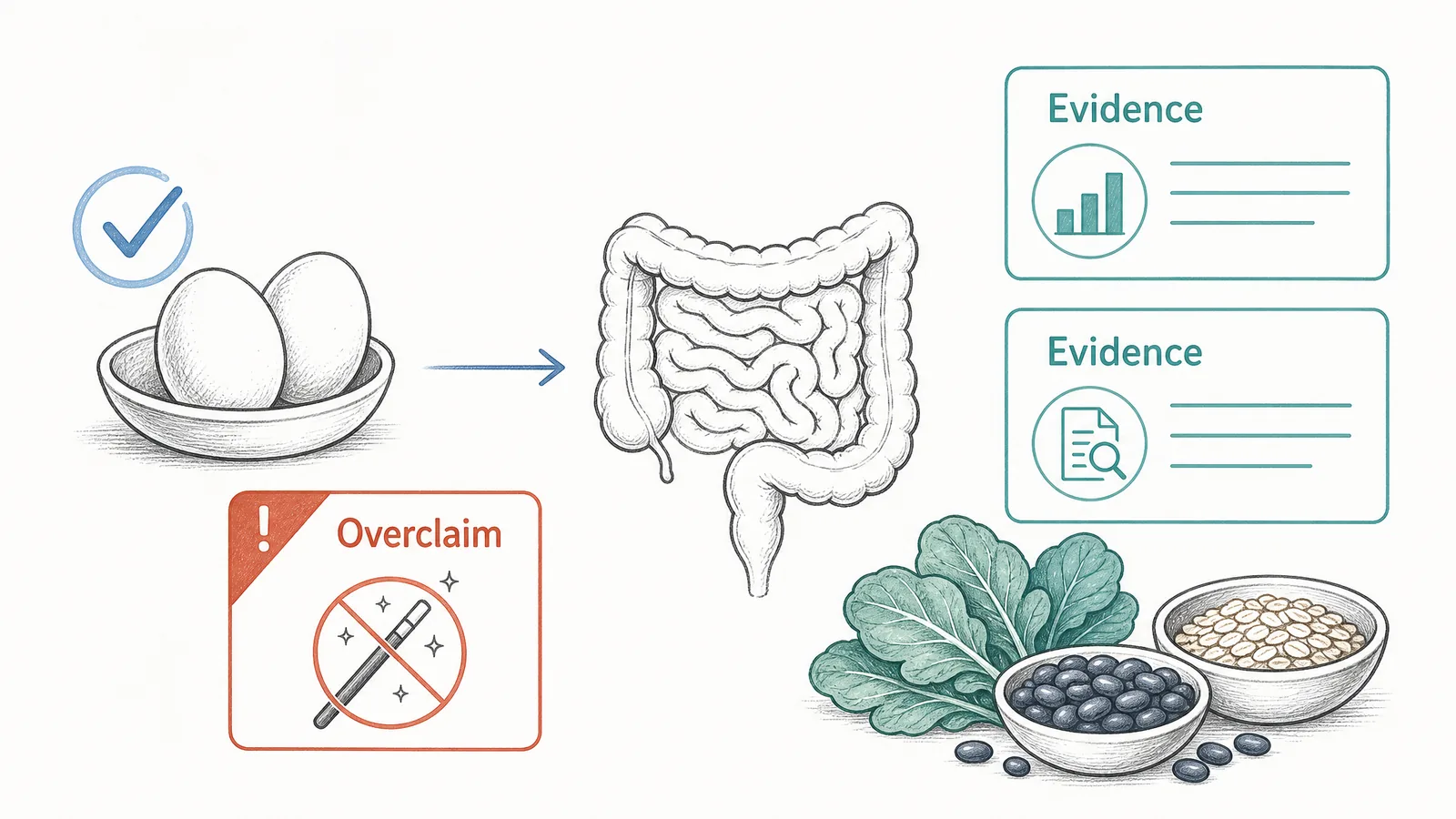
Short answer: Eggs can be fine for the intestines if you tolerate them, but they are not a proven gut-healing food. They provide digestible protein and nutrients, yet they contain no fiber and do not directly rebuild the microbiome. Repeated symptoms after eggs deserve clinical context, especially allergy-type reactions or severe pain.
Are eggs good for the intestines?
A consumer article from InnerBuddies presents eggs as part of digestive-health decision making. The safer evidence-based answer is narrower: eggs may fit a gut-friendly diet, but they should not be marketed as a personalized microbiome intervention.
Evidence summary
- Eggs are low in fermentable carbohydrates and often well tolerated, but they are not a fiber source.
- Egg nutrients can support general nutrition; this is not proof of intestinal repair.
- Food allergy, gallbladder disease, reflux, and meal context can explain symptoms after eggs.
- Consumer microbiome testing cannot reliably prescribe eggs for an individual gut profile.
- Red flags such as blood, weight loss, severe pain, vomiting, or allergy symptoms need medical care.
Are eggs good for intestinal health?
For many adults, eggs are a practical protein food that is usually easy to digest. They contain complete protein, fat, choline, selenium, vitamin B12, riboflavin, and other nutrients. They are also naturally very low in fermentable carbohydrates, so they are not a common direct cause of fermentation-related gas in the way that beans, onions, wheat, or some sweeteners can be for sensitive people.
That does not make eggs a gut treatment. The intestine is not repaired by one food on command. Tolerance depends on allergy history, gallbladder function, reflux tendency, meal size, the rest of the diet, and the person’s usual bowel pattern. An egg eaten with vegetables and whole grains is a different meal from eggs eaten with large amounts of processed meat and little fiber.
What do eggs actually do in digestion?
Egg protein is mostly digested in the stomach and small intestine. The yolk’s fat content can slow gastric emptying, which may feel satisfying for one person and heavy for another. Choline from eggs is an essential nutrient, but gut microbes can metabolize choline into trimethylamine, which the liver converts to TMAO. TMAO biology is complex and should not be simplified into “eggs harm the gut” or “eggs protect the gut.”
The best supported claim is modest: eggs can fit into a gut-friendly pattern when they are tolerated and balanced with fiber-rich foods. They are not a source of dietary fiber, resistant starch, or live microbes. If the goal is microbial diversity, plant variety remains central.
Can eggs help IBS, bloating, or constipation?
Eggs may be easier for some people with IBS because they are low in FODMAP carbohydrates. That is a tolerance point, not proof that eggs treat IBS. Bloating after eggs may come from the meal context, fat load, speed of eating, reflux, anxiety around food, or another condition. Constipation can worsen if eggs replace fiber-containing foods and fluids.
If eggs repeatedly cause hives, vomiting, wheezing, throat tightness, or rapid swelling, the issue is not microbiome optimization. It may be allergy and needs medical evaluation. If eggs cause predictable right upper abdominal pain after fatty meals, gallbladder disease is another possibility.
What marketing gets wrong
Marketing often turns ordinary nutrition into a microbiome promise. Statements about mucin, barrier integrity, or choline may be biologically plausible, yet they do not prove that eating eggs repairs an intestinal lining, corrects dysbiosis, or creates a healthier microbiome profile in a measurable clinical way.
Consumer microbiome testing also cannot reliably tell an individual that eggs are good or bad for their intestines without clinical context. A stool profile may generate a hypothesis about diet quality or microbial patterns, but it is not a validated egg-prescription tool.
What did MedicalBrain validation show?
MedicalBrain found stronger evidence around food allergy mechanisms, microbial metabolism of choline, general microbiome metabolites, and the need for clinical translation than around eggs as a specific gut therapy. That matters because an evidence-based answer should not pretend that every nutrient mechanism has already become a patient-level recommendation.
The review sources support caution: microbiome science is real, but individual diet advice needs validated outcomes. Egg tolerance should be judged by symptoms, allergy history, overall diet, and clinician input when symptoms are severe.
When should you see a clinician?
Seek medical care for blood in stool, black stools, unexplained weight loss, persistent vomiting, fever, anemia, severe abdominal pain, swallowing trouble, nocturnal diarrhea, new bowel changes after age 50, or suspected food allergy. Urgent care is needed for wheezing, throat swelling, faintness, or repeated vomiting after eating eggs.
For ordinary mild bloating, it is reasonable to track the whole meal pattern for a short period. Do not use a microbiome report alone to remove major food groups, start supplements, or ignore red flags.
Bottom line
Eggs are neither a miracle food for the intestines nor a food everyone must avoid. They can be a useful, low-FODMAP protein for many people, but gut health still depends on the wider pattern: fiber, plants, hydration, medical history, and symptom context.
The simple version
If eggs feel fine, they can stay in your diet. If they repeatedly trigger symptoms, do not assume the microbiome is the only reason. Look at the whole meal, the pattern of symptoms, and any red flags. A stool test should not decide this by itself.
The practical question is tolerance plus overall dietary quality. Eggs add protein and micronutrients, but they do not add fermentable fiber. For most people, the gut-health decision is about the whole plate, not one food in isolation.
Evidence notes
- B cells and the microbiota: a missing connection in food allergy. Mucosal Immunology. 10.1038/s41385-020-00350-x
- Akkermansia muciniphila exacerbates food allergy in fibre-deprived mice. Nature Microbiology. 10.1038/s41564-023-01464-1
- Gut bacterial phospholipase Ds support disease-associated metabolism by generating choline. Nature Microbiology. 10.1038/s41564-018-0294-4
- Gut microbial metabolites as multi-kingdom intermediates. Nature Reviews Microbiology. 10.1038/s41579-020-0438-4
- Utilization of the microbiome in personalized medicine. Nature Reviews Microbiology. 10.1038/s41579-023-00998-9
- Translating microbiota analysis for clinical applications. Nature Reviews Bioengineering. 10.1038/s44222-024-00168-3
This article is educational and does not diagnose, treat, or replace care from a qualified clinician.