Evidence-based response
9 Gut Health Triggers Most People Overlook: Evidence-Based Answer Without the Hype
Sleep, medications, fiber, stress, alcohol and other factors can affect gut symptoms, but they do not prove one hidden microbiome cause.
By Sandra McKenzy, Pharmacist · 2026-08-08
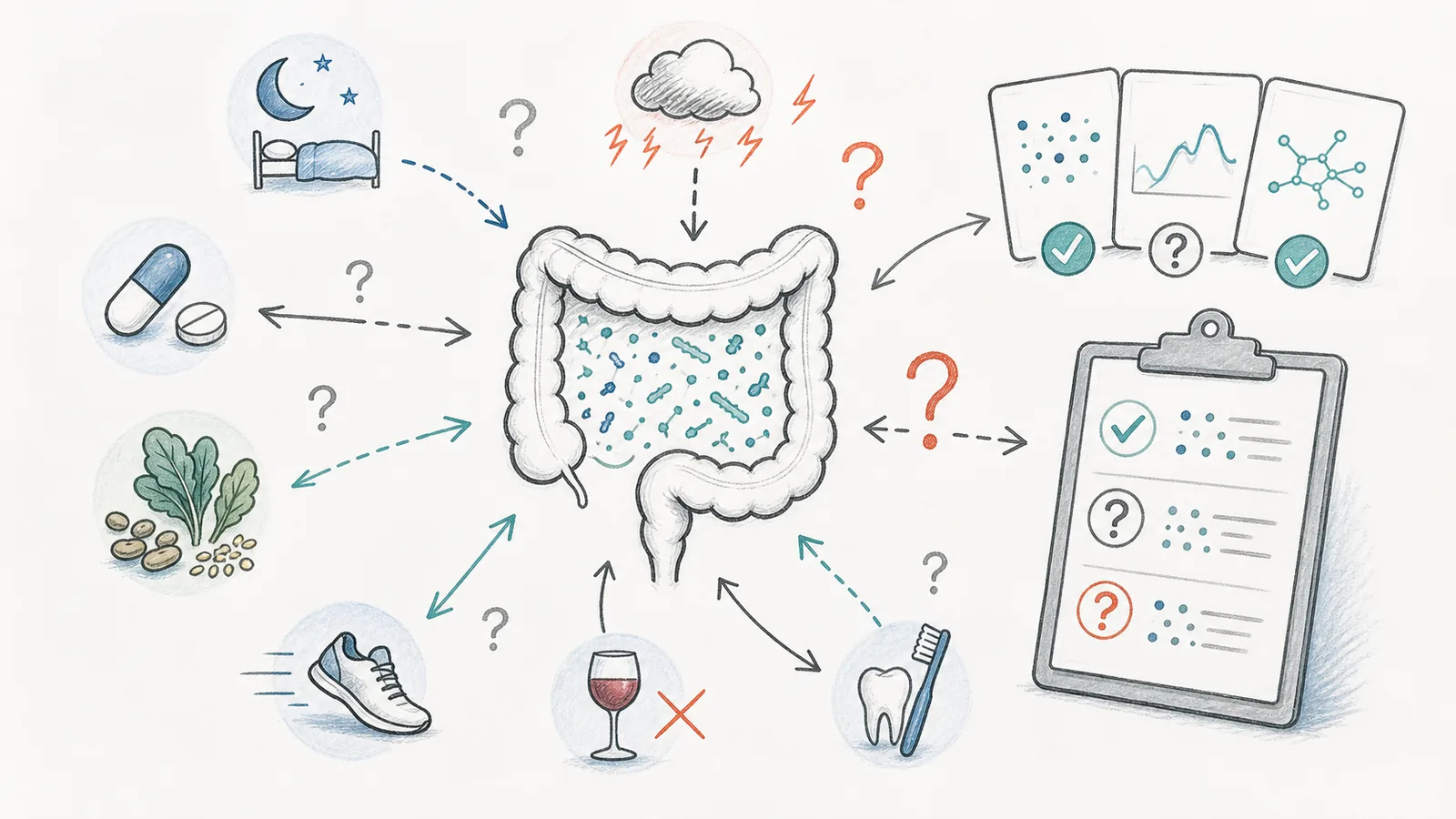
Short answer: The most common gut health triggers people overlook are not mysterious. Sleep disruption, antibiotics and other medicines, low fiber diversity, highly processed diets, stress, alcohol patterns, inactivity or overtraining, irregular meals, and oral health can all influence digestion or the gut microbiome. But symptoms such as bloating, fatigue, skin changes, or brain fog do not prove dysbiosis, and a consumer stool test cannot diagnose the cause on its own.
The source article raises a useful question because digestive symptoms rarely come from food alone. The problem is the leap from plausible triggers to certainty. Gut health is shaped by diet, medications, sleep, stress, illness, hormones, bowel transit time, immune activity, oral microbes, and many other variables. That complexity is exactly why simple lists need clinical boundaries.
What are the main causes of gut health problems?
Gut health problems can mean very different things. For one person it means constipation. For another it means post-meal bloating, diarrhea, reflux, abdominal pain, antibiotic-associated changes, or worry about a stool microbiome report. These are not interchangeable. The gut microbiome can be involved in many of these states, but it is only one layer of digestion.
The safest answer is that gut symptoms often come from overlapping factors rather than one hidden trigger. Diet pattern, fiber intake, food intolerances, infection, medications, stress biology, sleep timing, alcohol, physical activity, menstrual cycle, endocrine disease, celiac disease, inflammatory bowel disease, irritable bowel syndrome, and constipation physiology can all matter. A stool profile may add context, but it cannot replace a history, physical exam, basic labs, or condition-specific testing when symptoms are persistent or concerning.
Evidence summary
- Diet and lifestyle can measurably influence gut microbiome patterns, but effects vary strongly between people.
- Antibiotics and some non-antibiotic drugs can disturb gut microbial communities, yet medication decisions still need clinician guidance.
- Fiber is one of the better-supported levers for microbial metabolism, especially short-chain fatty acid production, but tolerance matters.
- Food additive and alcohol evidence supports caution, although many additive data remain animal or mechanistic rather than definitive human proof.
- Consumer microbiome tests can describe a stool sample, but they cannot diagnose the cause of broad gut-health symptoms by themselves.
Do overlooked triggers really change the microbiome?
Yes, some can. Large human studies show that lifestyle, diet, medications, host biology, and environment are associated with gut microbial composition. Antibiotics have especially strong evidence because they directly target bacteria. Recent work also shows that past antibiotic exposure can leave detectable signatures in stool metagenomic profiles years later. That does not mean every antibiotic course causes chronic disease, but it does mean microbiome effects are real enough to respect.
Diet also matters, especially long-term dietary patterns and fermentable carbohydrate intake. Gut microbes ferment many fibers into short-chain fatty acids and other metabolites. These metabolites can interact with gut barrier biology, immune signaling, and host metabolism. Still, the response to a fiber intervention is not identical for everyone. Baseline microbiome composition, constipation, IBS subtype, dose, food form, and speed of increase can all change tolerance and results.
Can poor sleep or circadian disruption harm gut health?
Sleep timing and circadian rhythm can affect digestion through hormones, autonomic nervous system activity, appetite, meal timing, motility, and inflammation. People who work shifts or eat late at night often change more than sleep alone. They may also change food choices, stress load, light exposure, alcohol use, and physical activity. That makes cause hard to isolate.
The practical boundary is simple. Regular sleep and meal timing are reasonable gut-supporting habits, especially for reflux, constipation, IBS-like symptoms, and appetite regulation. But poor sleep does not prove microbiome damage. If insomnia, fatigue, or brain fog is dominant, evaluation should also consider sleep apnea, depression, anxiety, thyroid disease, anemia, medication effects, and other common causes.
Which medications matter most for the gut microbiome?
Antibiotics are the clearest medication trigger. They can reduce susceptible commensal bacteria, shift community structure, and create short-term or longer-term changes. This is why antibiotics should be used when medically indicated, not casually. It is also why stopping antibiotics early or avoiding needed treatment is the wrong lesson. The risk-benefit decision belongs with the clinician who knows the infection and the patient.
Non-antibiotic drugs can also affect gut bacteria. Reviews have highlighted off-target effects from multiple drug classes, and research on microbiotoxicity is now expanding. Proton pump inhibitors, metformin, laxatives, NSAIDs, and other drugs can be associated with microbiome or gut barrier changes in specific contexts. But association is not a reason to stop a prescribed medicine. If symptoms changed after a medication, the safer move is to discuss dose, timing, alternatives, or protective strategies with a clinician.
Does low fiber diversity damage gut health?
Low fiber diversity is one of the more plausible everyday triggers. Different plants provide different fermentable substrates. A person who eats mostly refined starches, low vegetable variety, and little legume or whole-grain fiber gives gut microbes fewer substrates for fermentation. That can reduce production of metabolites such as acetate, propionate, and butyrate in some settings.
But more fiber is not always immediately better. People with IBS, constipation, inflammatory bowel disease flares, gastroparesis, strictures, or severe bloating may need tailored advice. A sudden large increase in beans, bran, inulin, or resistant starch can worsen gas and pain. The evidence-based version is gradual diversity, not a heroic overnight fiber challenge.
Are ultra-processed foods and additives proven gut destroyers?
Highly processed diets can crowd out fiber-rich foods and are linked to broader metabolic health risks. Some emulsifier and artificial sweetener research suggests possible microbiome or mucus-layer effects. The strongest signals for several emulsifiers are still largely animal or mechanistic, not a simple human diagnosis rule. That distinction matters.
It is reasonable to reduce reliance on ultra-processed foods, especially if they displace whole foods. It is not accurate to claim that one additive necessarily destroyed someone’s gut flora. A calmer recommendation is to build most meals around minimally processed foods, then watch symptoms and overall diet quality rather than panic over every ingredient.
Can stress alone cause gut problems?
Stress can clearly affect digestion. The gut-brain axis connects stress hormones, immune signaling, pain sensitivity, motility, secretion, sleep, and eating behavior. Stress can worsen diarrhea, constipation, nausea, reflux, abdominal pain, and appetite changes. In disorders of gut-brain interaction such as IBS, stress biology can be clinically meaningful.
Still, stress should not become a dismissal. Blood in stool, weight loss, fever, anemia, persistent vomiting, nighttime diarrhea, severe pain, or new bowel changes after age 50 are not explained away by stress. The protective approach is both-and: address stress while still checking red flags and ruling out organic disease when the pattern requires it.
What about exercise, alcohol, irregular meals, and oral health?
Moderate physical activity is generally associated with better metabolic health and bowel regularity. Too little movement can worsen constipation for some people, while extreme endurance exercise may temporarily increase gut symptoms and permeability. Alcohol can irritate the gut, affect barrier function, change bile acid and immune signaling, and interact with sleep and food choices. Dose and pattern matter.
Irregular meals can affect reflux, bloating, appetite, and bowel routines, although rigid meal rules are not necessary for everyone. Oral health is also biologically plausible because oral bacteria are swallowed constantly and periodontal inflammation is associated with systemic inflammatory signals. Good dental care is sensible. It is not proof that every gut symptom starts in the mouth.
Can microbiome testing find your personal gut health trigger?
A stool microbiome test can show organisms detected in one sample, relative abundance patterns, diversity metrics, and sometimes predicted metabolic functions. That can be educational. It can also help generate questions about diet, antibiotics, or broad microbial patterns.
But it cannot diagnose most causes of bloating, pain, diarrhea, constipation, fatigue, mood changes, skin symptoms, or food reactions. It cannot localize disease, rule out celiac disease or inflammatory bowel disease, diagnose SIBO, or prescribe the right probiotic with clinical certainty. Even newer microbiome health scores emphasize uncertainty and the need to redirect uncertain results to other screening methods. A test is context, not a verdict.
When should gut symptoms be checked by a clinician?
Seek medical advice for persistent, worsening, severe, or unexplained symptoms. Red flags include blood in stool, black stool, unintentional weight loss, anemia, fever, nighttime diarrhea, persistent vomiting, dehydration, severe abdominal pain, trouble swallowing, new bowel changes after age 50, family history of colorectal cancer, celiac disease, or inflammatory bowel disease, and symptoms after recent travel or infection. Children, older adults, pregnant people, and immunocompromised patients deserve a lower threshold for evaluation.
Bottom line
The overlooked triggers list is useful if it encourages better sleep, careful medication conversations, gradual fiber diversity, stress support, moderate movement, less alcohol, and more consistent eating. It becomes misleading when it implies that ordinary symptoms prove microbiome damage or that a consumer test can identify the root cause by itself. Gut health is real, but the honest answer is contextual, not one-size-fits-all.
Educational disclaimer: This article is for general information and science communication. It is not medical advice, diagnosis, or treatment. Do not stop prescribed medication, start supplements, or use a microbiome test to replace professional evaluation for persistent or concerning symptoms.
Evidence notes and sources
- Zimmermann et al. (2021). Unravelling the collateral damage of antibiotics on gut bacteria. Nature. https://doi.org/10.1038/s41586-021-03986-2
- The gut microbiome as a fingerprint of antibiotic use history (2026). Nature Medicine. https://doi.org/10.1038/s41591-026-04360-3
- Waldschmitt et al. (2018). Broad collateral damage of drugs against the gut microbiome. Nature Reviews Gastroenterology & Hepatology. https://doi.org/10.1038/s41575-018-0028-3
- Jin et al. (2024). The gut microbiota of healthy individuals remains resilient in response to the consumption of various dietary fibers. Scientific Reports. https://doi.org/10.1038/s41598-024-72673-9
- Vangay et al. (2020). Microbiome and health implications for ethnic minorities after enforced lifestyle changes. Nature Medicine. https://doi.org/10.1038/s41591-020-0963-8
- Pasolli et al. (2026). Gut micro-organisms associated with health, nutrition and dietary interventions. Nature. https://doi.org/10.1038/s41586-025-09854-7
- Huang et al. (2024). Common dietary emulsifiers promote metabolic disorders and intestinal microbiota dysbiosis in mice. Communications Biology. https://doi.org/10.1038/s42003-024-06224-3
- Leclercq et al. (2017). The link between inflammation, bugs, the intestine and the brain in alcohol dependence. Translational Psychiatry. https://doi.org/10.1038/tp.2017.15