Evidence-based response
8 Ways Gut Bacteria Affect Your Metabolism: What Science Actually Says
Gut bacteria can influence metabolism through fermentation, bile acids, inflammation, appetite signals, and drug or diet responses, but stool testing cannot diagnose metabolic health.
By Sandra McKenzy, Pharmacist · 2026-05-25
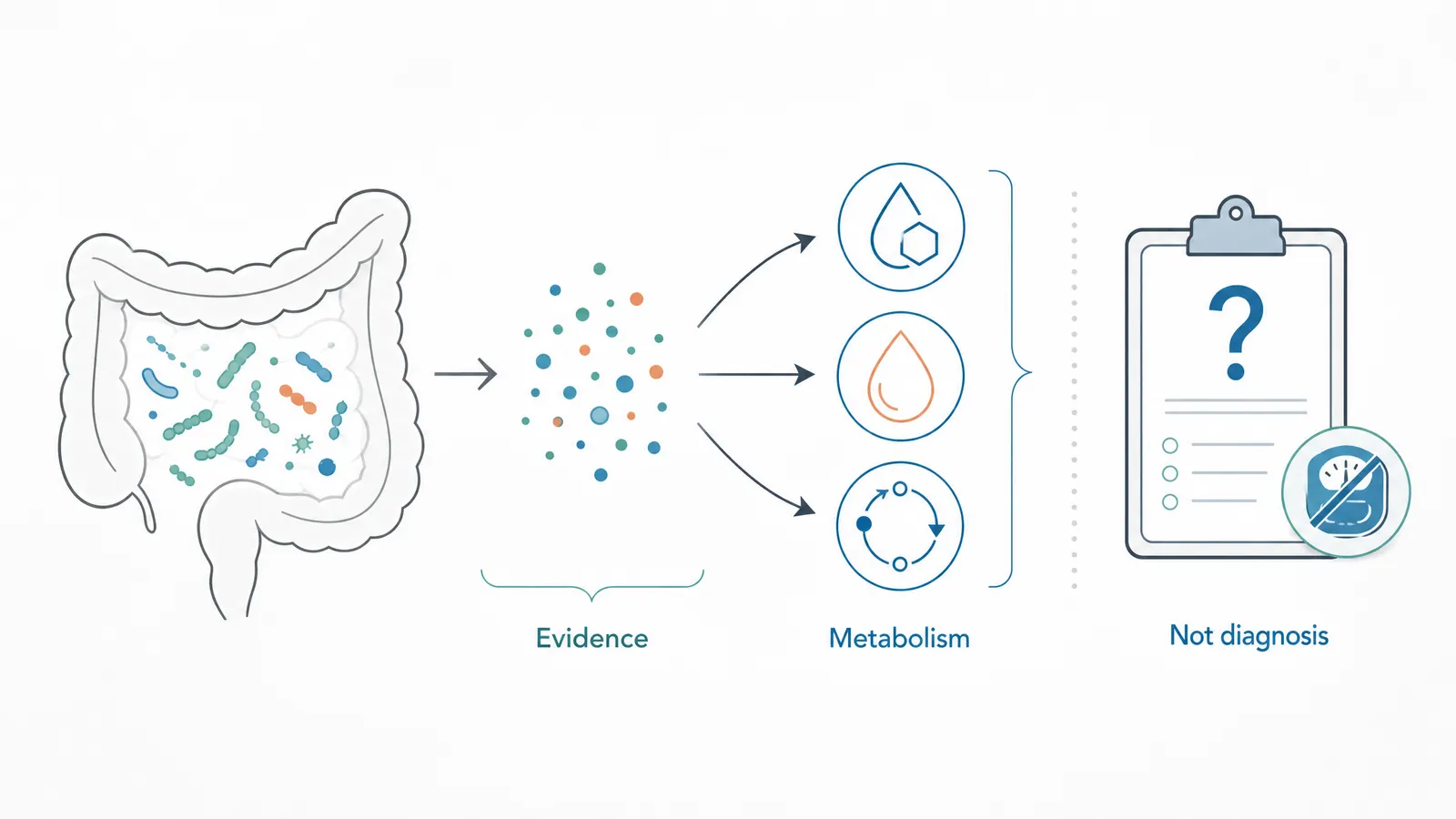
Short answer: Gut bacteria can affect metabolism, but not in the simple way marketing often implies. The best evidence links the microbiome to fiber fermentation, short-chain fatty acids, bile acid signaling, inflammation, appetite hormones, insulin sensitivity, medication response, and individual diet response. The limit is just as important: a stool test cannot diagnose your metabolic health, predict your weight future, or replace blood tests and clinical evaluation.
Do gut bacteria really influence metabolism?
Yes. The colon is not just a waste-processing tube. It is a microbial fermentation chamber where bacteria transform fibers, polyphenols, bile acids, and other compounds into signals that interact with the host. These signals can affect glucose handling, fat metabolism, appetite, immune tone, and the liver-gut axis.
That does not mean gut bacteria control everything. Body weight, insulin resistance, cholesterol, fatty liver risk, and energy levels are shaped by genetics, sleep, medications, stress, diet quality, physical activity, hormones, and social environment. The microbiome is one layer in that system, not the master switch.
What are the eight evidence-based pathways?
1. Fiber fermentation. Many gut bacteria ferment dietary fiber into short-chain fatty acids such as acetate, propionate, and butyrate. These compounds can support colon cells and influence metabolic signaling.
2. Insulin sensitivity. Human metagenomic work has linked microbial functions and specific species to serum metabolites associated with insulin resistance. One Nature study highlighted links involving branched-chain amino acid pathways and species such as Prevotella copri and Bacteroides vulgatus.
3. Bile acid signaling. Bacteria modify bile acids, which can signal through receptors involved in glucose, lipid, and energy metabolism.
4. Low-grade inflammation. Some microbiome patterns are associated with gut barrier disruption and immune activation. Chronic inflammatory tone can contribute to insulin resistance, but stool bacteria alone do not prove inflammation.
5. Appetite hormones. Microbial metabolites can influence gut hormones such as GLP-1 and PYY, which help regulate satiety and glucose handling.
6. Diet response. People can respond differently to the same food pattern. Microbiome composition may partly explain variation in glucose response, lipid changes, and weight-loss response, but prediction is still imperfect.
7. Medication effects. Drugs can reshape the microbiome, and microbes can influence drug metabolism.
8. Metabolic syndrome associations. Reviews consistently find microbiome differences in obesity and metabolic disorders. The hard part is causality: some microbial shifts may contribute to disease, while others may reflect diet, medication, or the disease state itself.
What does marketing often get wrong?
The common overclaim is turning association into diagnosis. If a stool test shows low diversity or a bacterial pattern associated with obesity, that does not mean the test has diagnosed insulin resistance, fatty liver, thyroid disease, diabetes, or the reason for weight gain. It may provide context, but it should not be sold as certainty.
Evidence summary
- The microbiome can influence metabolism through metabolites, bile acids, immune signaling, and hormone pathways.
- Human studies support associations with obesity, insulin resistance, and metabolic syndrome, but causality varies by pathway.
- Short-chain fatty acids are biologically important, but more of one metabolite is not always automatically better.
- Stool microbiome tests are snapshots, mostly of the colon, and cannot diagnose metabolic disease.
- Blood pressure, HbA1c, fasting lipids, liver enzymes, waist circumference, medication history, and symptoms still matter clinically.
Can you improve metabolism by changing the microbiome?
Usually the most defensible answer is: improve the inputs that shape both metabolism and the microbiome. That means more minimally processed plants if tolerated, enough protein, gradual fiber increases, regular movement, sleep consistency, fewer ultra-processed foods, and medical management of diabetes, lipids, blood pressure, or fatty liver when present.
Prebiotics, probiotics, fermented foods, and polyphenols may help some people, but they are not metabolic treatments by themselves.
When should you seek clinical testing?
If you have unexplained weight loss, excessive thirst or urination, persistent fatigue, high waist circumference with family history of diabetes, abnormal liver tests, high triglycerides, high blood pressure, or symptoms after starting medication, start with a clinician. Standard metabolic markers are still the foundation. A microbiome test may be educational, but it is not the first-line diagnostic tool.
Bottom line
Gut bacteria do affect metabolism, and the science is strong enough to take seriously. The safe interpretation is not that your microbiome determines your metabolic fate. It is that gut microbes participate in a wider metabolic network. Use that knowledge to support better diet and lifestyle choices, not to replace medical diagnosis.
Evidence notes and sources
- Human gut microbes impact host serum metabolome and insulin sensitivity. Nature. https://doi.org/10.1038/nature18646
- Causal relationships among the gut microbiome, short-chain fatty acids and metabolic diseases. Nature Genetics. https://doi.org/10.1038/s41588-019-0350-x
- Specific gut microbiota features and metabolic markers in postmenopausal women with obesity. Nutrition & Diabetes. https://doi.org/10.1038/nutd.2015.9
- Profile of the gut microbiota of adults with obesity: a systematic review. European Journal of Clinical Nutrition. https://doi.org/10.1038/s41430-020-0607-6
- Timing of unsaturated fat intake improves insulin sensitivity via the gut microbiota-bile acid axis: a randomized controlled trial. Nature Communications. https://doi.org/10.1038/s41467-025-58937-6
Educational note: This article is for general education and does not diagnose, treat, or replace medical care.