Evidence-based response
10 Gut Bacteria That Play a Role in Immunity: What Science Actually Says
Several gut bacteria influence immune signaling, barrier function, and inflammation, but no stool test can measure immune strength from a list of microbes alone.
By Sandra McKenzy, Pharmacist · 2026-05-25
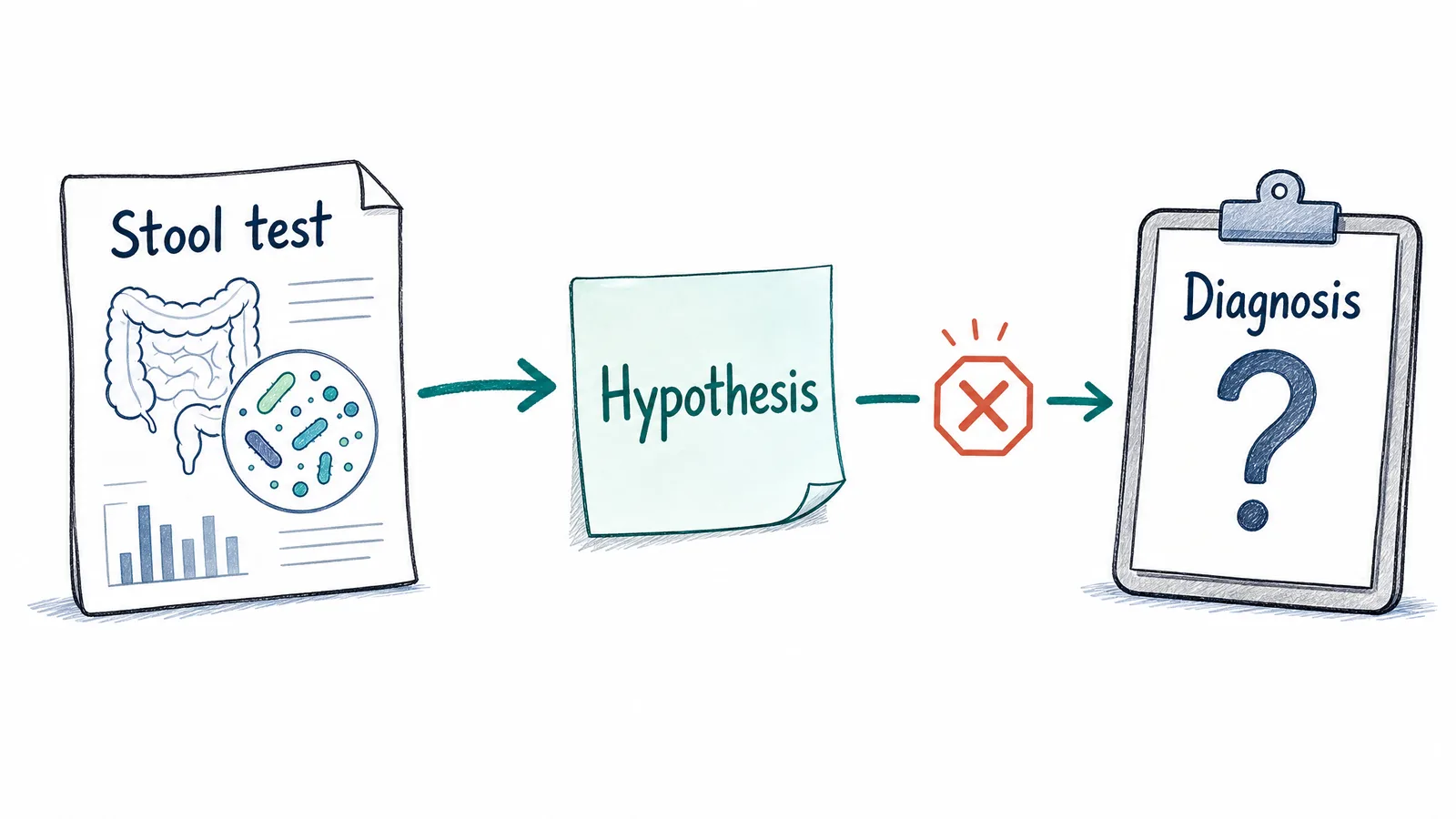
Short answer: Yes, some gut bacteria play real roles in immunity. Species and groups such as Faecalibacterium prausnitzii, Akkermansia muciniphila, bifidobacteria, lactobacilli, and several butyrate-producing Clostridia are linked to mucosal barrier function, immune tolerance, and inflammatory signaling. But a list of 10 bacteria should not be read as an immune score, and a consumer stool test cannot diagnose why someone gets frequent infections, fatigue, allergies, or inflammatory symptoms.
Do Gut Bacteria Really Affect Immunity?
They do, but the relationship is more conditional than many gut-health articles make it sound. The intestine contains a large immune surface where food antigens, microbial products, mucus, epithelial cells, and immune cells constantly interact. Commensal microbes help train immune tolerance, influence secretory IgA, produce metabolites such as short-chain fatty acids, and support the mucus and epithelial barrier.
This does not mean that one bacterium equals one immune outcome. The immune system responds to patterns, metabolites, host genetics, diet, age, medications, infections, and the wider microbial community. A bacterium that looks beneficial in one context may be neutral, absent, or hard to interpret in another.
Which Bacteria Have the Strongest Evidence?
The best-supported examples are not magic immune boosters. They are organisms or groups with plausible mechanisms and repeated associations in human or experimental research.
- Butyrate producers, including Faecalibacterium prausnitzii, Roseburia, Eubacterium rectale, and some Clostridia clusters, matter because butyrate fuels colon cells and can influence regulatory T cell biology.
- Clostridia clusters IV and XIVa have strong experimental evidence for promoting colonic regulatory T cells, especially in animal and mechanistic models.
- Bifidobacteria are prominent early-life microbes and can interact with immune maturation, barrier function, and pathogen resistance, although effects are strain-specific.
- Lactobacilli can influence mucosal immunity and inflammatory signaling, but the evidence depends heavily on the exact strain and clinical setting.
- Akkermansia muciniphila is associated with the mucus layer and metabolic health signals, but it should not be interpreted as universally good or as a stand-alone immune marker.
What Goes Beyond the Evidence?
The risky leap is moving from "these microbes interact with immunity" to "your stool profile explains your immune health." A stool microbiome test can describe microbial DNA in a sample. It can sometimes show low diversity, unusual abundance patterns, or loss of organisms commonly seen in healthier cohorts. It cannot directly measure T cell balance, vaccine response, infection risk, autoimmune activity, food allergy, or inflammatory disease status.
Symptoms are also nonspecific. Bloating, fatigue, skin flares, or frequent colds may coexist with dysbiosis, but they can also reflect sleep loss, stress, diet quality, medications, iron deficiency, thyroid disease, viral exposure, inflammatory bowel disease, celiac disease, or other conditions that require ordinary clinical evaluation.
Evidence Summary
- Gut microbes help shape mucosal immune development and immune tolerance.
- Short-chain fatty acids, especially butyrate, are plausible links between fiber-fermenting bacteria and immune regulation.
- Some named bacteria are useful research signals, but they are not validated personal immune scores.
- Stool testing can generate hypotheses about microbiome composition; it does not diagnose immune dysfunction.
- Dietary diversity, fiber intake, sleep, medication history, and disease context matter as much as individual microbes.
Can a Microbiome Test Tell Whether Your Immunity Is Weak?
No. It may show patterns relevant to gut ecology, such as lower diversity or fewer butyrate-associated taxa, but immune competence is not diagnosed from stool sequencing. Clinical immune problems are evaluated with history, examination, blood tests, infection patterns, inflammatory markers, allergy workup, and disease-specific testing when appropriate.
That does not make microbiome testing useless. It can be educational, especially when interpreted cautiously and used to guide broad, low-risk habits such as eating more varied plant fibers. The problem starts when a report implies that adding or losing one organism explains a complex immune symptom.
When Should You See a Clinician?
Seek medical advice if you have recurrent serious infections, unexplained weight loss, blood in stool, persistent fever, chronic diarrhea, anemia, severe abdominal pain, night sweats, suspected autoimmune disease, or symptoms after immunosuppressive medication. These are not issues to troubleshoot with microbiome scores.
Bottom Line
Gut bacteria genuinely participate in immune biology. The strongest evidence supports broad concepts: microbial metabolites, barrier integrity, immune tolerance, and community stability. The weakest claim is that a consumer stool report can translate a list of bacteria into a personal immune diagnosis. Treat microbiome data as context, not a verdict.
Evidence Notes and Sources
- Belkaid & Hand (2014). Role of the microbiota in immunity and inflammation. Cell. https://doi.org/10.1016/j.cell.2014.03.011
- Thaiss et al. (2016). The microbiome and innate immunity. Nature. https://doi.org/10.1038/nature18847
- Furusawa et al. (2013). Commensal microbe-derived butyrate induces the differentiation of colonic regulatory T cells. Nature. https://doi.org/10.1038/nature12721
- Atarashi et al. (2013). Treg induction by a rationally selected mixture of Clostridia strains from the human microbiota. Nature. https://doi.org/10.1038/nature12331
- Quigley (2017). Gut microbiome as a clinical tool in gastrointestinal disease management: are we there yet? Nature Reviews Gastroenterology & Hepatology. https://doi.org/10.1038/nrgastro.2017.29
Educational disclaimer: This article is for general education and does not diagnose, treat, or replace care from a qualified clinician.